


close
Choose Your Site
Global
Social Media


Content Menu
● Key Raw Materials For Masterbatch
>> Additives
● Step 2: Raw Material Selection And Testing
● Step 3: Weighing And Batching
● Step 4: Premixing And Pre-Blending
● Step 5: Extrusion And Compounding
● Step 6: Cooling, Pelletizing, And Drying
● Step 7: Screening, Packaging, And Storage
● Step 8: Quality Control And Testing
● Types Of Masterbatch And Their Uses
● Equipment Used In Masterbatch Manufacturing
● Process Optimization And Best Practices
● Using Masterbatch In Plastics Processing
● Advantages Of Using Masterbatch
● FAQ
>> 2. How is masterbatch manufactured?
>> 3. What is the typical dosage of masterbatch?
>> 4. Why use masterbatch instead of powder pigments?
>> 5. How to choose the right masterbatch for an application?
Masterbatch is a concentrated mixture of pigments and/or additives dispersed in a carrier resin, designed to be mixed with a base polymer to achieve color or special functional properties. Knowing how to make masterbatch step by step helps plastic processors control quality, improve efficiency, and customize performance for different end-use applications.[1][2][11][12]

Masterbatch is usually supplied as pellets or granules in which pigments, dyes, or functional additives are uniformly dispersed within a compatible polymer carrier. During processing, a relatively small amount of masterbatch is added to the base resin to achieve the desired shade, opacity, or property enhancement without handling fine powders.[11][12][13]
There are three common categories: color masterbatch, additive masterbatch, and filler masterbatch, each optimized for specific performance targets such as appearance, stability, or cost reduction. The carrier resin is chosen to match the final plastic (for example PE, PP, PS, PET, or EVA) to secure good compatibility and dispersion in the customer's process.[2][6][10][1]
The carrier resin forms the continuous phase that encapsulates pigments and additives in the masterbatch. Typical carriers include polyethylene (PE), polypropylene (PP), polystyrene (PS), polyethylene terephthalate (PET), and ethylene-vinyl acetate (EVA), selected according to the target application and processing temperature.[6][8][1][2]
Important selection criteria for carrier resin in masterbatch include melt flow index, polarity, thermal stability, and regulatory compliance for food contact or medical use. A well-matched carrier allows the masterbatch to melt and disperse quickly when blended with the customer's base polymer.[8][10]
Pigments give color masterbatch its shade, opacity, and heat resistance. Inorganic pigments such as titanium dioxide and iron oxides provide excellent opacity and durability, while organic pigments offer bright shades and higher color strength.[5][6]
Dyes are sometimes used in masterbatch when transparent or deep transparent colors are required, especially for PET bottles and fibers. Pigment properties such as particle size, oil absorption, and heat stability strongly influence masterbatch dispersion and final product performance.[7][12][5][11]
Additive masterbatch is based on functional ingredients such as UV stabilizers, antioxidants, antistatic agents, slip and anti-block agents, flame retardants, nucleating agents, and antimicrobial components. These additives are incorporated into the masterbatch to modify the polymer's behavior during processing or in service.[10][1]
Using additive masterbatch allows processors to fine-tune performance by adjusting dosage, without changing the base polymer formulation. It also simplifies handling, since multiple additives can be combined into a single multi-functional masterbatch.[14][1][2][10]
Filler masterbatch uses minerals such as calcium carbonate, talc, barium sulfate, or silica to reduce cost and tailor stiffness, dimensional stability, and barrier properties. Filler masterbatch is widely used in films, shopping bags, thermoformed sheets, and injection molded parts.[15][7]
Because filler loadings in masterbatch can be high, the compounding process must be optimized to ensure good dispersion and avoid rough surfaces or weak points in the final plastic articles.[4][15]
The process of making masterbatch begins with a clear definition of application requirements, such as color standard, opacity, mechanical performance, regulatory limits, and processing method. These requirements guide the choice of carrier resin, pigment system, additive package, and target loading in the masterbatch.[16][1]
Color labs or technical teams perform color matching and performance testing on small extruded or molded samples to confirm that the masterbatch formulation meets customer expectations. At this stage, the recommended let-down ratio in the final polymer is also defined.[2][6]
Once the formulation is fixed, masterbatch production relies on consistent, high-quality raw materials. Every batch of carrier resin, pigment, additive, and filler is checked for identity, purity, moisture content, and key physical properties before being released to production.[17][7][8]
A robust incoming quality control system reduces the risk of shade variation, contamination, or processing instabilities in the masterbatch. Long-term cooperation with qualified suppliers is important to maintain stable properties and predictable masterbatch behavior over time.[18][10][17]
Accurate weighing and batching of each ingredient is fundamental to making consistent masterbatch. Modern production lines often use automatic gravimetric dosing systems that measure resins, pigments, and additives according to the masterbatch recipe.[4][2]
Control of weighing tolerances ensures that the pigment and additive concentrations in the masterbatch are within tight limits, which directly affects color strength and performance in the final plastic. Proper batching also helps operators avoid manual errors and improves traceability between masterbatch lots and the recipes used.[8][2][4]
After batching, raw materials for the masterbatch are dry-blended in high-speed mixers, ribbon blenders, or similar equipment to create a homogeneous pre-mix. This step distributes pigments and additives throughout the carrier resin granules, promoting good feeding and dispersion during extrusion.[1][2]
Effective premixing minimizes pigment agglomerates before they enter the extruder and helps maintain consistent throughput and torque on the machine. Adjustments to mixing time, speed, and loading can improve masterbatch uniformity and reduce dust formation.[7][1][4]
The pre-mixed material is then fed into a twin-screw or, in some cases, single-screw extruder for melting, dispersing, and compounding. Twin-screw extruders are preferred for many masterbatch grades because they provide higher shear and better mixing, especially for difficult pigments or high filler levels.[5][2][4]
Inside the extruder, the masterbatch formulation passes through multiple barrel zones with controlled temperatures, where the carrier resin melts and pigments are broken down and dispersed. Screw configuration, screw speed, temperature profile, and feed rate are tuned to balance dispersion quality, throughput, and energy consumption while avoiding thermal degradation.[9][6][4][8]
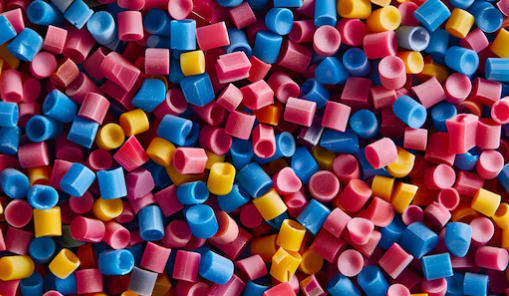
The molten masterbatch exits the extruder through a die, forming strands that are guided through water baths or air-cooling units to solidify. As the masterbatch cools, the strands are stabilized and prepared for pelletizing.[2][7]
In the pelletizing step, the strands are cut into small, uniform pellets that serve as the final masterbatch product. Pellet size distribution, shape, and surface quality influence how easily the masterbatch flows and disperses in customer equipment. After pelletizing, the masterbatch is typically dried to remove surface moisture and prevent defects such as bubbles in downstream processing.[4][7][2]
Dry masterbatch pellets are screened to remove fines, oversize particles, and any foreign bodies that might have been introduced during handling. Clean pellets improve feeding reliability and reduce the risk of filter blockage or surface defects in final products.[19][7]
The screened masterbatch is then packed in moisture-resistant bags, cartons, or bulk containers with clear labels indicating grade, batch number, and recommended dosage. Proper storage conditions—such as controlled temperature, low humidity, and protection from UV light—help preserve masterbatch performance throughout its shelf life.[6][10][19][2]
Every production lot of masterbatch undergoes rigorous quality control to confirm that it meets internal standards and customer specifications. Typical tests include color measurements using spectrophotometers, dispersion checks in test plaques, and evaluation of melt flow index or rheological behavior.[17][1][6][2]
For special masterbatch types, additional tests such as lightfastness, weathering resistance, migration behavior, flame retardancy, or mechanical performance in the final polymer may be required. Comprehensive documentation and traceability support regulatory compliance and give customers confidence in long-term performance.[18][5][17]
Color masterbatch is formulated to deliver precise shade and opacity while maintaining processing stability. It is widely used in films, injection-molded parts, blow-molded containers, fibers, and profiles where brand colors and aesthetic appearance are critical.[10][11][6][2]
Special effect color masterbatch can create metallic, pearlescent, fluorescent, or glow-in-the-dark finishes, helping brand owners differentiate their products on the shelf.[1][5]
Additive masterbatch provides functional improvements such as UV protection, oxidation resistance, antistatic behavior, slip, anti-blocking, or flame retardancy. By using additive masterbatch instead of powder additives, processors gain cleaner operation and better dosing accuracy.[11][10][1][2]
Many producers offer multi-functional additive masterbatch that combines several additives into a single product, simplifying the masterbatch portfolio and production planning.[10][1]
Filler masterbatch, usually based on calcium carbonate or talc, helps reduce formulation cost and tailor stiffness, opacity, and printability. It is common in shopping bags, garbage bags, agricultural films, and thermoformed packaging.[15][7][4]
The design of filler masterbatch focuses on high mineral loading, good dispersion, and minimal impact on mechanical properties such as tear strength and impact resistance.[7][15]
Masterbatch production uses specialized equipment such as high-speed mixers for premixing, gravimetric feeders for dosing, twin-screw extruders for compounding, water baths or air-cooling systems, and strand or underwater pelletizers. Each component of the production line must be synchronized to maintain stable throughput and product quality.[2][4][7]
Automation systems monitor temperature, pressure, screw speed, and feed rates to ensure that masterbatch manufacturing remains within defined process windows. Modern lines may also integrate online sensors and data analysis to support predictive maintenance and continuous optimization.[3][8][4]
Optimizing masterbatch production involves careful control of raw materials, equipment settings, and quality checks. Adjustments to screw configuration, barrel temperature, and mixing strategy can improve pigment dispersion without sacrificing throughput.[5][8][1][4]
Best practices include maintaining clean equipment to avoid cross-contamination between different masterbatch colors or formulations, using standardized start-up and shutdown procedures, and keeping detailed records for each batch. Continuous improvement programs often focus on reducing scrap, shortening changeover times, and improving consistency from lot to lot.[3][8][17][2]
In practical use, masterbatch is blended with base polymer at a defined let-down ratio, typically in the range of 1–5%, depending on pigment strength and the type of masterbatch. The blend can be made directly in the processing machine hopper using gravimetric or volumetric feeders or via pre-compounded blends.[12][20][11][2]
Correct selection and dosing of masterbatch ensure stable color, reproducible mechanical properties, and minimal processing problems such as plate-out or die build-up. Processors work closely with masterbatch suppliers to choose the right grade for extrusion, injection molding, blow molding, or film blowing conditions.[13][20][14][2]
Using masterbatch instead of powder pigments or additives provides several advantages in plastics manufacturing. These include cleaner handling, more accurate dosing, better dispersion, improved worker safety, and easier color or property changes.[11][10][2]
Masterbatch also simplifies warehousing and inventory management because multiple pigments or additives can be combined into one customized masterbatch solution for each application. This flexibility supports efficient production planning and helps brand owners maintain consistent product appearance globally.[14][1][10]
Making masterbatch is a structured process that starts with formulation design and raw material selection, followed by precise weighing, premixing, extrusion, cooling, pelletizing, and final quality control. Each step influences dispersion quality, color consistency, and functional performance of the masterbatch in downstream plastics processing.[16][8][1][2]
By understanding the complete masterbatch manufacturing process and the roles of carrier resins, pigments, additives, and fillers, manufacturers can produce reliable masterbatch solutions tailored to different polymers and applications. Processors who choose the right masterbatch and apply it correctly benefit from stable production, improved product appearance, and enhanced properties in their plastic products.[6][5][10][11]
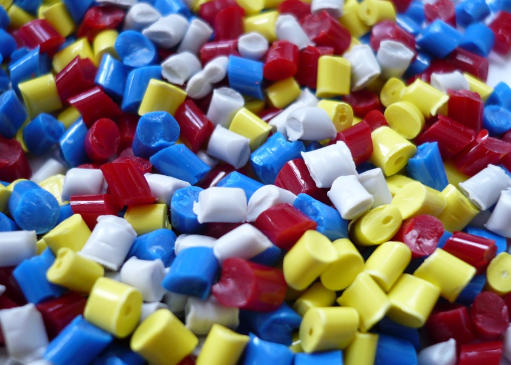
Masterbatch is a concentrated mixture of pigments and/or functional additives dispersed in a compatible polymer carrier and supplied as pellets or granules. It is added at a defined let-down ratio to the base polymer to provide color or special properties without directly handling powders.[12][11][2]
Masterbatch is manufactured by accurately weighing and premixing resins, pigments, additives, and fillers, then compounding them in an extruder to achieve uniform dispersion, followed by cooling, pelletizing, drying, screening, and packaging. Each batch is tested for color strength, dispersion quality, rheology, and other required properties before release.[17][1][4][2]
The typical dosage, or let-down ratio, of masterbatch in the final polymer is usually between 1% and 5%, depending on pigment strength, desired shade, and type of additive or filler used. Highly concentrated or high-strength masterbatch may be used at lower levels, while special-effect or heavily filled grades may require higher dosages.[12][14][1][11]
Using masterbatch offers cleaner handling, more accurate dosing, reduced dust, better dispersion, and improved worker safety compared with handling loose powder pigments and additives. It also simplifies inventory management and allows fast adjustments to color or properties simply by changing masterbatch type or dosage.[1][10][11][2]
To choose the right masterbatch, processors should consider the base polymer type, processing method, required color or property, regulatory constraints, and cost targets. Working with a masterbatch supplier to match color standards, verify performance through trials, and optimize let-down ratio ensures reliable results in production.[14][10][17][2]
[1](https://www.charmingmb.com/2025/10/09/masterbatch-manufacturing-process-a-complete-guide-to-production-and-innovation/)
[2](https://www.runme-plas.com/resources/masterbatch-manufacturing-process-a-complete-guide.html)
[3](https://www.montblanc.ai/en/blog/master-batch-process-manufacturing-a-comprehensive-guide)
[4](https://jieyatwinscrew.com/blog/masterbatch-production-line/)
[5](https://www.gsextruder.com/color-masterbatch-manufacturing-process-and-manufacturing-machine-guide/)
[6](https://eupegypt.com/blog/color-masterbatch-manufacturing-process/)
[7](https://en.ongoaltech.com/newsview/742.html)
[8](https://www.materials.zone/blog/8-steps-to-optimize-the-masterbatch-manufacturing-process)
[9](https://masterbatchglobal.com/articles/inside-the-masterbatch-manufacturing-process/)
[10](https://deltatecnic.com/complete-guide-to-masterbatch/)
[11](https://fillplas.com/masterbatch-what-exactly-is-it/)
[12](https://en.wikipedia.org/wiki/Masterbatch)
[13](https://www.monomex.com/processes/masterbatch)
[14](https://eupegypt.com/blog/masterbatch-manufacturing-process/)
[15](https://www.hmel.in/wp-content/uploads/2025/08/technical_guide_to_compounding_and_masterbatches_process__polysure_products-final_small.pdf)
[16](https://alokmasterbatches.com/blogs/what-is-masterbatch-its-manufacturing/)
[17](https://alokmasterbatches.home.blog/2025/03/18/the-importance-of-quality-control-in-masterbatch-production/)
[18](https://usmasterbatch.com/strict-quality-control-system)
[19](https://kaysapolymer.com/en/masterbatch-production-process/)
[20](https://www.lyondellbasell.com/globalassets/sites/2019/mme/4.2-the-use-of-masterbatch-in-your-production-process---joris-briers.pdf)


