


close
Choose Your Site
Global
Social Media


Views: 222 Author: Rebecca Publish Time: 2026-01-20 Origin: Site


Content Menu
● Understanding Plastic-Based Fabrics
● Step 1: Gathering and Sorting Plastic Waste
● Step 2: Cleaning and Shredding
● Step 3: Melting and Extrusion into Fibers
● Step 4: Drawing and Texturizing the Fibers
● Step 5: Yarn Production and Weaving
>> Role of Masterbatch in yarn production
● Step 6: Dyeing, Finishing, and Printing
● Step 7: Garment Manufacturing
● Environmental and Economic Benefits
● The Role of Masterbatch in Sustainable Textiles
>> Key Masterbatch types used in textile manufacturing
● Future Trends in Plastic-to-Fabric Technology
● FAQ
>> 1. What is a Masterbatch and why is it important?
>> 2. Can all types of plastic be turned into fabric?
>> 3. How sustainable is making clothes from plastic bottles?
>> 4. Does using Masterbatch make the fabric less eco-friendly?
>> 5. What kind of products can be made from recycled plastic fabrics?
The global movement toward sustainability has inspired manufacturers and innovators to rethink how we use and recycle plastic materials. One exciting development in recent years is the transformation of plastic waste into wearable fashion. From water bottles to sophisticated fabrics, the apparel industry now uses plastic-based materials to make everything from sportswear to luxury garments.
This process involves advanced materials engineering, innovative processing technologies, and specialized additives such as Masterbatch, which determine fabric color, strength, and performance. In this article, we'll explore the entire process of making clothes from plastic materials—from raw material selection to final textile production.
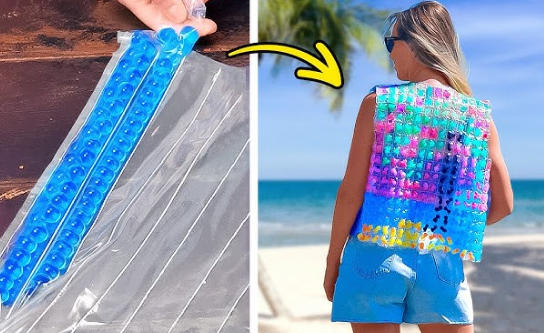
Before diving into manufacturing techniques, it's essential to understand what plastic-based fabrics are. These textiles are made from synthetic polymers derived from various plastic resins, commonly including:
- Polyethylene Terephthalate (PET): Used in water and soda bottles, often recycled into polyester fibers.
- Polypropylene (PP): Known for its lightweight and moisture-wicking properties.
- Polyamide (Nylon): Offers strength, elasticity, and excellent abrasion resistance.
- Polyethylene (PE): Used in lightweight, flexible garments and rain gear.
When properly processed and enhanced with a Masterbatch, these materials acquire desirable properties such as UV stability, color uniformity, and improved fabric softness.
The first stage in producing plastic-based clothing starts with collection and sorting. Post-consumer plastic bottles, packaging films, and industrial scraps are gathered and carefully separated by resin type.
Different plastics melt at different temperatures and possess distinct chemical characteristics. If mixed improperly, the resulting fiber quality can be compromised. Advanced optical sorting and near-infrared sensing technologies are used to ensure material purity.
At this stage, engineers may also add color Masterbatch to predefine the fabric's shade or to simplify later dyeing steps. This reduces chemical waste and water usage—helping maintain an eco-friendly production approach.
Once the plastics are sorted, they undergo a cleaning process to remove contaminants like paper labels, food residue, or adhesives. High-efficiency washing lines and friction washers ensure that plastics are thoroughly sanitized.
Next, the clean plastic is shredded into flakes or pellets. During this phase, additive Masterbatch formulations can be introduced to enhance certain properties:
- Antioxidant Masterbatch to improve heat resistance.
- UV stabilizer Masterbatch to protect fabric color from sunlight.
- Anti-static Masterbatch to improve fiber comfort and reduce cling.
These additives play a crucial role in ensuring the performance and longevity of the final clothing material.
After shredding, plastic flakes or pellets are melted and extruded into fibers using specialized spinning machines.
1. Melting: The plastic resin and Masterbatch mixture is heated until it reaches a consistent molten state.
2. Filtration: The molten material passes through precision filters to remove impurities.
3. Spinning: The purified melt is forced through micro-level spinnerets to form fine filaments.
4. Cooling: The filaments are rapidly cooled and solidified.
The addition of functional Masterbatch at this stage allows customization of fiber properties, such as gloss, texture, or tensile strength. For example, manufacturers may use flame-retardant Masterbatch for protective clothing or antibacterial Masterbatch for medical textiles.
After extrusion, the filaments are stretched (drawn) to align the polymer chains, improving the fabric's strength and elasticity. The fibers are then texturized to give them a more natural, fabric-like softness.
- Enhances flexibility and comfort.
- Improves aesthetic appearance through crimping.
- Boosts moisture management capacity.
Producers often blend color Masterbatch during this stage to modify appearance without secondary dyeing, reducing environmental impact.
The next stage involves twisting the processed fibers into yarns, ready for weaving or knitting into fabrics.
Masterbatch additives at this point ensure consistent color dispersion and improved yarn processability. Certain formulations also help control static buildup during high-speed spinning.
After spinning, the yarns are woven or knitted using standard textile machines into various types of fabrics—ranging from smooth polyester satin to breathable mesh and durable outdoor fabrics.
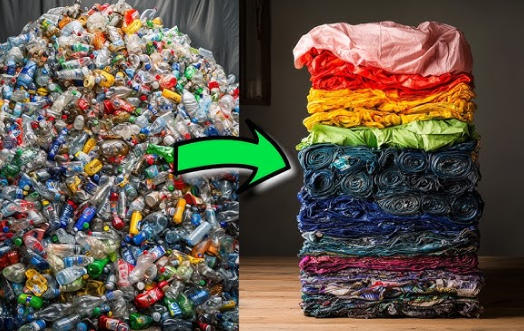
In some production processes, the fabric may undergo dyeing or printing to achieve desired colors and patterns. However, when color Masterbatch has already been used earlier, this step may be simplified or skipped entirely.
Post-dyeing, the fabric receives finishing treatments to improve performance:
- Softener treatment for a comfortable hand feel.
- Hydrophobic or hydrophilic coatings for moisture control.
- Anti-pilling or anti-bacterial finishes for durability and hygiene.
Again, specialized Masterbatch helps embed these functions permanently into the fiber structure. The result is a high-performance textile with lasting color stability and fabric integrity.
Finally, the finished fabrics are cut and sewn into garments. Design studios and apparel factories apply sustainable production processes to ensure minimal waste.
Many global fashion brands now use recycled PET (rPET) materials, which originated from discarded bottles and were re-engineered into stylish, functional apparel.
At this stage, branding Masterbatch may also be used to apply specific translucent or matte effects on labels and decorative designs, enhancing visual quality.
Producing clothes from plastic materials is not just about innovation—it's about responsibility.
- Waste reduction: Diverts millions of tons of plastic from landfills.
- Water conservation: Reduces dyeing and chemical wash processes through pre-colored Masterbatch use.
- Energy efficiency: Requires less energy compared to virgin polymer production.
- Creates new markets for recycled materials.
- Increases value-added potential for waste plastics.
- Reduces dependence on petroleum-based virgin polymers.
Through the integration of advanced Masterbatch technology, manufacturers can maximize recycling efficiency and fabric performance simultaneously.
Masterbatch is the foundation of innovation in plastic-based fabric manufacturing. This concentrated mixture of pigments and additives ensures uniform dispersion within the polymer matrix and improves quality consistency.
- Color Masterbatch: Provides rich, consistent color without traditional dyeing.
- Additive Masterbatch: Adds performance enhancements (heat stability, flame resistance, anti-static, etc.).
- Functional Masterbatch: Enables extra features such as odor control or water repellency.
Using the right Masterbatch formulation ensures that fabrics made from recycled plastic rival or even surpass those made from virgin materials.
The next decade will see more integration between circular economy principles and textile production. Several emerging trends include:
1. Bio-based Masterbatches: Derived from renewable natural sources to enhance biodegradability.
2. Smart textiles: Integration of conductive Masterbatches that enable wearables and sensor-based clothing.
3. 3D printing fabrics: Advanced extrusion technologies to produce ready-to-wear garments directly from plastic filaments.
4. Closed-loop recycling systems: Collection and reprocessing of used garments into new fibers—completing the sustainable cycle.
Turning plastic materials into wearable clothing demonstrates the power of modern materials science and sustainable design. Through a combination of recycling innovation, fiber engineering, and highly specialized Masterbatch technology, industries can transform waste into high-performance fabrics that drive the future of fashion.
Such practices not only minimize environmental impact but also redefine the boundaries of textile innovation—offering a blueprint for a cleaner, more circular economy in the global apparel market.
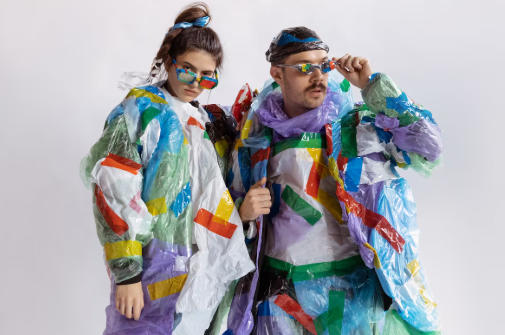
A Masterbatch is a concentrated blend of pigments or additives used to modify plastic properties. In textile production, it ensures uniform color distribution, UV resistance, flame retardancy, and other performance characteristics.
Not all plastics are suitable; typically, PET, nylon (PA), and polypropylene (PP) are preferred. These materials have excellent spinnability, strength, and durability after recycling.
It's significantly more sustainable than using virgin fibers. Recycling bottles into textile fibers reduces carbon emissions, conserves water, and reuses non-biodegradable waste.
No. In fact, Masterbatch helps minimize environmental impact by reducing water and chemical usage during coloration and by enhancing fabric longevity.
They include sportswear, outerwear, backpacks, fashion garments, upholstery materials, and even industrial textiles such as geotextiles or insulation fabrics.


