


close
Choose Your Site
Global
Social Media


Views: 222 Author: Rebecca Publish Time: 2026-01-15 Origin: Site


Content Menu
● Understanding Clear Plastic and Masterbatch
● Real-World Clear Masterbatch Basics
● How Real Masterbatch Behavior Informs Blender Materials
● Step-by-Step: Building a Clear Plastic Material in Blender
● Best Practices for Realistic Results
● FAQ
>> 1. What is Masterbatch in clear plastics?
>> 2. Why can Masterbatch affect plastic clarity?
>> 3. How do I mimic Masterbatch effects in Blender?
>> 4. Which shaders are best for clear plastic in Blender?
>> 5. How does transparent filler Masterbatch relate to Blender material settings?
Creating a realistic clear plastic material in Blender combines digital material settings with real-world plastic know-how, especially around Masterbatch design for transparent polymers. This guide explains both how clear plastic behaves in industry and how to reproduce its look step-by-step inside Blender.[1][2][3][4]

Clear plastic products, from packaging films to transparent cases, rely on carefully controlled resin purity and optimized Masterbatch formulations to maintain high transparency and low haze. Any poorly dispersed pigment or additive in the Masterbatch can appear as specks, streaks, or cloudiness in the final part.[5][6][7][4]
In industrial production, a transparent Masterbatch typically uses highly pure fillers like barium sulfate (BaSO₄) with controlled particle size, combined with polyethylene or polypropylene carriers for films and molded parts. These transparent filler Masterbatch systems are engineered to give clarity as well as mechanical properties while keeping the appearance clean and glass-like.[6][8][7][9]
In real manufacturing, defining the right Masterbatch is the starting point for any clear plastic product. The target application (film, sheet, injection part, or blow-molded container) determines which base resin and which transparent Masterbatch technology are suitable.[10][9][4][6]
- Transparent filler Masterbatch often uses BaSO₄ or similar fillers with sub-micron particle sizes to minimize light scattering and haze.[8][7]
- Color or additive Masterbatch must be designed so that pigments or stabilizers do not disturb the optical path of light through the plastic, keeping parts clear while adding UV, antistatic, or processing benefits.[10][1]
Formulators rely on high-speed mixing and twin-screw extrusion to disperse pigments and fillers uniformly in the carrier polymer, ensuring that the Masterbatch pellets are clean and consistent. When this Masterbatch is later diluted into the natural resin during molding or film blowing, its dispersion directly controls the clarity and appearance of the final clear plastic.[11][4][12]
Understanding how Masterbatch works makes it easier to simulate clear plastic materials in Blender, because the same ideas—clarity, internal impurities, and surface effects—drive realism. In real transparent plastics, clarity depends on a uniform internal structure with nearly no visible pigment agglomerates or incompatible phases.[7][4][5][1]
- A properly dispersed transparent Masterbatch leads to smooth, uniform optical transmission, which in Blender corresponds to clean refraction and controlled roughness in the shader.[3][1]
- Poor Masterbatch dispersion would appear as internal noise, localized haze, or unexpected color spots, which can be mimicked in Blender by subtle textures or noise in roughness and normal channels.[4][5]
This link between Masterbatch behavior and digital shading helps you design Blender materials that look like actual HDPE, PP, PC, or PET parts produced with industrial Masterbatch solutions. By tweaking transparency, gloss, and micro-roughness, you can represent anything from crystal-clear PET bottles to slightly frosted PP containers made with specialty Masterbatch additives.[9][1][8][10]
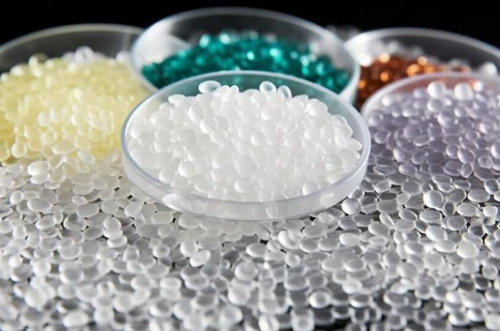
In Blender, a clear plastic material typically combines transparency, controlled gloss, and refraction, with subtle imperfections that echo real Masterbatch-based products. The workflow below assumes you are using the Cycles render engine for physically based, realistic results.[2][3]
1. Add and prepare the object
- Insert the target mesh (bottle, container, lens, or film) into the scene and enable smooth shading for cleaner highlights.[2]
- Ensure proper mesh thickness for hollow parts, as realistic clear plastic needs solid walls and volume for refraction and internal reflections.[13][3]
2. Set up the rendering engine
- Switch the render engine to Cycles to get physically accurate light transport and transparent shading.[3][2]
- Enable transparent shadows and appropriate bounces for transmission so the clear plastic behaves like a real component produced with high-clarity Masterbatch.[3]
3. Create a new material
- Assign a new material to the object and start from either a Principled BSDF shader or a combination of Transparent BSDF, Glossy BSDF, and Mix Shader nodes.[2][3]
- Keep the base color nearly white or slightly tinted, similar to how transparent Masterbatch provides a colorless or very lightly tinted carrier.[1][8]
4. Control transparency and refraction
- For a Principled BSDF, increase Transmission close to 1.0 to let light pass through the object, imitating a highly transparent Masterbatch formulation.[2][3]
- Set the Index of Refraction (IOR) around typical plastic values (about 1.45–1.5) to match the way light bends in clear polymers produced with optical-grade Masterbatch.[13][3]
5. Adjust surface roughness and gloss
- Use a low roughness value to create glossy, reflective surfaces similar to polished injection-molded parts based on clear Masterbatch.[1][3]
- For slightly frosted or satin-finish films, increase roughness or drive it with a subtle noise texture, replicating the soft scattering that some transparent Masterbatch systems intentionally introduce.[8][9]
6. Simulate internal imperfections
- Add very small-scale noise or bump textures to normal or roughness channels to represent tiny internal inconsistencies or microbubbles that can appear when Masterbatch dispersion is not perfectly optimized.[5][4]
- Keep these effects subtle, because high-quality transparent Masterbatch is specifically designed to minimize visible defects.[8][1]
7. Fine-tune color and absorption
- If representing a UV-stabilized or slightly tinted product, gently shift the color or use color ramps to simulate the way functional Masterbatch changes the plastic's tone without killing transparency.[10][1]
- For thicker parts, use volume absorption or similar techniques to reflect how even clear Masterbatch can cause a light color cast over long optical paths.[13][3]
Through these steps, the Blender material becomes a visual analog of real-world clear plastics produced using transparent filler and additive Masterbatch technologies.[6][8]
Even with a technically correct shader, realism depends on lighting, environment, and the subtle cues taken from Masterbatch behavior in real plastics. Clear materials are highly sensitive to reflections and refractions, so environmental setup is critical.[1][3][13]
- Use HDRI or well-designed studio lighting so that the clear plastic picks up meaningful highlights and reflections, just like real products made with high-clarity Masterbatch.[3][13]
- Combine environment lights with area lights to emphasize edges, thickness changes, and internal reflections that typically appear in clear Masterbatch-based components.[3]
Geometry and scene composition also contribute greatly to realism for transparent plastics. Complex shapes, fillets, and consistent wall thickness let the Blender material showcase effects similar to those seen in injection-molded parts or blown films produced with transparent Masterbatch.[9][6][13][3]
Clear plastic materials in Blender are most convincing when they are grounded in real industrial behavior, especially the way transparent Masterbatch controls optical clarity, dispersion, and functional additives. By combining a physically based shader setup—proper transmission, IOR, roughness, and subtle imperfections—with good lighting and geometry, the resulting Blender material can accurately represent real transparent products made with modern Masterbatch solutions.[4][10][1][3]
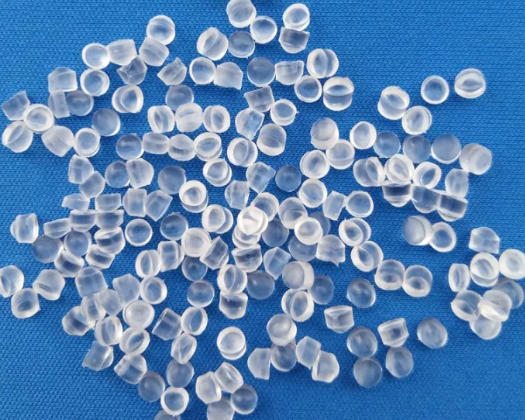
Masterbatch is a concentrated mixture of pigments or additives dispersed in a carrier resin, designed to be diluted into base polymers during processing. For clear plastics, transparent or colorless Masterbatch systems add properties like UV stability, processing aids, or antistatic performance without reducing transparency.[4][10][8][1]
If a Masterbatch is poorly dispersed, pigment or filler agglomerates scatter light and appear as black specks, cloudiness, or streaks in transparent parts. High-quality transparent Masterbatch uses very fine particles and optimized extrusion to minimize haze and maintain a clean, glass-like appearance.[7][5][8][4]
In Blender, Masterbatch effects can be mimicked by adjusting transmission, IOR, roughness, and adding subtle noise or bump textures to represent internal structure. Clear, uniform Masterbatch translates into clean refraction and smooth surfaces, while imperfect dispersion can be represented by gentle noise in roughness or normal channels.[5][4][2][3]
The Principled BSDF shader with high Transmission and appropriate IOR works well for most clear plastic materials. Alternatively, combining Transparent BSDF and Glossy or Refraction BSDF via a Mix Shader allows more manual control for simulating different Masterbatch-based appearances.[13][2][3]
Transparent filler Masterbatch uses ultra-fine fillers and compatible carriers to keep light scattering low, which corresponds to low roughness and high transmission in Blender. When you design a material with minimal surface noise and accurate refraction, you are essentially simulating the effect of a well-formulated transparent filler Masterbatch in a digital environment.[6][8][4]
[1](https://alokmasterbatches.home.blog/2025/03/18/masterbatch-use-in-transparent-plastics-achieving-clear-and-clean-results/)
[2](https://www.youtube.com/watch?v=YwkjUqca5jg)
[3](https://www.youtube.com/watch?v=cIukOGxQWSw)
[4](https://deltatecnic.com/complete-guide-to-masterbatch/)
[5](https://pcn.org/technical-information/formulating-plastic-compounds-masterbatch-and-compounds/)
[6](https://www.usmasterbatch.com/transparent-filler-masterbatch)
[7](https://patents.google.com/patent/CN104497406A/en)
[8](https://megaplast.com.vn/product/baso4-transparent-masterbatch/)
[9](https://www.hoyonn.com/product/transparent-filler-masterbatch/)
[10](https://www.tosaf.com/article/plastic-masterbatch-article/)
[11](https://www.youtube.com/watch?v=ahbUZSjmi2k)
[12](https://www.debaomasterbatch.com/News_Events/2025-09-04/masterbatch-manufacturing-process.html)
[13](https://www.reddit.com/r/blenderhelp/comments/wvlk63/how_do_i_make_a_clear_plastic_material_like_this/)
[14](https://www.tipure.com/en/-/media/files/tipure/legacy/ti-pure-r-350-formulation-freedom-masterbatch-producers.pdf?rev=2dd38d7a4323429990aedcc2bfd31e5d&hash=645F9BF1EAB05EE0ABCC53EEF1CFEFF6)
[15](https://firstmold.com/guides/masterbatch/)


