


close
Choose Your Site
Global
Social Media


Views: 222 Author: Rebecca Publish Time: 2026-01-12 Origin: Site


Content Menu
● Understanding Injection Molded Plastic Materials
>> The Role of Masterbatch in Identification
● Key Characteristics of Injection Molded Plastics
● Methods for Identifying Injection Molded Plastics
>> 1. Visual and Physical Inspection
>> 3. Density and Floatation Test
>> 4. Solvent and Chemical Resistance Test
>> 5. FTIR Spectroscopy and Laboratory Analysis
● The Importance of Accurate Plastic Identification
● How Masterbatch Affects Plastic Properties
● Practical Tips for Manufacturers and Engineers
● Case Study: Identifying a Reprocessed Plastic Material
● FAQ
>> (1) How does Masterbatch improve injection molded plastic quality?
>> (2) Can Masterbatch affect the recyclability of plastics?
>> (3) What is the difference between dry pigment and Masterbatch?
>> (4) How can I test if an injected part contains a Masterbatch additive?
>> (5) Why is accurate identification of plastic types important before molding?
In today's global manufacturing industry, identifying injection molded plastic materials is fundamental for production quality, cost-efficiency, and sustainability. Whether you're a product designer, materials engineer, or buyer sourcing components, understanding how to distinguish different types of plastics used in injection molding can help you select the right material and optimize your manufacturing process.
This article explains the techniques, tools, and visual cues for identifying injection molded plastics, explores the role of Masterbatch in material characterization, and provides practical insights for industrial applications.

Injection molding is one of the most widely used methods for producing plastic components. It involves melting thermoplastic polymers and injecting them into a mold cavity, where they cool and solidify into the desired shape.
The resulting products can range from automotive parts and electronic housings to medical components and packaging materials. Different polymers—such as ABS, PP, PS, PVC, PET, and PA—possess unique properties suited to different applications.
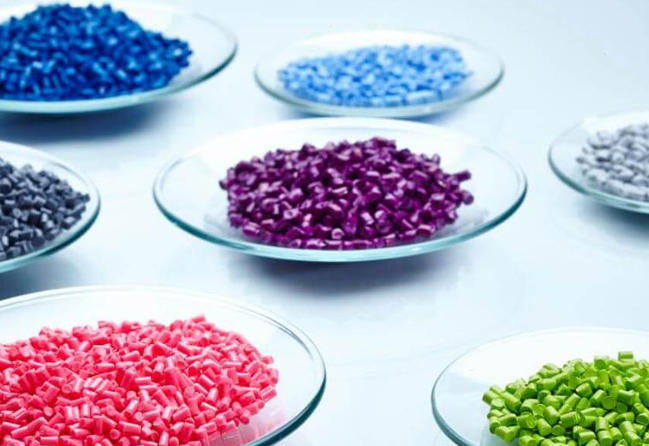
A Masterbatch is a concentrated mixture of pigments or additives encapsulated during a heating process into a carrier resin which is then cooled and granulated. Manufacturers use Masterbatch to impart specific colors, UV resistance, flame retardancy, or performance features to the base polymer.
When identifying plastics, the presence of Masterbatch can offer valuable clues. For instance:
- Color and finish may indicate the type or grade of Masterbatch used.
- Additive enhancements such as antistatic or antibacterial features often derive from Masterbatch composition.
- Spectroscopic testing can reveal the polymer type and the Masterbatch formula, indicating origin or performance grade.
Thus, recognizing Masterbatch cues is a practical step in identifying the plastic type and its intended function.
Different plastics display unique characteristics that make them identifiable through observation and testing. The most common indicators include:
- Appearance (color, gloss, transparency)
- Texture (smooth, matte, flexible)
- Density and weight
- Reaction to flame or heat
- Odor when burned or heated
- Water absorption or buoyancy
These basic tests help distinguish between plastics like Polypropylene (PP)—lightweight and flexible—and Acrylonitrile Butadiene Styrene (ABS)—rigid and glossy, often containing color-specific Masterbatch additives.
This is the simplest method. By carefully examining the surface textures, gate marks, weld lines, and parting lines, experienced engineers can often infer which polymer was used.
- ABS parts often have high gloss;
- Nylon (PA) components feel more rigid;
- Polypropylene (PP) is flexibly lightweight.
Because pigments and functional additives are distributed using Masterbatch, the color consistency and opacity often reflect the formulation and polymer compatibility.
The burn test provides immediate clues to the plastic type. By burning a small sample under controlled conditions, one can analyze flame color, odor, and residue.
For instance:
- PP and PE burn with a blue flame and drip molten plastic.
- PVC emits black smoke and a pungent odor due to chlorine.
- ABS burns with a sooty flame and a sweet smell.
Be cautious, though—if the material contains Masterbatch with special additives such as flame retardants or colorants, the burning behavior can change. The Masterbatch composition might suppress combustion or alter smoke color, revealing valuable hints about formulation.
Different plastics have distinct densities. A floatation test can quickly determine whether a sample sinks or floats in water or specific solutions.
- PP and PE float in water (density < 1.0 g/cm³).
- PVC and PET sink (density > 1.3 g/cm³).
Because some Masterbatches use heavy metal oxides or fillers to create special effects, they can slightly change the base polymer's density. Therefore, density variations can hint at the presence of mineral-filled Masterbatch additives.
Chemical testing helps identify plastics by how they react to specific solvents such as acetone, ethanol, or toluene.
- PMMA (Acrylic) dissolves in acetone.
- PP and PE remain stable in most solvents.
- PC (Polycarbonate) becomes cloudy in acetone exposure.
If Masterbatch components are present, surface changes—like discoloration or surface cracking—may indicate the additive system used during compounding.
In professional plastic testing labs, Fourier Transform Infrared Spectroscopy (FTIR) or Differential Scanning Calorimetry (DSC) is used to identify polymer types and additive systems precisely.
FTIR analysis reveals the molecular fingerprint of the plastic, while DSC measures melting temperature and thermal properties. When Masterbatch components are included, these techniques can detect their specific chemical structures and stabilizers.
Correct identification ensures quality control, performance reliability, and cost-effective sourcing. Incorrect plastic selection may lead to:
- Poor mechanical strength or durability
- Improper fit or warping during molding
- Color mismatch or fading (due to incorrect Masterbatch)
- Reduced recyclability
In industries such as automotive, consumer electronics, and packaging, accurate plastic recognition directly impacts production efficiency and sustainability. Masterbatch selection is especially critical when consistent color or additive dispersion must be maintained across large batches.
A well-formulated Masterbatch not only enhances aesthetics but also modifies mechanical and thermal properties. Common types include:
- Color Masterbatch: Provides precise hue and coverage.
- Additive Masterbatch: Improves UV resistance, antistatic behavior, or flame retardancy.
- Filler Masterbatch: Contains calcium carbonate or talc for cost reduction and stiffness improvement.
- Functional Masterbatch: Includes degradable or conductive additives for specialized applications.
Because injection molded parts rely heavily on consistent material behavior, the chosen Masterbatch impacts flow rate, cooling pattern, and part finish. During identification, understanding the Masterbatch integration aids in determining both polymer type and functional grade.
- Label and document every resin batch with Masterbatch formulation details for traceability.
- Avoid mixing unidentified regrind materials unless tested for compatibility.
- Use standard test methods (ASTM D1238 for melt flow index, ASTM D792 for density).
- Collaborate with Masterbatch suppliers to understand pigment or additive effects on processing.
These steps prevent production inconsistencies and support efficient troubleshooting.
A manufacturer receives injection molded housings from a supplier and suspects inconsistent color tone and brittleness. Using FTIR analysis, they find the base polymer is Polypropylene (PP) but containing an incompatible Masterbatch with excessive filler concentration.
The filler-type Masterbatch added rigidity but reduced impact resistance, making the parts brittle. Adjusting the Masterbatch ratio resolved the issue.
This example demonstrates how material identification helps ensure stable product quality and additive synergy.
Identifying injection molded plastic materials requires a systematic combination of visual observation, physical tests, and laboratory analysis. Recognizing the influence of Masterbatch is essential since it not only affects color and surface finish but also impacts polymer behavior, density, and chemical resistance.
A thorough understanding of both base resin and Masterbatch composition ensures material accuracy, consistent quality, and efficient processing—supporting innovation in plastic manufacturing across industries.
Masterbatch enhances plastic quality by ensuring uniform pigment and additive dispersion. It provides consistent color, improves UV or heat resistance, and maintains mechanical strength during molding.
Yes, certain Masterbatch additives—such as flame retardants or metallic pigments—can influence recyclability. Choosing eco-friendly or biodegradable Masterbatches improves sustainable recycling.
Dry pigments are raw color powders mixed directly into polymers, while Masterbatch encapsulates pigments in a carrier resin for easier handling, stable dispersion, and reduced dust contamination.
Visual color uniformity, color stability under heat, and spectroscopy analysis can confirm the presence of a Masterbatch additive in molded parts.
Each plastic type has its own melting point, shrinkage rate, and chemical resistance. Correct identification ensures optimal processing settings, prevents defects, and maintains part quality.


