


close
Choose Your Site
Global
Social Media


Views: 222 Author: Rebecca Publish Time: 2026-01-12 Origin: Site


Content Menu
● Understanding Plastic Materials
>> Major Categories of Plastics
● Why Identifying Plastic Type Matters
● Common Plastic Categories and Their Characteristics
● Methods to Determine Type of Plastic Material
>> 1. Visual and Physical Inspection
>> 3. Burn Test
>> 4. Solvent and Chemical Resistance Test
>> 6. Fourier Transform Infrared Spectroscopy (FTIR)
>> 7. Differential Scanning Calorimetry (DSC)
● The Role of Masterbatch in Plastic Identification
>> Applications in Testing and Traceability
● How to Choose Suitable Masterbatch After Identification
● Challenges in Plastic Material Identification
● Best Practices for Reliable Identification
● FAQ
>> 1. How can I quickly identify an unknown plastic material?
>> 2. Why is masterbatch compatibility important?
>> 3. What is the difference between masterbatch and pigment powder?
>> 4. Can masterbatch affect plastic testing results?
>> 5. Which plastic tests are most reliable in industrial applications?
Identifying the correct type of plastic material is one of the key challenges faced by manufacturers, product designers, and recycling facilities. Each plastic type has distinct chemical, thermal, and mechanical characteristics, making proper identification critical for product performance, cost efficiency, and environmental compliance. Whether you are in polymer research, product development, or masterbatch production, understanding how to determine the type of plastic material helps ensure successful manufacturing and optimized formulation.
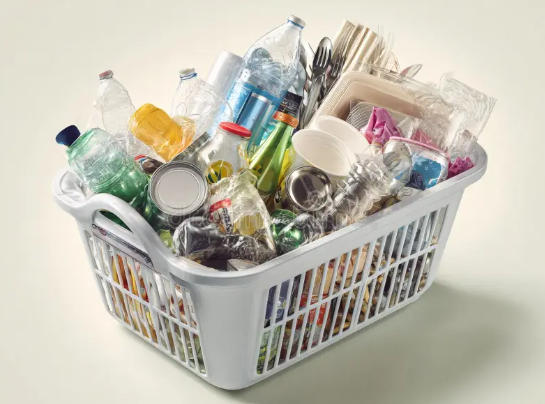
Plastics are synthetic or semi-synthetic materials made primarily from polymers—long chains of repeating molecular units. These polymers can be derived from petroleum, natural gas, or renewable resources. The characteristics of a plastic depend on the polymer type, additives, fillers, and processing conditions.
Plastics generally fall into two broad categories:
1. Thermoplastics – Soften when heated and can be remelted and reshaped multiple times (e.g., polyethylene, polypropylene, PVC).
2. Thermosetting plastics – Harden permanently after initial molding and cannot be remelted (e.g., epoxy, phenolic, melamine).
Different plastics show varying levels of transparency, toughness, flexibility, heat resistance, and chemical stability—factors that heavily influence product choice and masterbatch formulation in industrial settings.
Accurate identification of plastic is not merely a laboratory formality. It impacts every stage of production, sustainability, and quality control. Here's why:
- Material compatibility: To ensure adhesives, coatings, or masterbatches bond properly with the base resin.
- Cost optimization: Using the correct resin avoids waste and reduces reprocessing costs.
- Recycling efficiency: Sorting plastics by type helps recyclers achieve purer material streams and higher-value reuse.
- Performance assurance: Certain plastics offer resistance to chemicals or UV rays, while others do not.
- Regulatory compliance: Environmental regulations often specify which plastic types are allowed in specific applications.
For masterbatch manufacturers, precise identification is crucial since colorants, fillers, or additives must be matched to the base polymer to ensure proper dispersion and performance.
Here are some of the most widely used plastics and their key identifiers:
| Plastic Type | Common Abbreviation | Density Range (g/cm³) | Key Features | Typical Applications |
|---|---|---|---|---|
| Polyethylene | PE | 0.91–0.96 | Flexible, lightweight, chemical resistant | Packaging films, bottles |
| Polypropylene | PP | 0.90–0.92 | High fatigue resistance, versatile | Containers, fibers |
| Polystyrene | PS | 1.04–1.06 | Hard, clear, brittle | Disposable utensils, cases |
| Polyvinyl Chloride | PVC | 1.30–1.45 | Rigid or flexible, chemical resistant | Pipes, cables |
| Polyethylene Terephthalate | PET | 1.35–1.39 | Transparent, strong, recyclable | Beverage bottles |
| Acrylonitrile Butadiene Styrene | ABS | 1.04–1.07 | Impact resistant, glossy finish | Automotive parts, housings |
| Polycarbonate | PC | 1.20 | Impact resistant, transparent | Optical discs, helmets |
| Nylon | PA | 1.14 | Wear resistant, strong | Gears, bearings |
Each of these plastics reacts differently to testing conditions such as heat, density, solvent exposure, and flame—some of the key factors used to determine their types.
There are several methods—ranging from simple tests to advanced spectroscopy—used to identify plastics. The choice of method depends on available equipment, time, and precision requirements.
The first step in identifying plastic is a careful visual examination. Observe parameters such as:
- Color and transparency: Clear plastic could be PET, PC, or PS.
- Flexibility: Bending a sample may indicate whether it is rigid PVC, flexible PE, or elastic PP.
- Texture and gloss: ABS appears smooth and glossy, while HDPE feels waxy.
- Presence of masterbatch specks: Sometimes, visible color masterbatch traces indicate compounded polymers.
This simple test involves placing a plastic sample in different liquids of known densities (e.g., water, alcohol, salt solution). The floating or sinking behavior helps identify the plastic's density range, which narrows down material options.
Example interpretation:
- Floats in water → Likely PE or PP.
- Sinks in water but floats in salt solution → Could be PS or PVC.
The burn test provides quick results based on flame color, odor, and residue:
- PE and PP: Burn easily with blue-yellow flame, smell like candle wax.
- PVC: Produces a green flame due to chlorine and acrid odor.
- PS: Burns with sooty flame, emits a sweet styrene smell.
- PA (Nylon): Burns slowly, smells like burnt hair.
*Caution:* Conduct burn tests in a controlled environment with proper safety precautions.
Different plastics respond uniquely to solvents. Dropping small amounts of acetone or toluene on samples can reveal distinguishing properties. For example:
- ABS softens in acetone.
- PVC resists acetone but dissolves in tetrahydrofuran.
- PET is resistant to most solvents but can hydrolyze with strong alkalis.
This method is widely used in masterbatch and compound laboratories to ensure additive compatibility and confirm base material types before blending.
By gradually heating a sample, you can note its melting or softening point. Thermoplastics will deform and eventually melt, while thermosets will char without melting. A differential scanning calorimeter (DSC) precisely measures melting points for high-accuracy identification.
Typical melting ranges:
- PE: around 115°C
- PP: around 165°C
- PET: around 250°C
Such data are vital when designing heat-resistant masterbatch formulations.
FTIR analysis provides molecular fingerprinting. Each plastic absorbs infrared light at specific wavelengths, enabling precise identification even in complex blends. FTIR can distinguish between similar resins like HDPE and LDPE and detect additives or fillers used in masterbatch formulations.
DSC measures thermal transitions such as melting, crystallization, and glass transition. The data provide precise material identification and insights into polymer purity, crystallinity, and processing behavior. Masterbatch developers often use DSC to verify how pigment additives influence polymer behavior.
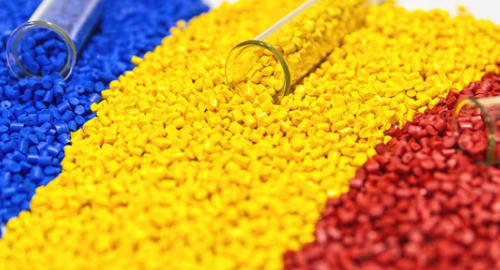
Masterbatch—a concentrated mixture of pigments, fillers, or additives encapsulated in a polymer carrier—plays a central role not only in coloration but also in plastic type verification and testing.
A masterbatch typically contains 20–80% active ingredients (colorants, UV stabilizers, flame retardants, etc.) dispersed in a compatible polymer base. The carrier resin must match the target plastic type to ensure proper mixing and dispersion. This compatibility requirement makes plastic identification essential for masterbatch manufacturers.
- Color-coded masterbatch: Used to mark or track plastic parts from different material batches.
- Functional additives: Certain test masterbatches contain markers that change under UV or heat exposure, helping verify resin identities.
- Recycled streams: In post-consumer recycling, specialized tracer masterbatch helps distinguish different polymer types automatically.
Knowing the base resin type guarantees that the masterbatch is compatible, preventing issues like pigment migration, poor surface finish, or mechanical strength loss.
Once you identify the plastic type, selecting the right masterbatch follows these general guidelines:
1. Match the carrier with base resin. For PE resin, use PE-based masterbatch for uniform dispersion.
2. Consider processing temperature. Ensure the masterbatch tolerates the resin's melt temperature.
3. Define performance requirements. UV, anti-static, or flame-retardant masterbatch options exist for various industries.
4. Evaluate end-use application. Food-grade masterbatches differ from industrial types.
5. Test small batches. Always run a trial to confirm that color dispersion and mechanical properties meet standards.
Proper selection ensures consistent color tone, robust performance, and traceability—especially when your product relies on precise material engineering.
Despite many techniques, several challenges remain in determining the correct type of plastic:
- Blended compositions: Many industrial plastics are co-polymers or blends (e.g., PP/PE mixtures), making identification tricky.
- Recycled materials: Recycled plastics may contain contamination or degraded molecules that distort test results.
- Additives and masterbatch effects: High pigment or additive concentration can alter density, color, or burn test outcomes.
- Similar melting points: Some plastics (like LDPE and HDPE) have overlapping temperature ranges.
Therefore, combining multiple testing methods—visual, thermal, and spectroscopic—produces the most accurate results.
Here are a few professional recommendations to maintain accuracy and consistency:
- Maintain a reference sample library of known polymers.
- Use calibrated instruments like FTIR or DSC for laboratory-grade results.
- Record masterbatch compositions precisely for traceability.
- Store all samples under controlled environmental conditions to avoid degradation.
- Partner with specialized testing laboratories when working with complex composites or unknown materials.
Determining the type of plastic material is fundamental for achieving consistency, performance, and sustainability in modern polymer industries. Whether through simple tests or advanced instrumentation, accurate identification ensures optimized masterbatch selection, quality control, and recycling efficiency. Understanding polymer characteristics—and how masterbatch interacts with each resin—empowers manufacturers to innovate responsibly and efficiently in the global plastics market.
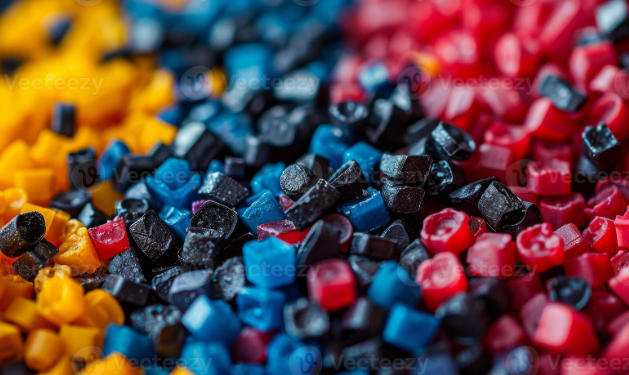
You can use quick tests like visual inspection, density (float) test, or burn test for an initial assessment. For precision, FTIR or DSC analysis is recommended.
Masterbatch compatibility ensures that pigments and additives disperse evenly without weakening the base resin. Incompatible carriers can cause surface defects or loss of mechanical properties.
Masterbatch is a pre-dispersed mixture of pigments in a polymer carrier, offering cleaner handling and uniform coloring. Pigment powders often require direct blending and may not disperse evenly.
Yes, additives or high pigment concentrations in masterbatch can slightly alter density, burning behavior, or melting properties. It's best to test raw resin before compounding.
FTIR spectroscopy and DSC analysis are considered the most reliable methods for identifying and analyzing plastic materials in professional manufacturing environments.


