


close
Choose Your Site
Global
Social Media


Views: 222 Author: Rebecca Publish Time: 2026-01-12 Origin: Site


Content Menu
● Understanding Plastic Material Composition
● Step-by-Step Process to Determine Plastic Material
>> 1. Identify the Application Requirements
>> 2. Analyze Base Polymer Options
>> 3. Determine Additive and Masterbatch Requirements
>> 4. Evaluate Chemical Compatibility
>> 5. Conduct Material Testing
● Role of Masterbatch in Plastic Material Customization
>> White and Black Masterbatch
● Practical Example: Determining Plastic for a Food Packaging Solution
● Sustainability and Recyclability Considerations
● Importance of Supplier Collaboration
● FAQ
>> (1) What is a Masterbatch in plastic production?
>> (2) How do I choose between different Masterbatch types?
>> (3) Can Masterbatch affect recyclability?
>> (4) What's the ideal dosage of Masterbatch in polymer manufacturing?
>> (5) How do I know if a Masterbatch is compatible with my plastic resin?
Choosing the right plastic material for any manufacturing or industrial project is one of the most crucial steps in ensuring quality, performance, and sustainability. Whether you're developing packaging, automotive parts, or electronic enclosures, understanding how to determine the best plastic is vital. In the modern material market, Masterbatch plays a central role in enhancing plastic performance, providing improved color consistency, stabilization, and property modification.

Plastics are synthetic polymers—a combination of molecular chains derived mostly from petrochemicals. They can be categorized into thermoplastics, thermosetting plastics, and elastomers, each with distinct physical and chemical behaviors.
- Thermoplastics (like PE, PP, PVC, ABS, PET) soften when heated and harden upon cooling, allowing for recyclability.
- Thermosets (like epoxy, phenolic resin, and melamine) harden permanently after curing and offer high mechanical and chemical resistance.
- Elastomers (like TPU and silicone rubber) combine flexibility and strength, suitable for seals, gaskets, and dynamic components.
In modern material design, adding a Masterbatch—a concentrated mixture of pigments or additives encapsulated in a carrier resin—helps tailor the functional and visual performance of each plastic category.
Defining the end-use conditions is the foundation of material selection. Consider factors like:
- Mechanical strength: Will the product endure stress, tension, or pressure?
- Temperature resistance: Will it operate under heat, cold, or fluctuating temperatures?
- Environmental exposure: Is UV resistance, chemical stability, or moisture protection necessary?
- Aesthetic factors: Should the surface be glossy, matte, or color-specific?
- Regulatory requirements: Does the product need FDA, REACH, or RoHS compliance?
To improve these performance factors, engineers often introduce Masterbatch formulations—color Masterbatch for visual precision, additive Masterbatch for UV or thermal protection, and functional Masterbatch for electrical or antistatic enhancements.
Each polymer family exhibits distinct base properties that make it suitable for different applications:
| Polymer Type | Characteristics | Common Applications |
|---|---|---|
| Polyethylene (PE) | Flexible, moisture-resistant, low cost | Packaging films, containers |
| Polypropylene (PP) | High stiffness, heat resistance | Automotive parts, caps, fibers |
| Polyvinyl Chloride (PVC) | Chemical resistance, rigidity/flexibility variants | Pipes, profiles, cables |
| Acrylonitrile Butadiene Styrene (ABS) | Tough, glossy, moldable | Electronic housings, toys |
| Polycarbonate (PC) | High impact strength, transparent | Optical disks, safety helmets |
| Nylon (PA) | Wear resistance, mechanical strength | Gears, bearings, textiles |
When formulating custom plastic compounds, Masterbatch can improve polymer compatibility, modify color tone, or enhance specific mechanical features.
Most base polymers are neutral or semi-functional. To achieve customized performance, specialized Masterbatch additives are indispensable. They modify key properties such as:
- Coloration: Pigment or dye Masterbatch ensures precise shade matching and color stability.
- UV stabilization: Protects plastics from sunlight degradation.
- Anti-static and conductive properties: Essential for electronic packaging.
- Flame retardancy: Improves fire safety performance.
- Anti-fog and slip agents: Enhance optical clarity and machinability for films.
Using Masterbatch rather than liquid additives simplifies processing and provides more consistent dispersion during extrusion or injection molding.
Chemical resistance is critical in industries such as packaging, automotive, and healthcare. A polymer must resist oils, solvents, acids, or alkaline solutions depending on the environment. Laboratories evaluate this through immersion testing, contact angle analysis, and molecular weight measurement.
Any additive or Masterbatch selected must be chemically compatible with the base resin to prevent degradation, poor mixing, or product discoloration.
Once the candidate materials are selected, testing confirms their suitability. Important tests include:
- Tensile and Impact Tests (ASTM D638 / D256): For mechanical integrity.
- Melt Flow Index (MFI) (ASTM D1238): To measure flow behavior during processing.
- Differential Scanning Calorimetry (DSC): To evaluate melting and crystallization temperatures.
- Thermogravimetric Analysis (TGA): To assess thermal stability.
- Weathering and UV Resistance Tests: Important if Masterbatch additives are used for outdoor applications.
Testing results guide fine adjustments in the Masterbatch concentration or type to achieve the exact performance benchmarks.

A color Masterbatch combines pigment and carrier plastic, offering vibrant, stable color dispersion without the hassle of liquid pigments. It ensures uniform shade, batch consistency, and ease of storage. For brand differentiation, a customized color Masterbatch can deliver unique tones matching corporate identity.
This category improves material performance. Examples include:
- UV Masterbatch for outdoor durability.
- Antioxidant Masterbatch for extended product lifespan.
- Flame Retardant Masterbatch for compliance with fire safety codes.
- Slip and Anti-block Masterbatch for smoother film production.
- Anti-static Masterbatch to control static buildup in electronic component packaging.
The balance between polymer and additive Masterbatch determines the overall performance landscape of any plastic product.
White Masterbatch, based on Titanium Dioxide (TiO₂), provides opacity, brightness, and coverage, widely used in films, injection molding, and fibers.
Black Masterbatch, containing Carbon Black, offers UV protection and color depth. Both types are fundamental in creating durable, visually appealing products.
Consider a company developing innovative flexible food packaging. The process to determine the right plastic proceeds as follows:
1. Application needs: High clarity, moisture barrier, food safety, and recyclability.
2. Polymer choice: Polyethylene (PE) or Polypropylene (PP) because of their food compliance and film properties.
3. Additive requirement: UV resistance, anti-fog capability, and slip control.
4. Masterbatch selection:
- Color Masterbatch for brand-specific packaging tones.
- Additive Masterbatch for oxygen barrier or freshness preservation.
5. Testing and validation: Shelf-life testing, optical transparency measurement, and sealing performance evaluation.
This stepwise approach ensures both functionality and cost-efficiency with the tailored use of Masterbatch formulations.
Sustainability is now a key focus of plastic material determination. Choosing recyclable polymers, reducing additive load, and designing biodegradable Masterbatch are essential strategies.
Modern eco Masterbatch solutions include:
- Biodegradable Masterbatch derived from PLA or starch.
- Recycling-compatible Masterbatch enhancing clarity and mechanical balance of post-consumer resins.
- Carbon Black alternatives improving infrared detection in sorting systems.
Integrating sustainability early in material determination ensures compliance with global environmental policies and satisfies market demand for eco-friendly products.
Selecting the right Masterbatch and base polymer requires close collaboration with material suppliers. A reliable manufacturer provides:
- Tailored Masterbatch formulations designed for your resin system.
- Technical support for processing optimization.
- Quality certifications and documentation.
- Consistent supply and traceability.
Partnering with a supplier that offers in-house R&D capabilities ensures faster prototyping and consistent quality control.
Determining the right plastic material is both a science and an art. From identifying performance requirements and analyzing polymers to customizing the formula with specialized Masterbatch, every step affects the final product quality and sustainability.
By understanding the interaction between base resin, Masterbatch, and additive systems, manufacturers can develop plastics that are functional, aesthetic, and environmentally responsible. The future of plastic materials lies in intelligent design, recyclable compositions, and continuous innovation through advanced Masterbatch technology.
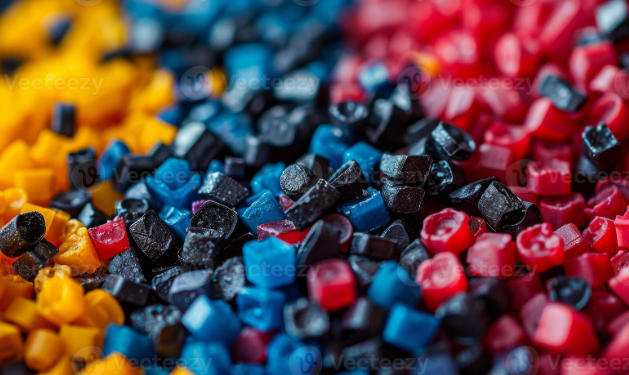
A Masterbatch is a concentrated mixture of pigments or additives encapsulated in a carrier resin. It is added to raw polymer to modify properties such as color, UV resistance, flame retardancy, or processing behavior.
Select the Masterbatch based on your target improvement—color Masterbatch for aesthetics, additive Masterbatch for technical properties, and combination grades for multifunctional effects.
Yes, but carefully chosen recycling-compatible Masterbatch formulas improve recyclability by enhancing polymer blending and maintaining optical purity in reprocessed materials.
Dosage depends on the concentration of pigment or additive, typically ranging from 1% to 5% by weight. Testing and process calibration are essential for consistent results.
Compatibility depends on the carrier resin used. For instance, a PP-based Masterbatch blends best with polypropylene polymers. Always verify compatibility data from the supplier before use.


