


close
Choose Your Site
Global
Social Media


Views: 222 Author: Rebecca Publish Time: 2026-01-08 Origin: Site


Content Menu
● Understanding Soft Plastic Materials
● Role of Masterbatch in Soft Plastics
● Preparing to Cut Rounded Tips
● Tools for Cutting Soft Plastic Rounded Tips
● Basic Manual Method: Knife or Scissors
● Cutting Rounded Tips with Power Tools
● Edge Rounding and Deburring Techniques
● Controlling Heat, Melting, and Burrs
● Designing for Rounded Tips in Production
● Quality Control and Inspection
● Application Examples for Rounded Soft Plastic Tips
● FAQ
>> (1) How do I prevent soft plastic from tearing when cutting rounded tips?
>> (2) What is the best tool for rounding tips on thick soft plastic profiles?
>> (3) How does Masterbatch affect the quality of rounded tips?
>> (4) How can I get a smooth, polished finish on the rounded tips?
>> (5) What safety precautions are important when cutting soft plastic rounded tips?
Cutting rounded tips in soft plastic materials requires the right tools, controlled cutting techniques, and careful edge finishing to avoid tearing, melting, or sharp edges. Proper Masterbatch selection in the soft plastic formulation also helps maintain shape, color, and surface quality during and after cutting.[1][2][3]

Soft plastics such as PVC, TPE, TPV, and TPU are flexible thermoplastic materials commonly used for seals, grips, toys, profiles, and protective covers. Masterbatch is widely used in these polymers to provide color, UV protection, slip, anti-block, and processing stability.[4][3][5][6]
The combination of soft polymer and tailored Masterbatch determines how easily the material can be cut, how the rounded tips hold their shape, and how resistant they are to cracking or whitening at the edges.[3][4]
Rounded tips on soft plastic parts improve safety by removing sharp points that can cut hands or damage adjacent components. They also enhance aesthetics, making products look more refined and premium, which is important for consumer goods and visible seals.[7][8]
In many applications—such as medical tubing, baby products, soft toys, and window seals—rounded tips combined with functional Masterbatch additives reduce the risk of injury, ease cleaning, and support regulatory compliance.[9][7]
Masterbatch is a concentrated mixture of pigments and additives dispersed in a compatible carrier resin, which is later diluted into the base polymer during processing. In soft plastics like TPU, TPE, and soft PVC, dedicated Masterbatch grades offer improved mechanical strength, thermal stability, UV resistance, and easy colorability.[5][10][4][3]
When planning to cut rounded tips, using a well-designed Masterbatch formulation helps ensure:
- Consistent color across the cut and rounded edge.
- Reduced brittleness and stress whitening at the radius.
- Stable melt flow and hardness, which keep the rounded geometry precise.[6][4]
Before cutting, proper preparation is essential to get smooth rounded tips in soft plastic material without distortion.
Key preparation steps:
- Confirm the polymer type (PVC, TPE, TPU, etc.) and the Masterbatch used, because this influences hardness, flexibility, and cutting response.[4][3]
- Check hardness (for example using Shore A scale) to choose suitable cutting tools and cutting force.
- Ensure the material has been cooled and conditioned; very warm soft plastics can tear or smear when cut.[2]
For production, collaborating with a Masterbatch supplier to fine-tune hardness, slip, and impact modifiers can make the cutting and edge-rounding process more stable and repeatable.[3][6]
Different tools can be used to cut and round soft plastic tips, depending on thickness, geometry, and production volume.[1][2]
Common tool options:
- Utility knife or craft knife: Suitable for thin soft plastic sheets and small strips, allowing manual rounding by controlled curved cuts.[1]
- Scissors or shears: Work well for very thin, flexible soft plastics such as films, soft profiles, and small soft PVC parts.
- Fine-tooth saw or jigsaw: Used when cutting thicker soft plastic profiles, often combined with a guide template to approximate rounded shapes.[11][2]
- Rotary tools and routers: For controlled radius cutting and edge rounding with dedicated plastic bits.[12][13]
- Deburring and edge-rounding tools: Abrasive brushes, files, and special deburring tools are used to refine and smooth the rounded tips after cutting.[14][7]
The chosen Masterbatch system should support clean cutting by avoiding excessive melt at the cut line and preventing edge cracking during mechanical finishing.[10][4]
For small batches and simple geometries, manual cutting with a knife or scissors is the most accessible way to create rounded tips on soft plastic material.[2][1]
General steps:
- Mark the desired radius at the tip using a template or small round coin to guide the curve.
- Use a sharp utility knife to trim along the marked arc in several light passes instead of one heavy cut, minimizing deformation.[1]
- Alternatively, use sharp scissors to cut with a smooth, continuous motion following the rounded line, supporting the plastic to avoid bending or stretching.
Soft plastics with Masterbatch-enhanced toughness and flexibility are less likely to tear when cut manually, helping maintain a clean, rounded contour.[4][3]
For thicker soft plastic parts, long profiles, or repeated precision shapes, power tools provide greater control and productivity.[13][2]
Typical approaches:
- Jigsaw or bandsaw with a fine-tooth blade optimized for plastics; the rounded tip is cut following a template or pre-drawn curve.[11][2]
- Router or CNC with an appropriate cutter, where the machine follows a programmed radius to create consistent rounded tips on multiple identical parts.[8][13]
- Cutting parameters are adjusted to avoid overheating, which could melt soft plastic and disturb color or surface finish, especially in Masterbatch-colored parts.[12][13]
When using power tools, the Masterbatch and base polymer must tolerate the cutting temperature and friction without discoloration, burn marks, or over-softening at the edge.[5][4]
Even after cutting, edges can remain sharp or slightly uneven; deburring and edge rounding complete the rounded tip.[7][2]
Recommended techniques:
- Hand finishing with fine needle files (round and half-round profiles) to refine the radius and remove tiny steps left by cutting tools.[14]
- Sanding with progressively finer grits, starting from medium (around 180–220) and moving up to fine (400–600) to achieve a smooth, safe edge.[2]
- Using abrasive brushes or specialized edge-rounding tools that gently work on the soft plastic edge to create a consistent radius and remove micro-burrs.[8][7]
A well-balanced Masterbatch often improves edge behavior by reducing brittleness and stress cracking during deburring, leading to longer-lasting rounded tips.[10][4]
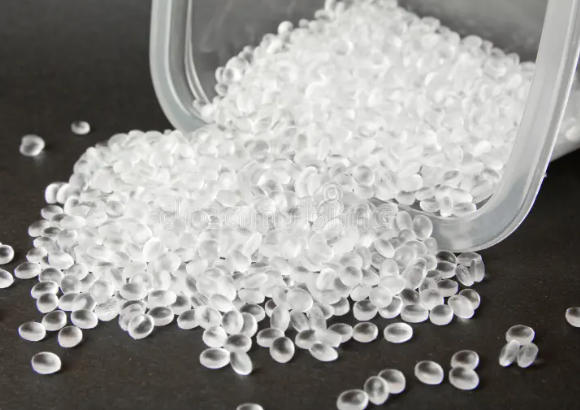
Soft plastics are sensitive to heat and friction, and excessive tool pressure or speed can cause melting, smeared edges, or burrs.[15][12]
Key control measures:
- Use sharp tools and moderate cutting speeds to reduce friction and heat generation.[13][12]
- If melting appears, reduce feed rate, adjust blade geometry, or use intermittent cutting to allow cooling.
- Immediately after cutting, remove burrs and micro-edges using deburring tools, sandpaper, or abrasive brushes, ensuring safe, rounded tips.[9][7]
Masterbatch formulations with improved thermal stability help soft plastics withstand the localized heating of cutting without discoloration or surface degradation, protecting both appearance and performance.[3][4]
In large-scale manufacturing, rounded tips are often designed into the soft plastic part so that less post-processing is required.
Design considerations:
- Use CAD to define the desired radius at the tip, ensuring that extrusion dies, molds, or thermoforming tools already include the rounded geometry.
- Collaborate with Masterbatch suppliers to adjust hardness, slip, and impact resistance, ensuring that the rounded tips retain shape during demolding, cutting, and service.[6][3]
- Combine color Masterbatch with functional additives (UV stabilizers, anti-scratch agents, lubricants) to maintain the visual quality of rounded tips over time.[10][4]
When parts are designed with integrated rounded tips and supported by the right Masterbatch, secondary cutting and manual finishing can be minimized, saving labor and improving consistency.
After cutting and rounding soft plastic tips, systematic inspection ensures that safety, performance, and appearance targets are met.[7][8]
Quality checkpoints:
- Check the radius size with gauges or fixtures to verify consistency across parts.
- Inspect edges for burrs, sharp points, or stress whitening that might indicate incorrect cutting parameters or insufficient Masterbatch toughness.[9]
- Evaluate color uniformity at the rounded tip, confirming that Masterbatch distribution remains homogeneous and that no burning or discoloration has occurred.[5][4]
In many industries, documentation of cutting parameters, Masterbatch lot numbers, and inspection records is part of quality management and customer qualification.
Rounded tips in soft plastic materials appear in a wide range of industries, where Masterbatch-enabled solutions are strongly preferred.
Typical applications:
- Soft seals and profiles in doors, windows, and automotive interiors, where rounded ends prevent tearing and improve sealing performance.[3]
- Soft toys and grips, where rounded tips and color Masterbatch provide safety and attractive appearance for children and consumers.[6]
- Cable sheathing, tubing, and protective covers, where rounded cut ends reduce snagging and damage to other components.[16][3]
Across these sectors, combining intelligent part design, proper cutting methods, reliable deburring, and tailored Masterbatch creates durable, visually appealing soft plastic products.
Cutting rounded tips with soft plastic material is not only a simple mechanical operation but also a material-engineering task that relies heavily on the right Masterbatch and process design. By selecting suitable soft polymers, using dedicated Masterbatch systems, adopting appropriate cutting tools, and carefully deburring and inspecting the edges, manufacturers can achieve smooth, safe, and durable rounded tips across a wide range of applications. Integrating rounded-tip design into tooling and collaborating closely with Masterbatch specialists ensures that production is efficient and that the final parts deliver consistent color, flexibility, and performance in real-world use.[2][4][7][6][3]
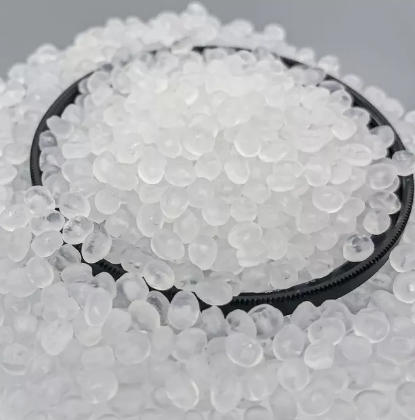
Soft plastic tears when the cutting force is too high, the tool is dull, or the material is not properly supported. Use sharp blades, support the workpiece firmly, cut in multiple light passes along a marked radius, and consider using a Masterbatch that improves toughness and elongation to resist crack initiation at the tip.[12][11][4][6]
For thicker profiles, a jigsaw, bandsaw, or router with a fine-tooth blade or plastic-specific bit works best for forming rounded tips. After the initial cut, finish the radius using files, abrasive brushes, or sanding blocks to smooth the edges, especially when the material contains color Masterbatch that must remain visually uniform.[13][14][7][2]
Masterbatch affects color consistency, mechanical strength, UV resistance, and surface behavior at the cut edge. Properly designed Masterbatch formulations help prevent stress whitening, cracking, and discoloration around rounded tips, ensuring that the cut and polished area matches the rest of the soft plastic part in appearance and durability.[4][5][10][3]
Start by cutting close to the final radius, then use progressively finer sandpapers (for example from 180–220 up to 400–600 grit) to smooth the tip. For some soft plastics, using abrasive brushes or specialized deburring tools further rounds and polishes the edges, allowing the Masterbatch-enhanced surface to appear glossy and uniform.[8][7][2]
Always wear safety glasses and gloves to protect against chips and sharp offcuts, even when working with soft plastic. Secure the material to prevent slipping, avoid excessive cutting speed that can cause melting and fumes, and ensure that dust extraction or ventilation is adequate, particularly when working with Masterbatch-modified materials in continuous production.[15][12][9][8]
[1](https://us.laserpecker.net/blogs/how-to/cut-plastic)
[2](https://www.perspexonline.com.au/cutting-shaping-and-working-with-plastic-materials/)
[3](https://www.hexpol.com/tpe/what-we-offer/soft-pvc-tpe-tpv-and-tpu-for-extrusion/)
[4](https://www.alibaba.com/showroom/plastic-masterbatch-for-tpu.html)
[5](https://okinchina.en.made-in-china.com/product/aQrpLzKCYqRj/China-White-Masterbatch-for-PE-PP-TPU-ABS-PC-TPE-EVA-PA-PU-PS-PLA-HIPS-PVC-HDPE-LDPE-20-80-TiO2-Master-Batch-for-Injection-Molding.html)
[6](https://www.kerkeextruder.com/masterbatch-production/tpe-masterbatch/)
[7](https://www.osborn.com/en/applications/deburring/edge-rounding~a28100)
[8](https://gkteso.de/en/deburring/deburring-edges/)
[9](https://www.iqsdirectory.com/articles/deburring-equipment/deburring.html)
[10](https://www.tramaco.de/en/products/foaming-agents/chemical-foaming-agents-and-additives-for-tpe.html)
[11](https://forum.trains.com/t/cutting-curve-in-plasic/283504)
[12](http://nerfhaven.com/forums/topic/8007-beginners-guide-to-machining-plastics/)
[13](https://www.onsrud.com/articles/Frequently-Asked-Questions-in-the-Routing-of-Plastics-2.asp)
[14](https://forums.bit-tech.net/index.php?threads%2Fbeginners-guide-to-machining-plastics.90412%2F)
[15](https://universalgrinding.com/industry-news-blog/deburring/)
[16](https://www.teknorapex.com/en-us/teknor-apexs-extensive-product-portfolio-of-vinyl-thermoplastic-elastomers-nylon-and-colorants/thermoplastic-elastomer)
[17](https://www.youtube.com/watch?v=ruwFym3evNU)
[18](https://www.youtube.com/watch?v=nh62xaTEmxw)
[19](https://www.reddit.com/r/fightsticks/comments/11qak6h/tips_on_manually_cutting_the_button_holes_in_soft/)
[20](https://aeroenginesafety.tugraz.at/doku.php?id=16%3A162%3A1622%3A16222%3A16222)


