


close
Choose Your Site
Global
Social Media


Views: 222 Author: Rebecca Publish Time: 2026-01-08 Origin: Site


Content Menu
● Understanding Semi-opaque Plastics
● Role of Masterbatch in Semi-opaque Design
● Key Optical Concepts: Transparent vs Translucent vs Opaque
● Choosing the Right Base Polymer
● Designing Color and Effect with Masterbatch
● Controlling Light Transmission and Haze
● Selecting Masterbatch Percentage for Semi-opaque Performance
● Processing Considerations: Extrusion and Injection Molding
● Additive Masterbatch: Stability and Durability
● Surface Finish, Texture, and Perceived Opacity
● Testing and Quality Control for Semi-opaque Masterbatch Solutions
● Sustainability and Recycled Content in Semi-opaque Plastics
● Practical Steps: How to Create Semi-opaque Plastic Material Max
>> 1. Define visual and performance targets
>> 2. Select base polymer and Masterbatch type
>> 3. Design and adjust Masterbatch formulation
>> 4. Run pilot trials and measure properties
>> 5. Validate long-term performance and scale up
● FAQ
>> 1: What is Semi-opaque Plastic Material?
>> 2: How Does Masterbatch Influence Semi-opaque Effects?
>> 3: What Masterbatch Percentage Is Recommended for Semi-opaque Plastics?
>> 4: Can Recycled Plastics Be Used with Semi-opaque Masterbatch?
>> 5: How Do Surface Texture and Mold Design Affect Semi-opaque Appearance?
Semi-opaque plastic materials combine controlled light transmission with privacy and strong color expression, and Masterbatch is the most efficient tool to fine-tune this balance in modern polymer processing. By optimizing Masterbatch selection, dosage, and dispersion, manufacturers can design “maximum-performance” semi-opaque plastics for packaging, consumer goods, lighting, and technical parts.[1][2][3][4]

Semi-opaque plastics sit between transparent and fully opaque materials, allowing light to pass while diffusing it so that objects behind are not clearly visible. This effect is commonly used in frosted, matte, or diffused plastic parts such as cosmetic bottles, light diffusers, and privacy panels.[5][6][7][1]
In optical terms, semi-opaque (translucent) materials typically show moderate light transmission but significant scattering, leading to a soft glow rather than clear visibility. Plastic resins like PP, PE, PET, PC, and copolyesters can all be modified with Masterbatch to reach different semi-opaque levels.[8][9][1][5]
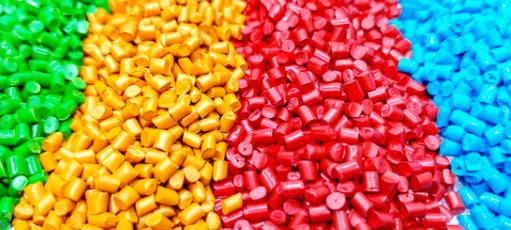
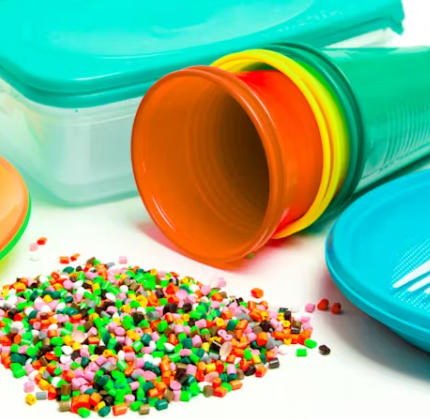
A Masterbatch is a concentrated mixture of pigments and/or additives encapsulated in a polymer carrier, designed to be let down into a base resin at a defined percentage. Color Masterbatch and additive Masterbatch together control not only color strength but also haze, gloss, and light diffusion in the final plastic.[2][9][3][10]
For semi-opaque plastic material, the Masterbatch package typically combines carefully selected pigments with scattering agents or fillers to achieve the desired balance of brightness and privacy. By adjusting Masterbatch concentration from roughly 1–5%, processors can move from nearly clear, to semi-opaque, to fully opaque appearances.[11][12][4][2]
To create a semi-opaque plastic material “Max”, the team must first translate visual targets into basic optical categories.[7][1]
- Transparent: High light transmission with minimal scattering; objects behind the plastic are clearly visible.[1][7]
- Translucent (semi-opaque): Moderate transmission and strong scattering; objects appear blurred while light still passes.[5][1]
- Opaque: No effective light transmission; the material blocks all vision through it.[13][7]
Semi-opaque design focuses on tuning the translucent zone where Masterbatch pigments, particle size, and dispersion govern how much light is scattered inside the plastic. Small particles and clear carriers shift materials towards higher transmission, while higher pigment loading and specific scattering fillers increase haze and opacity.[14][3][4]
The base polymer defines mechanical properties, process window, and intrinsic clarity level before adding Masterbatch. Common choices for semi-opaque parts include:[15][8]
- Polypropylene (PP): Widely used for consumer packaging, caps, containers, and injection parts; works with a broad range of Masterbatch systems.[8][15]
- Polyethylene (PE): Popular in films, squeeze bottles, and flexible packaging, where semi-opaque white or colored films are often produced via Masterbatch.[9][15]
- PET and Copolyesters (e.g., Tritan-type resins): Naturally clear polymers that can be easily tuned from transparent to semi-opaque using Masterbatch.[14][11]
- Polycarbonate (PC) and Engineering Plastics: Used for impact-resistant diffusers and technical covers where semi-opaque Masterbatch formulations must preserve impact strength.[16][5]
The carrier resin of the Masterbatch should be compatible with the base polymer to ensure good dispersion and avoid phase separation or haze defects beyond the desired optical effect.[3][8]
Color Masterbatch is central to semi-opaque plastic design because it defines hue, saturation, and lightness as well as the feeling of depth within the part. Important design parameters include:[12][10]
- Pigment type: Organic pigments offer bright, clean colors; inorganic pigments (such as TiO₂) provide opacity and high hiding power.[3][12]
- Pigment concentration: Higher concentration Masterbatch allows lower let-down levels, giving precise control over semi-opaque intensity.[4][2]
- Particle size and distribution: Fine, well-dispersed pigments minimize undesired streaks while enabling controlled haze and soft diffusion.[4][14]
Special effect Masterbatch can also introduce pearlescent, metallic, or soft-touch visual effects while maintaining semi-opaque behavior, especially when combined with surface texture or mold design.[17][10]
Creating a semi-opaque plastic material “Max” means maximizing control over transmission, haze, and gloss rather than just adding more pigment. Key levers include:[6][1]
- Masterbatch load rate: Increasing Masterbatch dosage raises color intensity and typically increases haze, but excessive loading may cause defects.[2][4]
- Scattering agents: Additive Masterbatch containing fillers or diffusing agents boosts light scattering inside the polymer to create a soft, frosted look.[6][3]
- Clear vs translucent vs opaque Masterbatch: Transparent color Masterbatch maintains high transmission, while standard color Masterbatch is used for semi-opaque and opaque results depending on dosage.[11][4]
By standardizing target values for % light transmission and haze, development teams can correlate Masterbatch formulations directly to measurable optical performance.[14][1]
The percentage of Masterbatch is usually defined as a weight ratio between Masterbatch and base resin, typically in the 2–5% range for most applications. For semi-opaque plastic materials, dosage is often fine-tuned in smaller steps to avoid overshooting the desired effect.[15][2][4]
- Lightly tinted, near-transparent parts may use around 1–3% color Masterbatch, especially with high-concentration products.[2][4]
- Semi-opaque, frosted, or privacy parts frequently operate closer to 3–5% color Masterbatch, sometimes combined with additive Masterbatch for diffusion.[11][2]
Accurate calculation of Masterbatch percentage and consistent dosing on the production line are essential to avoid color variation, streaks, and undesired opacity changes from batch to batch.[15][2]
Semi-opaque plastics formulated with Masterbatch can be processed via extrusion, injection molding, blow molding, or film casting, but each method has its own sensitivity to dispersion and temperature.[18][2]
- Extrusion and film blowing: Screw design, back pressure, and melt temperature all affect Masterbatch dispersion and final haze uniformity across the film.[4][2]
- Injection molding: Proper mixing at the feed throat and within the screw prevents swirls or color streaks; residence time control helps maintain consistent Masterbatch performance.[10][15]
In both cases, uniform pre-mixing of Masterbatch with virgin and recycled resin, as well as precise gravimetric feeding, is critical for stable semi-opaque appearance over long production runs.[2][15]
To create a semi-opaque plastic material “Max”, color alone is not enough; the material also needs performance additives to ensure the appearance and properties remain stable over time. Typical additive Masterbatch solutions include:[3][6]
- UV stabilizer Masterbatch: Protects color and mechanical strength against sunlight, especially for outdoor semi-opaque parts.[6][15]
- Anti-oxidant and thermal stabilizer Masterbatch: Prevents yellowing, brittleness, and degradation during processing and long-term use.[16][3]
- Anti-block, slip, and processing aid Masterbatch: Improves surface feel, demolding, film winding, or flow without compromising optical design.[9][10]
Combining color and additive Masterbatch into a single solution may be convenient, but many high-performance applications prefer separate Masterbatch streams for more flexible optimization.[9][3]
The perceived “semi-opaque” character of a plastic part is strongly influenced by surface finish and mold texture in addition to internal Masterbatch design. A glossy surface reflects light specularly, often making materials look clearer, while matte or etched surfaces enhance the diffused and frosted effect.[17][10][6]
Masterbatch technology and mold design work together here:
- Smooth surfaces with low-scattering Masterbatch create a subtle translucent appearance.
- Rough or matte surfaces combined with scattering-rich Masterbatch produce strong privacy and soft light diffusion.[17][6]
Coordinating Masterbatch formulation with tooling designers ensures that the semi-opaque plastic material reaches its maximum aesthetic potential in the final product.[10][17]
To guarantee repeatable semi-opaque materials, manufacturers rely on laboratory testing and in-line quality control linked to Masterbatch specifications. Important tests include:[3][2]
- Spectrophotometry and color measurement (CIELAB values) to track color drift and ensure Masterbatch batches stay within tolerance.[15][3]
- Haze and light transmission measurements to confirm that the semi-opaque effect matches the design target.[1][14]
- Mechanical property and aging tests to evaluate the impact of color and additive Masterbatch on strength, impact, and UV stability.[16][6]
Masterbatch suppliers that provide consistent formulation, tight pigment control, and technical support simplify the process of scaling semi-opaque formulations from lab to full production.[19][9]
Semi-opaque plastics are well-suited to incorporating recycled resin because the diffused appearance masks minor imperfections and color variations. Properly designed Masterbatch solutions can adjust shade, opacity, and stabilizer levels to compensate for variability in recyclate streams.[7][9][3][15]
- High-efficiency color Masterbatch reduces overall pigment usage, which can lower environmental impact and cost.[4][2]
- Additive Masterbatch packages can help recycled semi-opaque materials maintain UV resistance and mechanical integrity over multiple life cycles.[16][3]
By combining virgin and recycled polymers with optimized Masterbatch, producers can create semi-opaque plastic materials that meet both performance and sustainability goals without compromising visual quality.[12][9]
To summarize the practical roadmap, a Masterbatch-driven development project for semi-opaque plastic material “Max” typically follows these steps.[2][15]
- Desired color (hue, lightness, saturation) and semi-opaque level (target haze and transmission).[5][1]
- Mechanical, thermal, and UV performance requirements based on application and environment.[6][15]
- Choose the most suitable base resin (PP, PE, PET, etc.) for the application.[8][9]
- Select compatible color Masterbatch and additive Masterbatch carriers.[8][3]
- Work with Masterbatch experts to define pigment types, concentrations, and scattering agents for semi-opaque behavior.[12][10]
- Determine the starting dosage range, typically 2–5% Masterbatch, with small increments for fine-tuning.[4][2]
- Produce samples via the chosen process (extrusion, injection, etc.) and measure color, haze, and transmission.[14][1]
- Adjust Masterbatch percentage and processing parameters to eliminate streaks and achieve uniform semi-opaque appearance.[15][2]
- Conduct aging, UV, and mechanical tests to ensure that the semi-opaque Masterbatch solution meets durability targets.[16][6]
- Standardize Masterbatch codes, dosing settings, and quality control procedures for mass production.[3][2]
By following this structured approach, manufacturers can transform design ideas into robust semi-opaque plastics using advanced Masterbatch technology tailored to their specific industries and products.[19][9]
Creating a high-performance semi-opaque plastic material “Max” is fundamentally a question of mastering color and additive Masterbatch technology in combination with polymer selection, processing, and surface design. By precisely controlling Masterbatch composition, dosage, and dispersion, manufacturers can tune light transmission, haze, color, and durability to achieve premium semi-opaque aesthetics with reliable, scalable performance across packaging, consumer goods, lighting, and technical applications.[10][1][2][3]
Semi-opaque plastic material is a translucent polymer that allows light to pass while scattering it, so objects behind it appear blurred rather than clearly visible. This effect is typically achieved by combining base resins with carefully formulated color and additive Masterbatch to control haze and light diffusion.[7][1][3][4]
Masterbatch influences semi-opaque effects by delivering concentrated pigments and additives that determine color depth, light scattering, and overall opacity. By adjusting Masterbatch percentage and pigment formulation, engineers can move from lightly tinted to strongly semi-opaque plastics while maintaining mechanical performance.[12][2][3][4]
For most applications, a Masterbatch dosage between about 2–5% of the total polymer blend is common, with precise levels depending on pigment strength and desired opacity. Lightly tinted materials may use around 1–3%, while stronger semi-opaque effects often require closer to 3–5% Masterbatch plus, if needed, diffusing additives.[11][2][15]
Yes, semi-opaque designs are often ideal for blends containing recycled resin because the diffused appearance can hide small color or contamination variations. With the right color and stabilizer Masterbatch, recycled-based semi-opaque plastics can still achieve consistent appearance and reliable performance.[9][7][3][15]
Surface texture and mold design affect how light interacts with the plastic surface, amplifying or softening the semi-opaque effect created by Masterbatch. Glossy surfaces tend to look more transparent, while matte or etched textures enhance the frosted, diffused look and perceived privacy.[17][10][6]
[1](https://www.unionfab.com/blog/2024/05/clear-vs-translucent-vs-transparent)
[2](https://www.charmingmb.com/2025/11/06/what-is-the-percentage-of-master-batch-2025-complete-guide/)
[3](https://www.sciencedirect.com/topics/engineering/masterbatch)
[4](https://www.3devo.com/blog/complete-guide-plastic-pigments-how-colorants-work)
[5](https://www.machining-custom.com/blog/translucent-vs-transparent-vs-opaque-parts.html)
[6](https://www.elumtools.com/docs/2021/Content/Using%20ElumTools/Transparent%20vs%20Translucent.htm)
[7](https://www.linkedin.com/pulse/transparency-vs-translucency-key-differences-yy3he)
[8](https://www.nexamchemical.com/products/colour-masterbatches/)
[9](https://danalubes.com/polymer_masterbatch/)
[10](https://alokmasterbatches.home.blog/2025/03/18/how-masterbatch-helps-achieve-the-desired-surface-finish-in-plastics/)
[11](https://www.mddionline.com/medical-device-markets/color-masterbatches-available-in-translucent-and-opaque-formulations)
[12](https://europlas.com.vn/en-US/blog-1/the-excellent-colorant-for-plastic-is-the-color-masterbatch-of-eup-2)
[13](https://www.facebook.com/groups/wintersown/posts/10170640910545506/)
[14](https://www.alibaba.com/showroom/clear-masterbatch.html)
[15](https://www.ulprospector.com/knowledge/9819/pe-choosing-plastic-colorants/)
[16](https://www.kerkeextruder.com/masterbatch-production/pei-masterbatch/)
[17](https://www.lyondellbasell.com/globalassets/sites/2022/mme-2022/presentations/6.-bringing-color-to-your-designs-with-masterbatch-advanced-solutions.pdf)
[18](https://pigment.en.made-in-china.com/product/eFgAUVQOCpkM/China-Non-Pollution-Plastic-Colorant-Masterbatch-for-PP-PE-ABS-PS-Bulk-Plastic-Pellets-Master-Batch.html)
[19](https://www.ampacet.com)
[20](https://www.linkedin.com/pulse/how-transparent-color-masterbatch-works-one-simple-mzdjc)


