


close
Choose Your Site
Global
Social Media


Views: 222 Author: Rebecca Publish Time: 2026-01-05 Origin: Site


Content Menu
● What is Hardness in Plastics?
● Importance of Hardness Testing in Plastic Manufacturing
● Factors That Influence Plastic Hardness
● Methods to Measure Plastic Hardness
>> 4. Vickers and Brinell Hardness Tests
● Step-by-Step Guide to Checking Plastic Hardness
● Role of Masterbatch in Hardness Modification
>> Types of Masterbatch that affect hardness:
● Standards for Hardness Testing of Plastics
● Best Practices for Accurate Testing
● Applications of Hardness Measurement
● FAQs
>> 1. What is the most common method to measure plastic hardness?
>> 2. How does Masterbatch affect hardness in plastics?
>> 3. Can hardness vary within the same plastic product?
>> 4. What hardness scale should be used for polypropylene?
>> 5. Why should hardness testing be standardized?
Understanding the hardness of plastic materials is essential for designing reliable products and ensuring consistent quality. For manufacturers dealing with plastics and Masterbatch formulations, hardness testing provides insights into mechanical performance, surface resistance, and usability under stress. This article explores the methods, importance, and best practices for measuring the hardness of plastic materials.
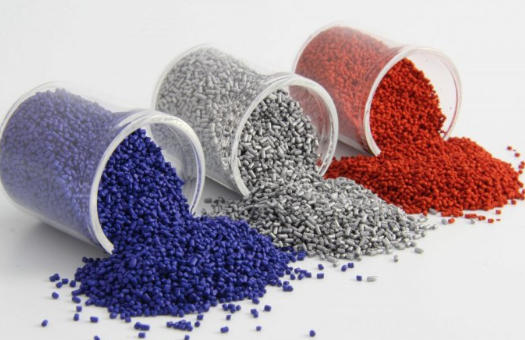
Hardness refers to the ability of a plastic material to resist surface deformation, indentation, or scratching. Unlike metals, the hardness of plastics depends on molecular structure, filler content, and temperature conditions. In Masterbatch formulations, hardness can also vary depending on pigment type, carrier resin, and additive concentration.
Hardness testing provides valuable data for comparing materials, predicting wear resistance, and optimizing processing conditions. For instance, a harder polymer may suit high-impact applications, while softer grades might be ideal for flexible packaging or wire insulation.
Hardness testing helps plastic manufacturers establish consistent product quality and predict long-term performance. In Masterbatch production, measuring hardness ensures that additives and pigments do not negatively affect the mechanical integrity of the base polymer.
- Quality control: Ensures batch-to-batch consistency in Masterbatch formulations.
- Material selection: Helps engineers choose appropriate polymers for specific applications.
- Process optimization: Monitors how extrusion temperature and cooling rates affect final hardness.
- End-use prediction: Indicates potential for wear, abrasion, or crack resistance in finished parts.
- Compliance: Confirms adherence to industry standards (ASTM, ISO, DIN, etc.).
Several factors determine the hardness value of a plastic material or a compound containing Masterbatch. These include:
- Polymer type: Thermoplastics like polypropylene (PP) are relatively soft, while engineering plastics such as polycarbonate (PC) or acrylonitrile butadiene styrene (ABS) are harder.
- Additives and fillers: The inclusion of pigments or reinforcing agents in Masterbatch can alter hardness. For example, calcium carbonate-filled masterbatches often increase rigidity.
- Processing parameters: Cooling rate, pressure, and extrusion temperature impact polymer crystallinity and thus hardness.
- Aging and exposure: UV light, heat, or chemical exposure can degrade surfaces, reducing hardness over time.
- Moisture absorption: Hygroscopic polymers like nylon soften when moisture content rises.
There are multiple standardized techniques to measure hardness in plastics. The choice of method depends on the material type, test conditions, and required accuracy.
The Shore durometer test is the most common method for determining plastic hardness. It measures the resistance of material to indentation from a spring-loaded indenter under a specific force.
- Shore A: Used for softer plastics, such as flexible PVC or rubberized materials.
- Shore D: Used for harder plastics like HDPE, ABS, or polypropylene.
To test hardness, the durometer is pressed firmly against the sample for a few seconds, and the reading is taken on a scale from 0 to 100. Consistency of Masterbatch dispersion in the polymer matrix helps achieve uniform hardness results across test areas.
The Rockwell test measures indentation hardness under a larger load compared to Shore testing. It uses a steel ball or cone penetrator with specific weights. The depth of indentation is converted into Rockwell hardness values (e.g., HRR, HRM, HRL).
This method is ideal for relatively thick, rigid samples like solid molded plastics or Masterbatch-polymer composites. Although less common than Shore testing for plastics, it provides a more robust characterization of mechanical behavior.
The Barcol test is performed with a handheld device that measures resistance to indentation. It is often used for measuring hardness of reinforced plastics and thermosets, including fiber-reinforced compounds that incorporate Masterbatch for color or UV protection.
Because of its portability and ease, Barcol testing is ideal for on-site inspections and production quality checks.
These microhardness tests use a diamond indenter and microscopy to measure indentation size under precise loads. While not commonly used for everyday plastic evaluation, they can help analyze micro-scale hardness variations in Masterbatch dispersion within polymer films or sheets.
For high-precision research, nanoindentation measures hardness and elastic modulus at microscopic levels. This is particularly useful for high-performance polymers or nanocomposite Masterbatch systems where microstructure plays a major role in mechanical behavior.
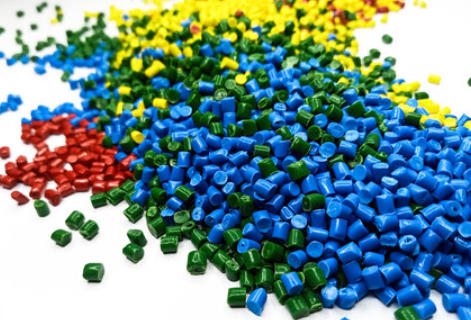
Follow this simple process to correctly measure plastic hardness, ensuring repeatability and standard compliance.
1. Prepare the sample: Cut the plastic specimen to a flat size according to ASTM D2240 (for Shore hardness). Avoid defects or voids caused by poor Masterbatch dispersion.
2. Condition the specimen: Maintain environmental conditions (23°C and 50% RH) before testing to ensure reliability.
3. Select test method: Choose Shore A, D, or Rockwell hardness based on the material's rigidity.
4. Perform indentation: Apply the indenter with the required force and duration (typically 15 seconds).
5. Record and average results: Take multiple readings from different locations and calculate the average for accuracy.
6. Analyze data: Compare the measured hardness with expected values based on polymer grade and Masterbatch recipe.
One of the crucial reasons hardness varies among plastic products lies in Masterbatch composition. Masterbatches not only deliver color or functionality but also influence physical properties through their carrier resin and additive content.
- Color Masterbatch: Pigment concentration can influence micro-distribution and rigidity. Some inorganic pigments increase surface hardness.
- Filler Masterbatch: Designed with calcium carbonate, talc, or glass fibers, these grades significantly improve hardness, stiffness, and dimensional stability.
- Additive Masterbatch: UV stabilizers, anti-scratch agents, or flame retardants can modify surface hardness indirectly by changing polymer structure or crystallinity.
- Functional Masterbatch: Tailored for anti-wear or high-impact applications, improving long-term performance.
By controlling Masterbatch formulation, engineers can fine-tune polymer hardness to suit specific product requirements — from flexible packaging films to rigid automotive parts.
Common international testing standards include:
- ASTM D2240: Standard test for Shore hardness (A and D scales).
- ASTM D785: Specifies Rockwell hardness testing procedure.
- ISO 868: Covers indentation hardness tests for plastics.
- ISO 2039: Defines Rockwell hardness testing for thermoplastics.
- ISO 7619: Applies to elastomers and similar soft plastics.
Manufacturers using Masterbatch in export-grade products must comply with these standards to ensure acceptance in global markets.
To obtain reliable hardness data, consider the following:
- Use smooth, clean surfaces free from dust or oil.
- Maintain consistent temperature and humidity during testing.
- Avoid testing on curved or uneven areas.
- Re-test after 24 hours to account for post-molding relaxation in polymers containing Masterbatch.
- Calibrate durometers or hardness testers regularly.
Consistency and sample preparation are especially important when testing colored or additive-filled plastics, as Masterbatch dispersion directly impacts local hardness behavior.
Hardness testing serves diverse industries and product lines, including:
- Automotive parts: Ensures abrasion resistance of dashboards, trims, and seals.
- Packaging materials: Evaluates film flexibility and puncture resistance of plastic bags and containers.
- Electrical enclosures: Confirms surface strength and thermal stability.
- Construction materials: Validates durability of pipes, fittings, and profiles containing filler Masterbatch.
- Consumer goods: Maintains consistent tactile feel in toys, appliances, and housings.
In all these sectors, hardness affects not only product performance but also processing conditions such as extrusion pressure and cooling speed.
Understanding how to check the hardness of plastic materials is fundamental for maintaining product standards, achieving consistent quality, and optimizing performance. Whether measuring hardness through Shore, Rockwell, or nanoindentation tests, each method offers unique insights into the behavior of polymers and Masterbatch-based compounds. By controlling formulation, processing, and testing conditions, manufacturers can ensure that the desired hardness aligns with both performance expectations and aesthetic requirements.
The Shore hardness test is the most widely used method, especially the Shore A and Shore D scales, which measure resistance to indentation for soft and hard plastics respectively.
Masterbatch affects hardness depending on its type and composition. Filler masterbatches increase rigidity and hardness, while certain additive masterbatches may slightly reduce hardness by enhancing flexibility.
Yes. Uneven Masterbatch dispersion, cooling rate differences, or inconsistent molding pressure can create localized hardness variations within a single product.
Polypropylene typically uses the Shore D scale for testing, as it is a medium-hard thermoplastic commonly found in packaging and automotive parts.
Following standardized testing (like ASTM D2240 or ISO 868) ensures consistent, comparable data across production batches and international quality assurance systems.


