


close
Choose Your Site
Global
Social Media


Views: 222 Author: Rebecca Publish Time: 2025-12-26 Origin: Site


Content Menu
● Types of PP Masterbatch and Their Applications
● The Manufacturing Process of PP Masterbatch
● How PP Masterbatch Enhances Plastic Product Quality
>> 1. Superior Color Dispersion and Consistency
>> 2. Improved Processing Efficiency
>> 3. Enhanced Mechanical Strength
>> 4. Augmented UV and Thermal Stability
>> 5. Environmental and Economic Advantages
● Applications of PP Masterbatch in Modern Industries
● Quality Control and Standardization in PP Masterbatch Production
● Trends and Innovations in PP Masterbatch Technology
● FAQ
>> 1. What is the main function of PP Masterbatch?
>> 2. How is PP Masterbatch different from pigment powder?
>> 3. Can PP Masterbatch be used in recycled plastics?
>> 4. What factors affect the Masterbatch dosage rate?
>> 5. How to select the right Masterbatch for a project?
In modern plastic manufacturing, Polypropylene (PP) Masterbatch has become an essential additive in improving the performance, color, and durability of plastic products. Its use spans across industries such as packaging, automotive, consumer goods, and construction materials. Beyond mere color enhancement, Masterbatch plays a crucial role in achieving consistency, cost efficiency, and material optimization during polymer processing. This article explores how PP Masterbatch enhances product quality, its types, manufacturing process, and the numerous benefits it delivers to global plastic manufacturers.

PP Masterbatch is a concentrated mixture of pigments, additives, and carrier resin—typically polypropylene—formulated to modify the base polymer's physical and chemical properties. It is supplied in granular or pellet form, making it easy to distribute and mix into raw materials during processing.
Manufacturers use Masterbatch to improve plastic performance without altering the original polymer matrix significantly. As a result, PP Masterbatch ensures consistent color dispersion, UV resistance, flame retardancy, and other functional enhancements needed for advanced product applications.
PP Masterbatch comes in various forms, each designed to meet specific requirements of industries and products. The main categories include:
Color Masterbatch provides vibrant and uniform color distribution in plastic products. Using precision-matched pigments, this Masterbatch eliminates color streaking and enhances aesthetic quality. It is widely used in consumer packaging, toys, and household items.
Composed mainly of titanium dioxide (TiO₂), White Masterbatch delivers high opacity, brightness, and UV protection. It is essential in film, fiber, and injection-molded products requiring superior whiteness and light resistance.
Black Masterbatch, containing high-quality carbon black, ensures deep coloration, conductivity, and UV stabilization. It is ideal for industrial containers, automotive parts, and cable sheathing.
This category includes UV stabilizers, antistatic agents, flame retardants, and anti-block additives. Additive Masterbatch enhances processing characteristics and extends the lifespan of final plastic parts.
Filler Masterbatch incorporates calcium carbonate or talc to increase rigidity, reduce production cost, and improve thermal properties of plastics. It's commonly used in PP woven bags, films, and rigid containers.
Producing high-quality Masterbatch involves several precise steps to ensure homogeneity and performance consistency.
1. Ingredient Selection: Pigments, additives, and carrier resins are chosen based on compatibility and functional requirements.
2. Premixing: The raw materials are pre-mixed in specific ratios to achieve uniform distribution.
3. Extrusion: The mixture is melt-compounded in a twin-screw extruder at high temperature to ensure proper dispersion of additives within the polymer carrier.
4. Cooling and Pelletizing: The molten compound is cooled and cut into uniform granules or pellets.
5. Quality Testing: The Masterbatch is subjected to dispersion, color consistency, and mechanical property tests before packaging and shipment.
A strictly controlled manufacturing process helps guarantee that each batch of Masterbatch can consistently improve processing stability and final product quality.
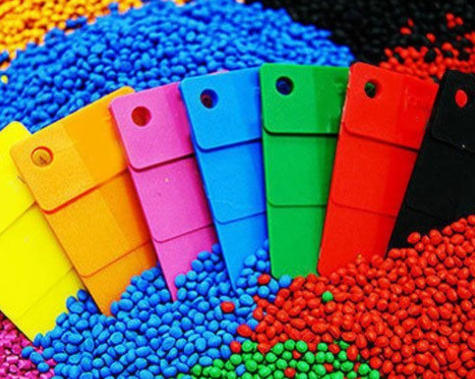
The addition of PP Masterbatch provides multiple improvements to plastic performance—physical, chemical, and aesthetic. Below are the key ways it enhances overall quality.
Masterbatch ensures accurate and uniform color distribution throughout the polymer matrix. Unlike direct pigment blending, it eliminates uneven coloring and streaks, helping manufacturers achieve perfectly matched tones across production lots.
Masterbatch simplifies manufacturing by allowing easier metering, reduced wastage, and faster coloring changes. The dry form of Masterbatch prevents moisture-related defects and ensures cleaner processing lines, reducing downtime.
By improving polymer structure during mixing, certain types of Masterbatch—especially filler and reinforcement grades—can increase a product's tensile strength, impact resistance, and dimensional stability. This is crucial for packaging, automotive components, and durable goods.
Outdoor products like garden furniture, agricultural films, and automotive parts often degrade under sunlight. UV stabilizer Masterbatch protects polymers from photodegradation, preventing color fading and loss of strength caused by ultraviolet exposure.
Many PP Masterbatch products are made from recyclable carriers, promoting sustainable production. Furthermore, using concentrated Masterbatch instead of direct pigments reduces overall pigment consumption, resulting in cost savings without compromising quality.
PP Masterbatch plays a vital role across numerous industries:
- Packaging: Enhances product shelf appeal through bright, consistent colors and improved surface finish.
- Automotive: Used for dashboards, trims, and cables, providing durability and UV resistance.
- Construction: Adds weather resistance and flame retardancy to pipes, sheets, and fittings.
- Textiles and Fibers: Enhances fiber coloration, softness, and UV protection for outdoor fabrics.
- Consumer Goods: Ensures aesthetic appeal and sustainability for household plastic items.
Each sector benefits from tailored Masterbatch formulations designed to meet performance and regulatory standards worldwide.
For manufacturers, ensuring consistency is paramount. Advanced laboratories test PP Masterbatch samples for:
- Dispersion Quality: To measure how uniformly pigments or additives distribute through the host polymer.
- Melt Flow Index (MFI): Ensures compatibility with customer processing equipment.
- Heat Stability Tests: Determines resistance to thermal degradation during molding.
- Color Measurement: Uses spectrophotometers for accurate tone matching.
- Accelerated Weather Testing: Evaluates UV and moisture resistance in simulated outdoor conditions.
Strict adherence to ISO and RoHS standards guarantees safety, stability, and performance reliability of every Masterbatch product.
The global market for Masterbatch continues to evolve with sustainability and high-performance needs at its core. Recent innovations include:
- Biodegradable Masterbatch: Designed for bio-based PP materials to support eco-friendly product lines.
- Antimicrobial Masterbatch: Incorporates silver ions or organic compounds to inhibit bacteria growth, ideal for food packaging and medical products.
- Nanocomposite Fillers: Adds nano-level additives to enhance strength and barrier properties.
- Laser Marking Masterbatch: Enables precise engraving on plastic surfaces without compromising aesthetics.
These advancements reflect the industry's shift toward smart, functional, and sustainable plastics powered by next-generation Masterbatch technology.
PP Masterbatch is more than a colorant—it's an essential engineering solution that enhances every aspect of plastic manufacturing, from process efficiency to product lifespan. By improving color consistency, mechanical performance, UV resistance, and sustainability, PP Masterbatch continues to redefine the standards of modern plastics. Manufacturers who integrate advanced Masterbatch formulations not only achieve superior product quality but also strengthen their competitive edge in global markets.
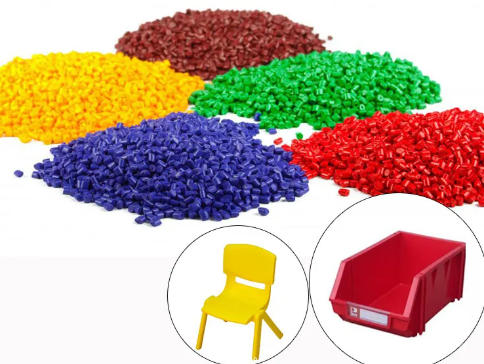
PP Masterbatch modifies the properties of polypropylene plastics by adding colorants or functional additives. It enhances color uniformity, UV protection, and mechanical performance without changing the base polymer composition.
Unlike pigments that are difficult to disperse, Masterbatch provides pre-dispersed, uniform color and additive distribution in pellet form. It's cleaner, safer to handle, and offers better process control.
Yes, PP Masterbatch suits both virgin and recycled materials. It improves appearance, restores mechanical properties, and helps achieve consistency between recycled batches.
Dosage depends on pigment concentration, desired color intensity, and processing temperature. Generally, color Masterbatch is used at 1–5% concentration, while additive types vary based on application requirements.
Choosing the suitable Masterbatch involves considering polymer type, end-use environment, required functionalities (e.g., UV stabilization, flame retardancy), and processing method (injection, extrusion, or blow molding).


