


close
Choose Your Site
Global
Social Media


Views: 222 Author: Rebecca Publish Time: 2026-02-08 Origin: Site


Content Menu
● Understanding PE Masterbatch
● What Causes UV Degradation in Plastics?
● The Role of UV Stabilizers in PE Masterbatch
● How PE Masterbatch Improves UV Resistance
>> 1. Consistent Distribution of Additives
>> 3. Synergistic Stabilization Effect
>> 4. Extended Lifespan and Durability
>> 5. Cost-Effective Additive Management
● Key Applications of UV-Resistant PE Masterbatch
● Customization and Innovation in PE Masterbatch Design
● Factors to Consider When Choosing a UV-Resistant PE Masterbatch
● Trends in UV Stabilization Technology
● FAQ about PE Masterbatch and UV Resistance
>> 1. What is PE Masterbatch made of?
>> 2. How does UV-resistant Masterbatch protect outdoor products?
>> 3. Can PE Masterbatch be used with other resins?
>> 4. How is the dosage of Masterbatch determined?
>> 5. Is UV Masterbatch recyclable?
Polyethylene (PE) Masterbatch plays a pivotal role in extending the performance, durability, and lifespan of outdoor plastic products. As global demand for weather-resistant materials increases, manufacturers turn to specialized Masterbatch formulations to combat UV degradation. In this article, we'll explore how PE Masterbatch enhances UV resistance, what makes UV stabilizers effective, and how customization ensures long-term outdoor performance for various industrial and consumer applications.
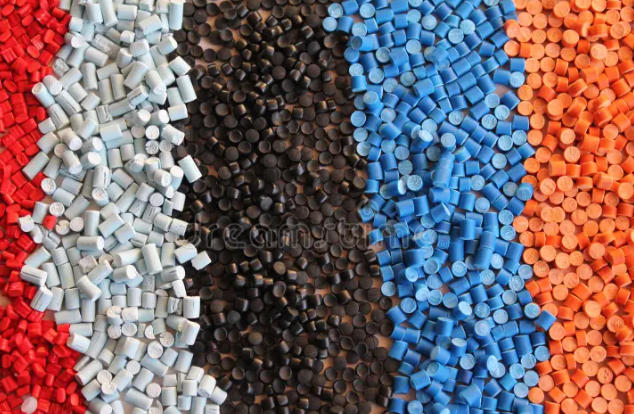
PE Masterbatch is a concentrated mixture of additives and pigments encapsulated within a polyethylene carrier resin. It is used to modify the physical or chemical properties of base plastics, improving aspects such as color stability, processing efficiency, and resistance to external factors like sunlight and heat.
By dispersing functional additives evenly throughout the polymer matrix, Masterbatch ensures consistent quality and long-term stability across the final product. Whether used for films, pipes, sheets, or molded parts, PE Masterbatch offers an economical and effective method to tailor plastic properties without altering the base resin.
Outdoor exposure accelerates the aging process of plastics. Ultraviolet (UV) radiation from sunlight initiates a chemical reaction known as photooxidation. This process breaks down polymer chains, leading to:
- Brittleness and cracking over time
- Discoloration and surface fading
- Loss of tensile strength and flexibility
- Reduced overall performance and aesthetics
Without adequate UV protection, products such as agricultural films, outdoor furniture, playground components, or building materials deteriorate quickly, requiring frequent replacement and maintenance.
To combat UV degradation, UV stabilizers are incorporated into PE Masterbatch during formulation. These stabilizers absorb or neutralize harmful radiation, preventing damage to polymer chains. Common categories include:
- UV Absorbers (UVA): These compounds absorb UV light and dissipate it as harmless heat, protecting the polymer interior.
- Hindered Amine Light Stabilizers (HALS): HALS work by scavenging free radicals generated by UV exposure, effectively regenerating themselves in the process.
- Antioxidants: Often paired with HALS, antioxidants reduce thermal oxidation that occurs during both processing and outdoor use.
By blending these additives into the Masterbatch, manufacturers can ensure the final plastic maintains its integrity and appearance even after years of outdoor exposure.
When introduced into polyethylene and other compatible resins, PE Masterbatch enhances UV resistance through multiple mechanisms:
The Masterbatch carrier ensures each polymer pellet contains a uniform concentration of UV stabilizers. This even dispersion enhances performance consistency across the finished product, reducing weak points susceptible to UV damage.
PE Masterbatch offers improved melt flow and easier mixing during extrusion or molding, ensuring that UV additives are well-integrated without degradation. Proper formulation minimizes additive loss during high-temperature processing.
When UVA and HALS are incorporated together in a PE Masterbatch, they perform synergistically. The UV absorber handles radiation at the surface, while HALS prevents deeper polymer degradation by neutralizing free radicals.
With enhanced stabilization, plastics can survive long-term exposure in extreme climates—sunny, humid, or high-altitude environments—maintaining color, flexibility, and mechanical strength for years.
Using PE Masterbatch simplifies the production process. Instead of handling loose powders or multiple additives, it allows efficient dosing during compounding, minimizing material waste and reducing errors.
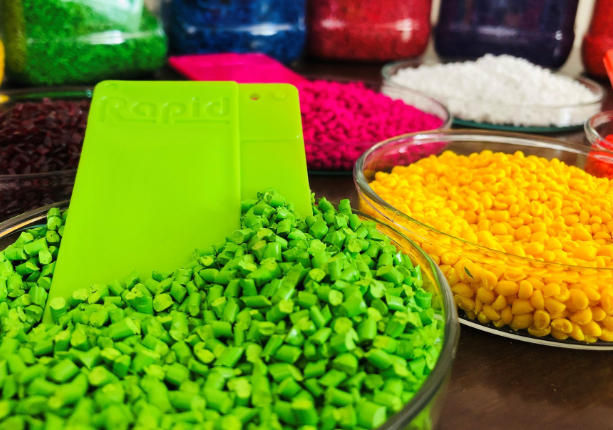
UV-resistant PE Masterbatch is widely applied across industries demanding prolonged sunlight exposure:
- Agricultural Films: Protection against solar radiation extends the usable life of greenhouse and mulch films.
- Outdoor Furniture: Prevents fading and structural weakness in plastic chairs, tables, and decking materials.
- Pipes and Cables: Guards against environmental cracking in exposed pipelines and cable sheaths.
- Automotive Components: Stabilized polymers withstand intense sunlight and temperature fluctuations.
- Building Materials: Used in roofing sheets, facades, and outdoor fittings that require structural stability.
Each application benefits from a custom-engineered Masterbatch formulation, ensuring optimal balance between cost and performance.
Modern Masterbatch development emphasizes adaptability. Different geographic regions experience diverse UV intensities, so manufacturers often design specialized UV formulations suitable for local conditions. For instance:
- Tropical regions may require higher HALS concentrations due to stronger, year-round sunlight.
- High-altitude zones demand formulations resistant to elevated UV radiation levels.
- Arid climates benefit from Masterbatch that also contains anti-thermal oxidation additives.
Advanced compounding technology allows precise customization, offering combinations of UV stabilizers, colorants, and processing aids that suit both performance and visual requirements. Custom PE Masterbatch solutions are therefore crucial for global outdoor product manufacturers seeking reliability and consistency.
Before selecting a suitable Masterbatch, manufacturers should evaluate:
- End-use environment: Duration and intensity of sunlight exposure.
- Processing method: Extrusion, injection molding, or blow molding each require different melt characteristics.
- Base resin compatibility: Ensuring uniform dispersion without phase separation.
- Desired product lifespan: From seasonal agricultural films to 10+ year outdoor installations.
- Regulatory compliance: Meeting RoHS, REACH, and environmental standards.
Partnering with a professional Masterbatch supplier ensures technical support, performance testing, and tailored product design that meets the application's specific requirements.
The Masterbatch industry continues to innovate toward sustainability and higher performance. Current research focuses on:
- Nano-dispersed additives: Enhancing UV-blocking efficiency through improved particle size control.
- Biobased stabilizers: Reducing environmental impact with renewable compounds.
- Multifunctional Masterbatch: Combining UV resistance with antistatic, flame-retardant, or antimicrobial functions.
- Recycling compatibility: Ensuring stabilizers maintain effectiveness through multiple reprocessing cycles.
These advancements are aligning with circular economy goals while maintaining the protective integrity of outdoor plastic products.
In outdoor applications, UV degradation is one of the most significant challenges plastic products face. PE Masterbatch provides a powerful, flexible, and cost-effective solution by incorporating advanced UV stabilizers directly into the polymer structure. Through optimized formulation, Masterbatch ensures uniform additive dispersion, improved durability, color stability, and long-term performance under harsh sunlight. For manufacturers seeking extended product lifespans and superior mechanical properties, investing in a custom UV-resistant PE Masterbatch is both a technical and economic advantage.
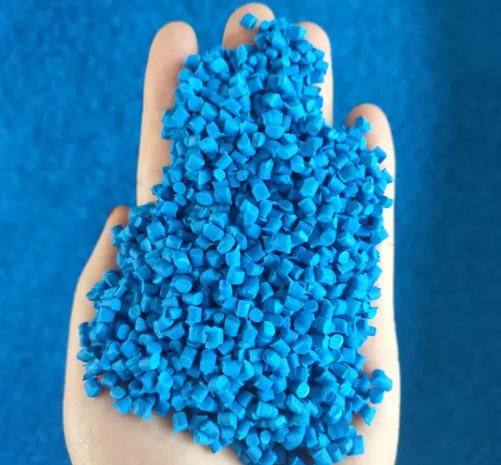
PE Masterbatch consists of a polyethylene carrier resin loaded with functional additives and pigments, allowing easy mixing and uniform dispersion in base polymers.
The Masterbatch contains UV absorbers and HALS that intercept harmful radiation and neutralize free radicals, preventing polymer degradation and discoloration.
Yes, PE-based Masterbatch can often be used with compatible polyolefins like PP or EVA, though matching resin types ensures better dispersion and bonding.
The recommended addition rate usually ranges between 1% and 5%, depending on the desired protection level, processing conditions, and exposure duration.
Yes. High-quality formulations remain effective through multiple recycling cycles, maintaining basic UV resistance while supporting sustainable production.


