


close
Choose Your Site
Global
Social Media


Views: 222 Author: Rebecca Publish Time: 2026-01-22 Origin: Site


Content Menu
● Why PE Masterbatch Matters in Plastic Production
● The Functionality of PE Masterbatch in Plastics
>> 1. Color Consistency and Aesthetic Appeal
>> 2. Mechanical Strength and Durability
>> 3. Process Optimization and Productivity
>> 4. Environmental and Recyclability Benefits
● Main Types of PE Masterbatch and Their Applications
>> Functional Additive PE Masterbatch
● How PE Masterbatch Improves Product Quality
>> Enhanced Dispersion and Homogeneity
>> Protective Functional Additives
>> Improved Environmental Impact
● Industrial Applications of PE Masterbatch
● Technical Insights: How Masterbatch Integration Works
● Quality Control and Innovation in Masterbatch Production
● Choosing the Right PE Masterbatch Supplier
>> 1. What is the ideal dosing ratio of PE Masterbatch?
>> 2. Can PE Masterbatch be used in recycled materials?
>> 3. Is PE Masterbatch safe for food-contact packaging?
>> 4. How does Masterbatch impact product recyclability?
>> 5. What is the shelf life of PE Masterbatch?
In today's competitive plastic manufacturing industry, achieving superior product performance, color uniformity, and production efficiency is impossible without high-quality Masterbatch formulations. Among various types, PE Masterbatch stands out for its versatility, cost efficiency, and ability to customize physical and aesthetic characteristics in polyethylene-based products.
This article explores what PE Masterbatch is, how it works, and why it has become vital for manufacturers seeking durability, consistency, and innovation in plastic materials.
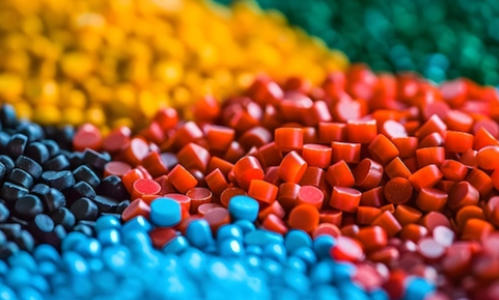
PE Masterbatch refers to a concentrated mixture of pigments, additives, or fillers encapsulated within a polyethylene (PE) carrier resin. It is used to color plastics or impart specific properties such as UV resistance, flame retardancy, anti-static behavior, or improved processability.
During plastic production, a small percentage of PE Masterbatch is blended with natural polymer resin before or during melt processing. The result is a homogenous mixture that provides excellent dispersion of functional additives, ensuring that every part of the final product performs consistently.
There are two primary categories of PE Masterbatch:
- Color Masterbatch: Delivers vibrant and consistent color across plastic products.
- Additive Masterbatch: Modifies or enhances material characteristics such as UV stability, anti-fogging, or anti-microbial effects.
The use of PE Masterbatch significantly simplifies the manufacturing process while improving product quality. Instead of handling and measuring individual additives, processors can rely on a pre-formulated concentrate that ensures precision and repeatability.
Here's why PE Masterbatch plays an indispensable role:
1. Improved Consistency: Ensures uniform dispersion of pigments and additives throughout the polymer matrix.
2. Enhanced Processing Efficiency: Reduces cycle time, improves melt flow, and prevents processing defects.
3. Customization: Allows manufacturers to design materials that meet specific color, strength, or environmental requirements.
4. Cost-effectiveness: Reduces waste, minimizes colorant usage, and optimizes additive performance.
From packaging films to household items, pipes, and automotive components, PE Masterbatch helps producers create superior plastics that meet or exceed industry standards.
Color is often the first factor influencing customer choice. PE Color Masterbatch ensures exact color tones that are vibrant, UV-stable, and free from streaking or mottling. Through precision dispersion, the pigments integrate evenly, maintaining uniformity even after long-term exposure to sunlight or temperature fluctuations.
Adding specialized PE Masterbatch formulations can reinforce mechanical properties such as impact strength, tensile resistance, and flexibility. For example, anti-oxidant and UV stabilizer Masterbatch prevent molecular degradation during processing and outdoor applications, thereby extending the product's lifespan.
Manufacturers constantly seek ways to reduce production costs while maintaining high quality. PE Masterbatch contributes to process stability by enhancing melt flow characteristics, minimizing pigment clustering, and allowing for faster cycle times in injection molding, film extrusion, and blow molding.
Modern PE Masterbatch solutions are increasingly developed with sustainability in mind. By enabling precise additive dosing, they reduce raw material consumption and ensure that recycled polyethylene (rPE) can be effectively recolored or modified—supporting circular economy goals without compromising performance.
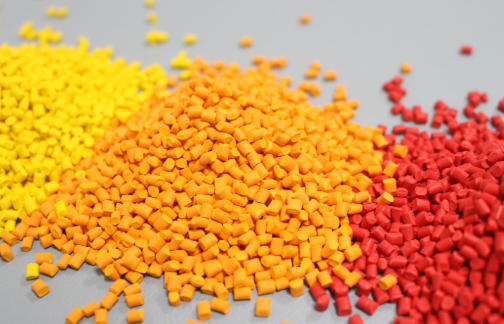
Color PE Masterbatch comes in thousands of formulations tailored to meet industrial design, branding, and aesthetic needs. Applications include:
- Packaging films
- Plastic bottles and containers
- Toys and consumer goods
- Furniture components
By using precision-engineered pigment dispersions, it eliminates issues such as uneven coloring and improves the overall visual quality.
This Masterbatch uses titanium dioxide (TiO₂) as the primary pigment, known for its brightness, opacity, and high UV resistance. Common applications involve:
- Food-grade packaging
- Medical containers
- Films and injection-molded parts
The high TiO₂ concentration in White PE Masterbatch enhances reflectivity and prevents discoloration in outdoor exposure.
Formulated with carbon black, Black PE Masterbatch offers excellent UV protection, weather resistance, and electrical conductivity when needed. It's widely used in:
- Industrial films and sheets
- Agricultural pipes
- Cables and wire coatings
These variants improve performance characteristics beyond color and appearance. Examples include:
- UV Stabilizer Masterbatch: Shields against degradation caused by sunlight.
- Anti-block Masterbatch: Prevents films from sticking to each other.
- Slip Masterbatch: Enhances surface smoothness and reduces friction.
- Anti-static Masterbatch: Reduces dust attraction and static discharge in packaging films.
Filler PE Masterbatch blends calcium carbonate (CaCO₃) or talc with polyethylene, reducing cost while improving dimensional stability and stiffness. This type is especially popular in large-volume, cost-sensitive applications like plastic bags, sheets, and injection products.
PE Masterbatch ensures that each pigment and additive is finely and uniformly distributed in the polymer. This eliminates uneven coloration, agglomeration, and micro-defects that often occur when raw additives are manually mixed.
Through PE Masterbatch, heat stabilizers, antioxidants, or UV filters can be precisely dosed, protecting plastics during both processing and product use. By preventing oxidative degradation, it ensures the plastic maintains color, gloss, and strength longer.
Since Masterbatch is pre-compounded, manufacturers save on mixing time, additive wastage, and machine cleaning downtime. Uniform dispersion also reduces rejections or rework, directly lowering production costs.
Using high-quality PE Masterbatch can reduce volatile emissions and pigment dust during manufacturing. Some environmentally optimized Masterbatch options are also made from biodegradable or bio-based PE carriers.
1. Flexible Packaging: Enhances the visual and functional characteristics of films used in food, beverage, and cosmetics packaging.
2. Pipes and Fittings: Adds UV resistance, improves durability, and supports outdoor applications.
3. Automotive Plastics: Provides uniform surface finish and heat stabilization for interior and exterior parts.
4. Consumer Goods: Maintains bright colors and gloss for household items and electronics casings.
5. Agricultural Films: Offers anti-UV, anti-fog, and infrared-blocking features for better crop protection.
Because of its adaptability, PE Masterbatch remains one of the key components in nearly every plastic-related manufacturing sector.
The typical ratio of PE Masterbatch to base resin ranges between 1% and 5%, depending on the pigment concentration and application requirements.
- Injection Molding: Masterbatch is fed via gravimetric or volumetric dosing units for precise color or additive control.
- Blow Molding: Ensures consistent hue and wall thickness in bottles and films.
- Film Extrusion: Achieves excellent optical clarity and uniformity in thin or multilayer films.
In each process, PE Masterbatch assists in smooth machine operation by promoting even melt flow and preventing pigment buildup on the nozzle or die.
Top-tier PE Masterbatch manufacturers emphasize quality consistency through:
- Advanced twin-screw compounding technology.
- Precision color-matching laboratories with spectrophotometer analysis.
- Continuous testing for thermal stability and migration resistance.
Innovation continues to shape the industry with bio-based carriers, non-toxic pigments, and high-performance nano-additive Masterbatches tailored for specialized sectors such as medical or packaging materials.
Selecting a reliable Masterbatch partner can dramatically improve production outcomes. Consider these factors:
- Formulation Expertise: Ability to offer customized color and additive solutions.
- Consistency Assurance: Proven track record of uniform dispersion and thermal stability.
- Global Standards Compliance: Certifications like REACH, RoHS, and FDA approval.
- Technical Support: In-house R&D teams providing after-sales optimization.
A strong supplier relationship leads to better color accuracy, fewer processing issues, and more adaptable materials for emerging market demands.
PE Masterbatch is far more than a simple colorant—it is the foundation of high-performance, sustainable, and cost-effective plastic manufacturing. By enabling precise additive control, ensuring uniform dispersion, and improving both functionality and aesthetics, PE Masterbatch empowers manufacturers to achieve consistent results across various applications.
As global markets increasingly prioritize material efficiency and environmental responsibility, adopting advanced PE Masterbatch solutions will be a defining factor in maintaining competitive advantage and long-term product quality.
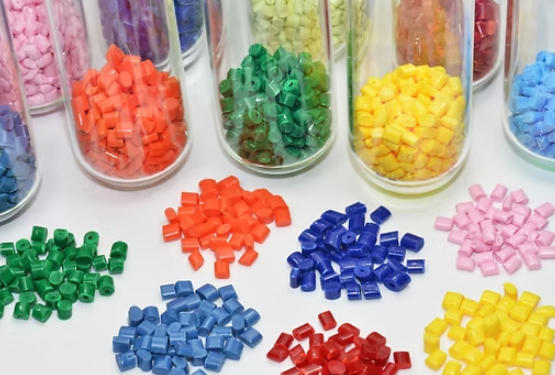
The typical addition rate ranges from 1% to 5%, depending on pigment concentration, product thickness, and desired intensity. For specialty additives like UV stabilizers or flame retardants, the proportion may differ.
Yes. PE Masterbatch is highly compatible with both virgin and recycled PE resins, improving appearance and performance in recycled plastic applications without sacrificing strength.
Food-grade PE Masterbatch produced under FDA or EU regulations uses non-toxic pigments and carriers, making it safe for packaging films, bottles, and other contact surfaces.
When formulated with recyclable or bio-based carriers, PE Masterbatch enhances recyclability by minimizing contaminants and enabling efficient color re-compounding in post-consumer recycling processes.
Under dry and cool conditions, PE Masterbatch typically maintains optimal performance for 12 to 24 months, although this may vary depending on pigment stability and storage environment.


