


close
Choose Your Site
Global
Social Media


Views: 222 Author: Rebecca Publish Time: 2026-01-19 Origin: Site


Content Menu
● Understanding PA Masterbatch
>> The Role of Masterbatch in Modern Polymer Engineering
● Mechanical Properties of Polyamide and Its Limitations
● How PA Masterbatch Enhances Impact Resistance
>> 1. Microstructure Modification
>> 2. Improved Stress Distribution
>> 3. Energy Dissipation Mechanism
>> 4. Maintained Dimensional Stability
● Factors Affecting the Effectiveness of PA Masterbatch
● Industrial Applications of PA Masterbatch for Impact Enhancement
>> Electrical and Electronic Products
>> Industrial Machinery and Consumer Goods
● Types of Impact Modifier Masterbatches for PA
● Processing and Application Considerations
>> Optimal Blending and Dosage
>> Compatibility and Screw Design
● Advantages of Using PA Masterbatch in Manufacturing
● Technological Innovations in PA Masterbatch Development
● Environmental and Economic Considerations
● FAQ About PA Masterbatch and Impact Resistance
>> 1. What is the main function of PA masterbatch in impact modification?
>> 2. How does PA masterbatch differ from traditional additives?
>> 3. Can PA masterbatch affect the color of the final product?
>> 4. What industries benefit most from PA impact modifier masterbatch?
>> 5. How should manufacturers choose the right PA masterbatch formulation?
In the modern manufacturing landscape, masterbatch technology has transformed how polymer materials are engineered and modified for specific performance goals. Among all types of masterbatches, PA masterbatch—the polyamide-based formulation—plays a crucial role in improving mechanical strength, especially impact resistance, across a wide range of plastic products.
This article explores the science behind PA masterbatch, how it enhances impact resistance, key benefits for industrial applications, and practical implementation insights for manufacturers striving to balance strength, cost, and consistent performance.
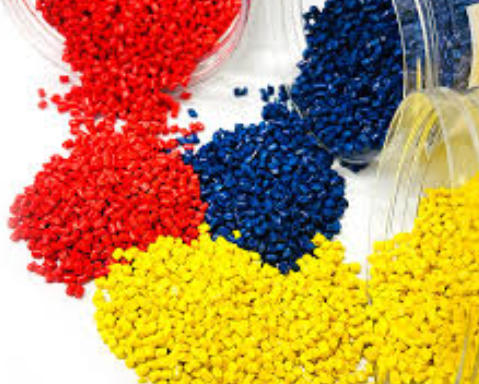
A PA masterbatch is a concentrated mixture of additives, pigments, and reinforcing materials dispersed uniformly into a polyamide (PA) carrier resin. It is designed to modify the base polymer's properties when blended during processing. Polyamide, commonly known as nylon, is widely recognized for its toughness, abrasion resistance, and chemical stability.
PA masterbatches are available in different functional types, including:
- Impact modifier masterbatch
- Color masterbatch
- UV stabilizer masterbatch
- Flame retardant masterbatch
- Reinforcement and filler masterbatch
Each type tailors the properties of polyamide resins to meet specific performance goals. For impact improvement, manufacturers rely on impact modifier masterbatches based on elastomers or rubbery polymers like EPDM or SBS, dispersed within a PA matrix.
Masterbatch technology simplifies the process of incorporating functional additives into polymers. Instead of manually dosing additive powders—which can lead to uneven distribution or process inconsistency—masterbatch pellets ensure controlled dosage, enhanced dispersion, and easier handling. This not only improves the final product performance but also increases production efficiency and repeatability.
Polyamide (PA6, PA66, etc.) is known for combining good tensile strength and toughness. However, under certain conditions such as low temperature or high impact loads, it can become brittle. The material's crystalline structure and moisture absorption characteristics both influence its impact behavior.
Typical challenges faced by manufacturers include:
- Cracking or breaking under sudden loads.
- Reduced ductility at sub-zero temperatures.
- Dimensional instability caused by moisture variation.
- Limited performance in thick-wall or reinforced components.
Hence, to overcome these mechanical limitations, impact modification techniques using PA masterbatch are frequently employed.
When PA masterbatch containing elastomeric additives is mixed into the polymer melt, it introduces flexible domains dispersed within the rigid polyamide matrix. These domains act as energy absorbers, redistributing stress and preventing crack propagation under impact loads.
The presence of elastomer phases converts brittle fracture behavior into ductile deformation, allowing the material to bend rather than break.
PA masterbatch formulations are engineered to create excellent compatibility between the elastomer particles and the PA resin. Coupling agents and compatibilizers (such as maleic anhydride-grafted polymers) improve interfacial adhesion, ensuring uniform stress transfer throughout the matrix. This structural harmony enhances impact strength without compromising tensile strength.
The elastomer particles embedded via the masterbatch function as micro energy buffers. During sudden impacts, these dispersed phases deform, absorbing kinetic energy and reducing localized stress concentration. As a result, the final polymer blend can sustain higher impact forces and recover without fracture.
A well-designed PA masterbatch enhances impact performance while maintaining the inherent mechanical rigidity of the base polyamide. This is crucial for applications that demand precise dimensional control, such as automotive connectors, industrial gears, and electronic housing components.
These combined effects make PA masterbatch an indispensable ingredient for industries requiring durability under mechanical stress.
The impact resistance improvement depends on several formulation and processing factors:
- Type and concentration of elastomer used in the masterbatch.
- Melt blending conditions, including temperature, shear, and residence time.
- Moisture content in polyamide resin before compounding.
- Dispersion quality of the masterbatch within the host polymer.
- Additive compatibility, ensuring no negative effects on other mechanical or aesthetic properties.
Proper optimization of these factors ensures the desired balance between impact resistance, surface finish, and processability.
Automotive manufacturers frequently employ PA masterbatch to produce components that face continuous vibration, shock, and stress. Examples include:
- Air intake manifolds
- Door handles
- Fuel system parts
- Under-the-hood components
Using an impact-modified PA blend reduces breakage from collision or fatigue, extends service life, and maintains safety performance in demanding environments.
Electrical housings require not only strength but also insulation and dimensional stability. Integrating impact modifier masterbatch in PA resins ensures better drop resistance and safety compliance for devices such as:
- Switch housings
- Connectors and sockets
- Enclosures for sensors and relays
From gears and bearings to sports equipment and tool handles, PA masterbatch-enhanced materials deliver improved toughness and prolonged product lifespan. Manufacturers can replace metal components with lighter, impact-resistant nylon parts, reducing cost and simplifying assembly.
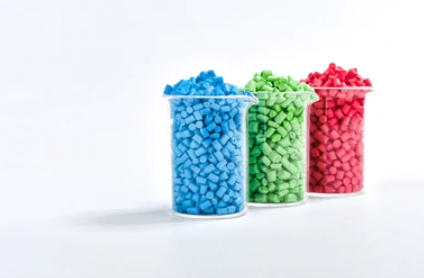
Depending on the performance target and final use, different base ingredients are employed in PA impact modifier masterbatches:
- EPDM-based masterbatch: Provides broad toughness and thermal stability.
- EPR-based masterbatch: Offers excellent low-temperature flexibility.
- POE-based masterbatch: Ensures fine dispersion and maintains high flowability.
- Core-shell rubber masterbatch: Ideal for high transparency and low gloss impact-modified nylon.
- Blended masterbatch systems: Combine multiple elastomers for balanced mechanical profiles.
Each system is fine-tuned to match the processing temperature and viscosity behavior of the target PA resin (e.g., PA6 or PA66).
Typically, 5–25% by weight of PA masterbatch is recommended, depending on the desired impact performance. Overdosing can lead to loss of stiffness or warpage issues, while underdosing might not achieve the required durability enhancement.
As both polyamide and masterbatch can be hygroscopic, pre-drying is critical to maintain stable processing and mechanical properties. Excess moisture may lead to hydrolysis and reduced impact performance.
Manufacturers should ensure screw design, temperature profile, and shear rate are optimized for homogeneous masterbatch dispersion during extrusion or injection molding. Stable dispersion ensures consistent mechanical behavior in the final parts.
- Superior impact resistance for structural plastic parts.
- Improved process control and higher reproducibility.
- Simplified storage and handling versus raw additives.
- Reduced production waste through better dispersion.
- Cleaner operation with less dust and contamination risk.
- Customization for specific client requirements, such as color and functional property targets.
The economic and logistical benefits make masterbatch integration a preferred approach for manufacturers aiming to differentiate product performance in global markets.
Recent advancements have driven significant improvements in PA masterbatch technology, focusing on environmental compliance and performance innovation.
1. Bio-based and recyclable masterbatches: Developed from sustainable feedstocks for eco-friendly applications.
2. Nano-additive masterbatches: Utilize nanoclays and nanotube fillers to enhance toughness and surface performance at lower loadings.
3. Smart dispersion technology: Achieves molecular-level uniformity, resulting in consistent toughness and smooth surface properties.
4. Hybrid masterbatch solutions: Combine impact modifiers with UV or flame retardant agents, reducing the need for multiple additive systems.
These innovations enable the next generation of lightweight, high-strength plastic materials for automotive, consumer, and industrial use.
Implementing impact modifier masterbatches aligns with sustainable production and cost efficiency in multiple ways:
- Reduced material waste: Better dispersion minimizes rejection rates.
- Extended product lifespan: Durable products require less frequent replacement.
- Lower density formulations: Allow metal-to-plastic substitution and weight reduction.
- Energy efficiency: Improved flow properties reduce processing temperature and cycle time.
Overall, PA masterbatch technology contributes to sustainable manufacturing systems by enhancing material utilization and product durability.
PA masterbatch has proven to be a cornerstone technology for improving the impact resistance of polyamide-based products. By integrating elastomeric modifiers within a compatible nylon matrix, manufacturers can achieve an excellent balance between strength, flexibility, and dimensional stability. From automotive parts and electronics to industrial tools, impact-modified PA materials provide superior performance, longer service life, and consistent quality.
As polymer innovation continues to evolve, custom-engineered PA masterbatch solutions will remain vital for companies seeking competitive advantages in material reliability and cost-efficiency.
Answer: It introduces elastomeric or rubber-like domains into the polyamide matrix, absorbing impact energy and preventing crack formation, thereby enhancing the product's toughness and overall durability.
Answer: Unlike direct powder additives, PA masterbatch ensures uniform dispersion, better compatibility, and easier handling, leading to more consistent mechanical performance and processing stability.
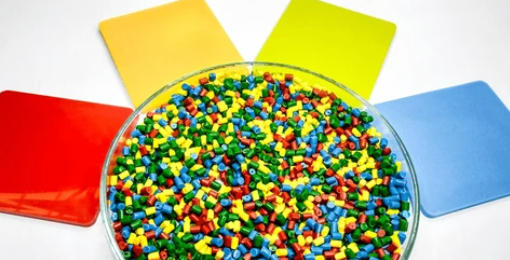
Answer: Yes, depending on the carrier resin and additive package, it can slightly alter color or surface gloss. However, matched color masterbatches can be used alongside to achieve the desired visual effect.
Answer: Automotive, electrical, electronics, consumer goods, and industrial machinery sectors use PA masterbatch for components requiring enhanced toughness and long-term mechanical stability.
Answer: Selection should consider resin type (PA6 or PA66), target impact strength, finishing requirements, processing temperature, and environmental conditions to ensure optimal performance and cost-effectiveness.


