


close
Choose Your Site
Global
Social Media


Views: 222 Author: Rebecca Publish Time: 2025-12-21 Origin: Site


Content Menu
● Understanding Plastic Materials and Their Types
>> Common Categories of Plastic
● Factors Influencing the Price of Plastic Materials
>> 4. Production Technology and Processing
>> 5. Geographic and Market Factors
>> 6. Order Quantity and Customization
● The Role of Masterbatch in Plastic Material Cost
>> What Is Masterbatch Used For?
>> Types of Masterbatch and Their Cost Impact
● Global Plastic Material Price Trends
>> Post-Pandemic Market Recovery
● How to Estimate Your Plastic Material Cost
● Why Partner with a Professional Plastic Material Supplier
● FAQ
>> (1) What is the average cost of plastic material per kilogram?
>> (2) How does Masterbatch reduce production cost?
>> (3) Is recycled plastic cheaper than virgin plastic?
>> (4) Which plastics are most commonly used with Masterbatch?
>> (5) How can I choose the right Masterbatch for my product?
As one of the world's most widely used industrial materials, plastic plays a vital role in every aspect of modern manufacturing—from packaging to automotive, electronics, construction, and medical devices. Yet, one of the most frequent questions among manufacturers and suppliers is: how much is plastic material?
This article explores the key factors influencing the price of plastic materials, the importance of Masterbatch in customizing material properties, and the global trends driving plastic costs up or down. Whether you are a procurement officer, product developer, or material engineer, understanding these variables is crucial to achieving cost-effective and high-performance results.

Plastic is a synthetic or semi-synthetic material derived mainly from petrochemical sources. It can be molded into various shapes and forms, making it ideal for countless applications. However, the cost of plastic varies depending on its composition, form, quality, and additives, such as Masterbatch.
There are two primary groups of plastic materials:
1. Thermoplastics – These soften when heated and harden when cooled. Examples include:
- Polyethylene (PE)
- Polypropylene (PP)
- Polyvinyl Chloride (PVC)
- Polystyrene (PS)
- Polyethylene Terephthalate (PET)
2. Thermosetting Plastics – These harden permanently after processing, such as:
- Epoxy Resin
- Phenolic Resin
- Melamine Formaldehyde
Each type has different performance attributes and market prices, typically ranging from $1,000 to $5,000 per ton, depending on grade and use.
Plastic pricing is not static; it fluctuates based on a combination of raw material costs, manufacturing processes, and market dynamics. The following factors are the most significant.
Petrochemical feedstocks like naphtha, ethylene, and propane are the foundational sources for most plastics. Fluctuations in oil prices directly affect plastic resin prices. When crude oil rises above $80 per barrel, plastic material prices often surge by 10–20% globally.
Different polymers have different production complexities. For example, engineering plastics (like PC or PA6) are more expensive than commodity plastics (like PP or PE) because they offer enhanced mechanical and thermal properties.
| Polymer Type | Typical Price Range (USD/ton) | Main Applications |
|---|---|---|
| PE (Polyethylene) | 1,000 – 1,600 | Packaging, containers |
| PP (Polypropylene) | 1,100 – 1,500 | Automotive, fibers |
| PVC (Polyvinyl Chloride) | 1,000 – 1,400 | Pipes, flooring |
| PC (Polycarbonate) | 2,000 – 3,000 | Electronics, lenses |
| ABS | 1,800 – 2,200 | Appliances, housings |
Masterbatch—a concentrated mixture of pigments and additives encapsulated in a carrier resin—significantly affects final plastic costs. It's used to:
- Modify color, UV resistance, flame retardancy, or antistatic properties.
- Reduce overall manufacturing costs by allowing precise additive dosage.
- Improve processing efficiency and product consistency.
Though Masterbatch itself costs more per kilogram than raw resin, its efficiency often reduces total expenses. The typical price range for Masterbatch is $2.5 to $5 per kg, depending on the function and quality.
Energy usage, recycling ratio, and extrusion or injection molding techniques contribute to cost differences. For example, recycling-grade plastics containing reprocessed Masterbatch can reduce total expenses by up to 30%.
Plastic material prices vary across regions due to logistics, tariffs, and market demand.
- China and Southeast Asia often offer lower production costs.
- European and North American markets have higher regulation and energy costs but stable quality.
- Global trade policies and environmental restrictions also push prices upward.
Bulk orders always reduce unit price. However, customized materials that integrate specific Masterbatch formulations—such as high-UV stability or metallic-effect colors—will increase per-kilogram cost.
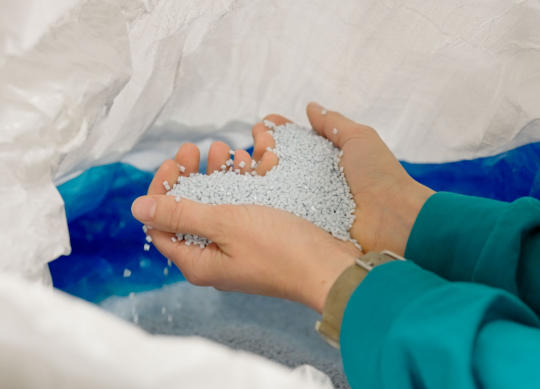
A Masterbatch is a pre-dispersed additive used to achieve consistent color and property control in plastic manufacturing. Its popularity lies in its flexibility, ease of handling, and ability to reduce waste during production.
Instead of mixing powder pigments directly with polymer, manufacturers incorporate color Masterbatch or functional Masterbatch into resin during extrusion or injection molding.
- Color Masterbatch – Designed for aesthetic quality and brand differentiation. Prices depend on pigment concentration and carrier base.
- Additive Masterbatch – Includes UV absorbers, flame retardants, antistatic agents, lubricants, and anti-fog components. These enhance performance but cost more.
- Filler Masterbatch – Contains calcium carbonate or talc, aimed at reducing resin usage and cutting raw material expenses.
- Black and White Masterbatch – Used widely in films and packaging; typically less expensive due to carbon black or titanium dioxide pigments.
The type of Masterbatch selected directly influences both unit cost and material performance. Smart selection allows balance between quality and budget.
After the COVID-19 pandemic, global plastic production faced supply disruptions and high shipping costs. However, from 2023 onwards, producers have normalized output, stabilizing resin prices worldwide. High-end Masterbatch demand, however, continues to rise due to quality expectations in packaging and sustainable manufacturing.
Growing environmental awareness has shifted market preferences toward biodegradable plastics and recycled materials blended with recycled Masterbatch. These products often cost 10–30% more than conventional plastics but help brands meet global sustainability targets.
| Region | Average PP Price (USD/ton) | Key Trend |
|---|---|---|
| China | 1,150 | Rising domestic recycling demand |
| Europe | 1,450 | Tight energy supply and emissions taxes |
| Middle East | 1,180 | Stable due to low feedstock costs |
| North America | 1,350 | Supply chain normalization |
Businesses should calculate plastic costs based on project requirements rather than base resin price alone. Here's a simple estimation approach:
1. Define Application – Identify polymer type (PP, PE, etc.) and required functionality.
2. Add Masterbatch Percentage – Usually 1–5% of total resin weight for color or additive enhancements.
3. Include Processing Costs – Energy, labor, and equipment maintenance.
4. Consider Waste Rate – Typically 2–5% depending on efficiency.
5. Check Market Indexes – Keep track of resin prices from ICIS or Plastics News to manage cost fluctuations.
Using this method ensures realistic cost estimation, which can vary between $1.2 and $3.5 per kg for most general applications.
Working with experienced suppliers offering integrated Masterbatch solutions ensures consistent quality and optimized costs. Leading companies in China provide custom formulations, global logistics support, and technical consultation for specific applications in automotive, packaging, and construction sectors.
By combining in-house R&D with Masterbatch compounding, such suppliers help clients tailor properties like transparency, impact resistance, and UV stability without overspending.
The cost of plastic material depends on multiple interconnected factors—raw material prices, polymer type, production method, market conditions, and Masterbatch additives. Manufacturers seeking both affordability and performance should analyze each variable carefully and collaborate with trusted suppliers who can customize material formulations.
In the modern manufacturing landscape, Masterbatch is not only a colorant but a core technology enabling cost control, sustainability, and performance optimization. Understanding its impact allows businesses to make informed, long-term decisions in material sourcing and production planning.
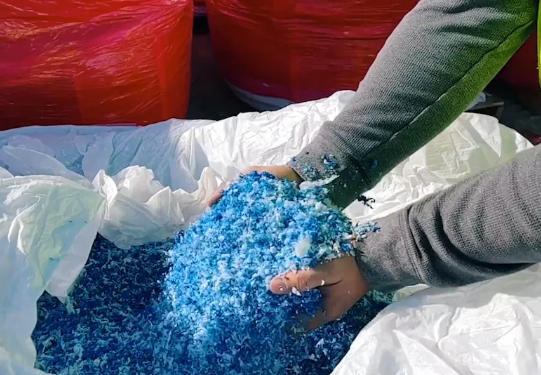
The price typically ranges from $1.2 to $3.5 per kg depending on resin type, quality level, and Masterbatch additives. Engineering plastics may exceed $5 per kg.
By enabling accurate additive dispersion, Masterbatch minimizes waste, improves consistency, and allows manufacturers to use lower-grade resins while maintaining quality, which reduces total cost.
Yes. Recycled plastics, often combined with reprocessed Masterbatch, can be 20–40% cheaper while still offering acceptable performance for non-critical applications.
Polyethylene (PE), Polypropylene (PP), and PET are the most common. These thermoplastics are compatible with most Masterbatch carriers, offering good flow and uniform color dispersion.
Consider your required properties—color, opacity, UV resistance, or flame retardancy—and choose a Masterbatch formulation designed for your base polymer type and processing conditions.


