


close
Choose Your Site
Global
Social Media


Views: 222 Author: Rebecca Publish Time: 2025-12-02 Origin: Site


Content Menu
● Fundamental Plastic Material Classifications
● Thermoplastics: The Widest and Most Versatile Family
● Thermosetting Plastics: The Realm of Permanence
● Engineering Plastics: For Demanding Applications
● High-Performance and Specialty Plastics
● Biodegradable and Bio-Based Plastics
● Elastomers and Thermoplastic Elastomers (TPEs)
● Major Plastic Material Identification Codes and Their Practical Importance
● The Role of Masterbatch in Modern Plastic Materials
● Plastic Material Application Case Studies
● Innovations and Trends in Plastic Materials and Masterbatch
>> 1. How many main types of plastic material exist in global markets?
>> 2. What is masterbatch and why is it important?
>> 3. Can masterbatch be used with biodegradable and bio-based plastics?
>> 4. How do I determine which plastic material is ideal for my application?
>> 5. Is the use of masterbatch compatible with modern recycling processes?
Plastic materials are foundational to modern life, revolutionizing industries such as packaging, automotive, construction, healthcare, and electronics. China's plastic material manufacturers, through continual innovation in research, production, and sales, are able to offer tailored solutions for a truly global customer base. Understanding the different types of plastic material and the vital role of masterbatch in customizing their properties enables businesses to optimize product quality, sustainability, and efficiency. Below, you will discover the major categories of plastic materials, their subtypes, performance characteristics, and the unique functions masterbatch provides throughout the plastic lifecycle.

Plastics are generally classified into two primary groups: thermoplastics and thermosets. Thermoplastics can be repeatedly softened by heating and remolded, making them recyclable and versatile across multiple applications. Thermosets, on the other hand, undergo permanent chemical changes during processing and do not melt upon reheating, endowing them with exceptional dimensional stability and resistance to heat or chemicals. Within these broad categories, plastics can further be subdivided according to their chemical structure, performance level, processing methods, and application sector.
Materials scientists and manufacturers often classify plastics based on chemical family (such as polyolefins, styrenics, vinyls, polyamides, polyesters, and so on), performance (commodity, engineering, specialty), and use-case (biodegradable, elastomeric, high-heat, etc.). Masterbatch—a concentrated blend of pigments and/or additives in a compatible resin carrier—is key for customizing plastic material properties, including color, UV resistance, process stability, and many other functional effects.[7]
Thermoplastics are the most prevalent plastic type in global use, primarily because they are easy to process and recycle. The major thermoplastic types include:
- Polyethylene Terephthalate (PET): Commonly used in drink bottles, food packaging, and textile fibers, PET is valued for its strength, clarity, and barrier properties.[3]
- High-Density Polyethylene (HDPE): Recognized for its high rigidity and resistance to impact, HDPE is applied in containers, milk jugs, pipes, playground equipment, and more.
- Polyvinyl Chloride (PVC): Used in various forms (rigid and flexible), PVC's high durability makes it a favorite for pipes, window profiles, medical tubing, flooring, and electrical insulation.
- Low-Density Polyethylene (LDPE): More flexible and transparent than HDPE, LDPE is ideal for plastic bags, wraps, squeeze bottles, and low-stress containers.
- Polypropylene (PP): A tough, semi-crystalline plastic, PP's high melting point, chemical resistance, and light weight make it a dominant material for food packaging, automotive parts, fibers, and reusable containers.
- Polystyrene (PS): Available as rigid (GPPS) or impact-resistant (HIPS) variants, PS is found in food trays, cutlery, CD cases, and insulation foams.
- Other Thermoplastics: ABS (acrylonitrile butadiene styrene), polycarbonate (PC), polyamide (Nylon/PA), acetal (POM), acrylic, and engineering blends each serve higher-performance or specialized roles.
Masterbatch brings both flexibility and efficiency to thermoplastic processing. Manufacturers can easily develop colored or functionalized products by selecting the right masterbatch, simplifying logistics and expanding application possibilities.
Thermosetting plastics, or thermosets, set irreversibly once molded, making them the material of choice for electrical, automotive, and construction applications where mechanical strength, heat, and chemical resistance are critical. Common thermosets include:
- Epoxy Resins: Found in adhesives, coatings, and electronic encapsulations.
- Phenolic Resins: Used in circuit boards, heat shields, and brake pads due to high thermal resistance.
- Polyurethanes: Widely used as foams, adhesives, and elastomers.
- Unsaturated Polyester Resins: The matrix material for fiberglass composites in boat hulls, car bodies, and construction panels.
- Melamine- and Urea-formaldehyde Resins: Common in laminates, molded tableware, electrical insulation, and adhesives.
While thermoset masterbatches require different carrier systems to ensure compatibility during crosslinking, they are just as essential for consistent color, flame retardancy, and enhanced durability.
Engineering plastics bridge the gap between commodity plastics and high-performance materials by offering superior strength, durability, dimensional stability, and resistance to heat and chemicals. Examples include:
- Polyamides (Nylon/PA): Used for automotive gears, electrical housings, and fibers.
- Polycarbonate (PC): Known for optical clarity and impact resistance, widely used in eyewear, lenses, and electronics.
- Acrylonitrile Butadiene Styrene (ABS): Used in automotive trims, appliances, and housing materials due to good toughness and moldability.
- Polyoxymethylene (POM/Acetal): Valued for low friction and high dimensional stability, often in precision gears and mechanical parts.
- Polybutylene Terephthalate (PBT): Resistant to solvents and electrical arcs, thus often found in switches and connectors.
Masterbatch for engineering plastics must match higher processing temperatures, tight mechanical properties, and special regulatory requirements. Custom-additive masterbatch for flame retardancy, lubricity, or antistatic performance is common in these sectors.
For advanced applications in aerospace, automotive, electronics, and medical devices, high-performance plastics offer exceptional mechanical, thermal, and chemical resistance. Materials such as:[7]
- Polyetheretherketone (PEEK)
- Polysulfone (PSU)
- Polyetherimide (PEI)
- Polyimides (PI)
- Fluoropolymers (PTFE, PVDF)
These materials often require advanced masterbatch solutions with highly specialized carrier resins, pigments, and additives designed to withstand extreme environments without compromising performance.
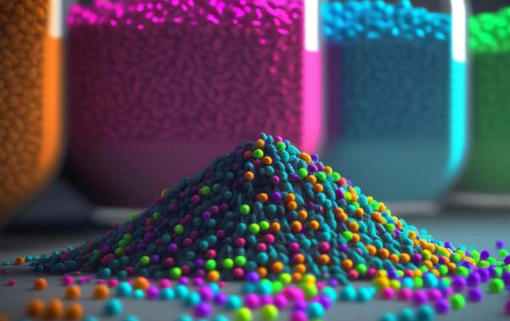
With increasing emphasis on sustainability, biodegradable and bio-based plastics offer renewable and compostable alternatives to fossil-derived plastics. Notable examples include:
- Polylactic Acid (PLA): Used in packaging, disposable cutlery, and 3D printing, PLA is compostable under industrial conditions.
- Polyhydroxyalkanoates (PHAs): Naturally produced by bacteria, PHAs degrade in marine and soil environments, making them ideal for disposable items.
- Starch-Based Plastics: Blends of natural starch and polymers, employed in bags and agricultural films.
- Bio-based Polyethylene and Polypropylene: Produced from renewable feedstocks but otherwise chemically identical to traditional PE and PP.
Masterbatch for these materials utilizes biodegradable or bio-based carrier resins and carefully selected additives that do not hinder compostability or environmental safety.
Elastomers and TPEs combine the processability of plastics with the flexibility and resilience of rubber. Sectors such as automotive, electronics, sports, and healthcare use:
- Styrenic TPEs (TPE-S, SBS, SEBS)
- Thermoplastic polyolefin elastomers (TPO)
- Thermoplastic vulcanizates (TPV)
- Thermoplastic polyurethane (TPU)
Masterbatch for these applications must provide uniform color, flexibility, UV stabilization, and sometimes antimicrobial properties, all while being compatible with the elastomeric matrix.
To streamline recycling and identification, the plastics industry commonly uses the Resin Identification Code (RIC) system to classify the seven most common plastic packaging types:
1. PET (Polyethylene Terephthalate)
2. HDPE (High-Density Polyethylene)
3. PVC (Polyvinyl Chloride)
4. LDPE (Low-Density Polyethylene)
5. PP (Polypropylene)
6. PS (Polystyrene)
7. Other (All remaining plastics including polycarbonate, ABS, and innovative blends)
Understanding these codes is crucial for proper recycling, segregation, regulatory compliance, and for ensuring that the chosen masterbatch is compatible with base resin for optimal dispersion and performance.[2]
Masterbatch enhances the value and functionality of plastic materials at every stage of their lifecycle. The main types are:
- Color masterbatch: Uniform, reproducible coloring for branding, aesthetics, and product identification.
- White and black masterbatch: High opacity, UV protection, light barrier, and conductivity as required.
- Additive masterbatch: UV protection, flame retardancy, antistatic effects, slip improvement, and processing aids.
- Filler masterbatch: Cost reduction and property modification by dispersing minerals like calcium carbonate or talc.
Masterbatch compatibility is tailored for each resin family, ensuring optimal mixing, processing, and end-use performance. It enables a single polymer base to service a wide range of consumer, industrial, and specialty markets through precise, efficient customization.
Plastic materials, empowered through masterbatch, serve a wide array of industries and functions:
- Packaging: PET, PE, PP, and PLA provide tailored performance and branding solutions, while masterbatch improves shelf-life, appeal, and processing.
- Automotive: PP, ABS, PC, Nylon, and TPEs with masterbatch deliver safety features, light weight, durability, and specialized appearances.
- Construction: PVC, HDPE, PP, and advanced blends with masterbatch are utilized in pipes, windows, insulation, and waterproof membranes.
- Electronics: PC, ABS, PBT, high-performance resins, and masterbatch enable safe, color-coded, and flame-retardant electrical components.
- Medical Devices: PP, PE, TPE, PC, and biopolymers worked with biocompatible, regulatory-approved masterbatch in instruments, packaging, and disposables.
China's masterbatch and plastic materials sector is especially capable in offering customized, scalable solutions for these diverse applications.
The future points towards ongoing innovation in both plastic bases and masterbatch technology. Trends include:
- Increased demand for recyclable and mono-material solutions.
- Growth in bio-based, low-carbon, and degradable plastics for environmental compliance.
- Enhanced masterbatch offerings supporting new regulations—sorting-friendly colors, advanced flame retardants, barrier enhancements, and next-generation antistatic and antimicrobial solutions.
- Broader digitization and automation of plastic manufacturing, where masterbatch plays a key role in process tracking and quality assurance.
Masterbatch remains the bridge between material science and market needs, and its development drives both performance and sustainability in modern plastics.
In summary, industrial plastics encompass scores of resin types—ranging from commodity thermoplastics to advanced high-performance materials, engineering polymers, thermosets, elastomers, and a growing suite of sustainable and biodegradable options. Each type can be further tailored for precise business requirements through the application of specialized masterbatch, which adds color, stabilizers, functional agents, fillers, or multiple enhancements in a controlled, efficient way. For companies seeking integrated, high-value, and sustainable solutions, partnering with an experienced plastic material and masterbatch provider opens the door to next-level innovation, quality assurance, and competitive market advantage.
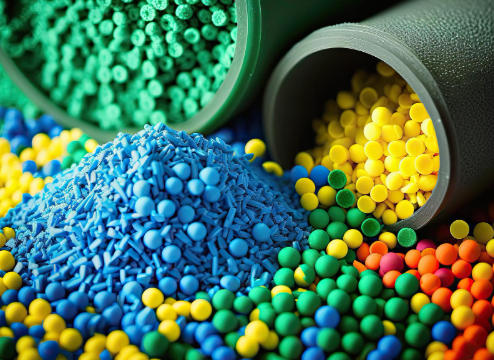
Plastic materials are generally grouped into seven standard commodity types by resin code (PET, HDPE, PVC, LDPE, PP, PS, and Other), but dozens of engineering, high-performance, thermoset, elastomeric, and biodegradable types are commonly used in various applications.[2][3]
Masterbatch is a proprietary blend of pigments and/or additives in a carrier polymer designed for easy incorporation into raw plastics to impart color or enhance material properties, ensuring cost-effective and consistent results.[1][7]
Yes. Specially designed masterbatch systems for PLA, PHAs, starch blends, and other bio-based plastics provide color and performance enhancements without affecting compostability or environmental safety.[4]
Material selection depends on factors such as mechanical, thermal, and chemical requirements, regulatory compliance, cost, and process method. Consulting with a global supplier ensures optimal polymer and masterbatch compatibility for your needs.[1][7]
Masterbatch can be engineered for recycling compatibility, supporting mono-material packaging trends, easy identification via sorting colors, and the use of recycled carrier resins for circular economy initiatives.[4][7]
[1](https://www.tricorbraun.com/blog/understanding-types-of-plastic.html)
[2](https://www.plasticsforchange.org/blog/different-types-of-plastic)
[3](https://beaverstateplastics.com/understanding-the-key-categories-of-plastics-a-comprehensive-guide/)
[4](https://www.plasticcollective.co/types-of-plastic-guide-to-different-plastic-types/)
[5](https://www.plasticoceans.org/blog/7-types-of-plastic)
[6](https://tropicalcommons.co/wp-content/uploads/2019/01/Different_plastic_polymer_types.pdf)
[7](https://www.thecarycompany.com/insights/guides/guide-to-plastics)
[8](https://yesstraws.com/blogs/news/types-of-plastic-plastic-numbers-guide)


