


close
Choose Your Site
Global
Social Media


Views: 222 Author: Rebecca Publish Time: 2025-12-29 Origin: Site


Content Menu
● The Building Blocks of Plastic Materials
>> Common Types of Plastic Polymers
● Step 1: Extraction and Refining of Raw Materials
● Step 2: Polymerization — Creating the Plastic Base
● Step 3: Compounding and Masterbatch Integration
● Step 4: Pelletizing the Plastic Compound
● Step 5: Plastic Forming and Shaping
>> 3. Extrusion
● Step 6: Cooling, Finishing, and Quality Inspection
● Step 7: Recycling and Sustainability in Plastic Production
● The Role of Technology and R&D
● Advantages of Using Masterbatch in Plastic Manufacturing
● Challenges in Plastic Manufacturing
● FAQs About Plastic Material and Masterbatch
>> 1. What exactly is Masterbatch used for?
>> 2. Can recycled plastics use Masterbatch?
>> 3. Are there eco-friendly Masterbatch options?
>> 4. How is the right Masterbatch chosen?
>> 5. What industries rely most on Masterbatch?
The modern world runs on plastics — from food packaging and medical devices to automotive components and electronics. But behind these everyday products lies a complex and fascinating process of plastic material creation. Understanding how plastic material is made reveals not only the science behind its transformation but also the innovation driving new sustainable and high-performance materials such as Masterbatch formulations.
This article takes a deep dive into the entire plastic manufacturing process, from raw material extraction to compounding and shaping. It also explores the role of Masterbatch in improving color, performance, and sustainability of modern plastic products.

To understand how plastic materials are made, we first need to look at their fundamental building blocks — polymers.
Plastics are primarily made from petrochemical feedstocks like crude oil and natural gas. Through chemical processing, these raw materials are converted into monomers such as ethylene, propylene, styrene, and vinyl chloride. These small molecular units are then polymerized into long chains of molecules, creating polymers with different properties.
1. Polyethylene (PE) – Used for packaging films, containers, and tubes.
2. Polypropylene (PP) – Found in automotive parts, textiles, and packaging.
3. Polyvinyl Chloride (PVC) – Used in pipes, cables, and profiles.
4. Polystyrene (PS) – Applied in insulation and disposable packaging.
5. Polyethylene Terephthalate (PET) – Commonly used in beverage bottles.
Each polymer offers distinct characteristics such as strength, flexibility, or heat resistance — making it ideal for different industries.
The first step in plastic production starts deep underground or beneath the ocean — extracting hydrocarbons from crude oil or natural gas. These feedstocks are refined through a process called cracking, which breaks large hydrocarbon molecules into smaller ones like ethylene and propene.
This refining process produces a variety of chemicals, such as naphtha, that serve as raw materials for polymerization. At this stage, the materials are still basic hydrocarbons, but they form the core ingredients for plastics once they undergo polymerization.
During polymerization, monomers link together to form polymers through two major methods:
- Addition polymerization – Monomers join end-to-end without losing atoms (e.g., polyethylene).
- Condensation polymerization – Monomers combine and release a byproduct like water (e.g., nylon).
The resulting polymer can be in the form of pellets, beads, or powder. The physical and chemical characteristics of the polymer are determined by the type of monomer used, catalysts, and reaction conditions.
This polymer base is typically colorless, has minimal additives, and may not yet have the performance properties required for industrial use. This is where Masterbatch and other compounding ingredients come in to enhance the material.
Compounding is the stage where polymer base resins are mixed with various additives to tailor their properties to specific applications. Additives may include stabilizers, fillers, colorants, flame retardants, or Masterbatches.
Masterbatch is a concentrated mixture of pigments, additives, or both, encapsulated in a carrier resin. It is used to impart color or functional properties to plastic during the processing stage.
Instead of adding raw pigments or liquid additives directly to the plastic resin — which can result in uneven dispersion — Masterbatches ensure uniform distribution and better control. They improve the final product's quality, appearance, and performance.
1. Color Masterbatch – Enhances visual appeal with precise, consistent color tones.
2. White Masterbatch – Primarily titanium dioxide-based for opacity and brightness.
3. Black Masterbatch – Carbon black-based for conductivity, UV resistance, and color depth.
4. Additive Masterbatch – Improves performance with anti-UV, anti-static, or flame-retardant effects.
5. Filler Masterbatch – Reduces raw material costs while enhancing rigidity and processability.
Through compounding, manufacturers can produce high-performance plastics suited to specific applications in industries like packaging, construction, and electronics.
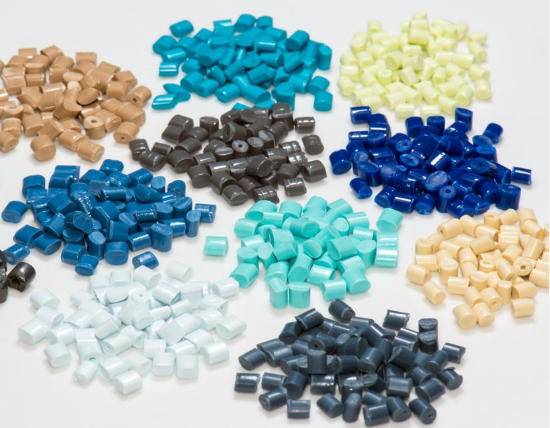
Once compounded, the plastic mixture — including Masterbatch additives — is melted, homogenized, and extruded through a die. It is then cut into small uniform pellets.
These pellets serve as the feedstock for plastic manufacturing processes such as injection molding, blow molding, or extrusion. Pellets are easy to handle, transport, and feed into machinery, making them the ideal form for almost every plastic production line.
This stage transforms raw plastic pellets into end-use products. The most common shaping techniques include:
Pellets are melted and injected into a mold cavity under high pressure. After cooling, the plastic hardens into the desired shape. Used for toys, containers, and automobile parts.
Used to produce hollow parts like bottles. Heated plastic tubes (parisons) are inflated inside a mold, taking its shape.
Plastic is melted and pushed through a die to create continuous profiles such as pipes, sheets, or films.
Thin plastic sheets are heated, shaped over molds, and trimmed to form packaging trays, cups, or clamshells.
In advanced applications, pellets are processed into filaments that are used in additive manufacturing for custom components and prototypes.
After shaping, products are cooled, trimmed, and sometimes coated or printed. Quality control teams inspect for surface defects, dimensional accuracy, and color consistency.
Masterbatch impacts this stage significantly—because it helps maintain uniform color dispersion and surface appearance. A high-quality Masterbatch solution minimizes streaking, fading, or uneven coloration commonly found in lower-grade plastics.
The industry has evolved to incorporate circular economy principles. Plastic recycling aims to recover and reuse waste to minimize environmental impact.
Recycling involves:
1. Collection and sorting of post-consumer or industrial plastic waste.
2. Cleaning and shredding into small flakes.
3. Reprocessing through melting, filtering, and pelletizing for reuse.
Innovations in Masterbatch technology are also supporting sustainability. For instance, biodegradable Masterbatches and recycled polymer-compatible Masterbatches are emerging trends that enhance eco-friendly plastic production and reduce reliance on virgin materials.
Cutting-edge R&D is reshaping plastic material production across the world. Companies increasingly invest in:
- Nano-Masterbatch technologies for enhanced dispersion and lightweight design.
- Reactive extrusion to combine compounding and functional modification.
- AI-driven quality control systems that optimize processing based on real-time monitoring.
Such innovation leads to materials with higher purity, greater mechanical strength, and reduced carbon footprints — ensuring plastics remain indispensable yet sustainable.
- Cost Efficiency: Reduces waste and improves mixing consistency compared to liquid additives.
- Ease of Use: Simplifies handling, dosing, and storage versus raw pigments.
- Color Stability: Provides consistent shades across production batches.
- Improved Performance: Offers UV protection, anti-aging, flame retardant, and other functional properties.
- Sustainability: Enables recycling and use of eco-friendly materials through advanced formulations.
Today, almost every plastic product — from electrical parts to packaging films — benefits from Masterbatch integration.
Despite its advantages, plastic production faces several challenges:
1. Raw material price volatility due to oil market fluctuations.
2. Environmental concerns and tightening regulations on plastic waste.
3. Color matching and dispersion issues with poor-quality Masterbatches.
4. Energy consumption during polymerization and processing.
5. Recycling limitations for mixed or contaminated plastics.
Industry leaders are addressing these challenges through innovation in Masterbatch engineering, process optimization, and clean technology adoption.
The process of making plastic materials is an intricate journey — from refining petrochemical feedstocks to formulating Masterbatches that define color and performance. Every stage, from polymerization to finishing, plays a critical role in determining the final quality and sustainability of plastic products.
As industries shift toward greener and more efficient materials, Masterbatch technology remains at the forefront of this transformation — ensuring plastics not only meet functional demands but also align with global sustainability goals.
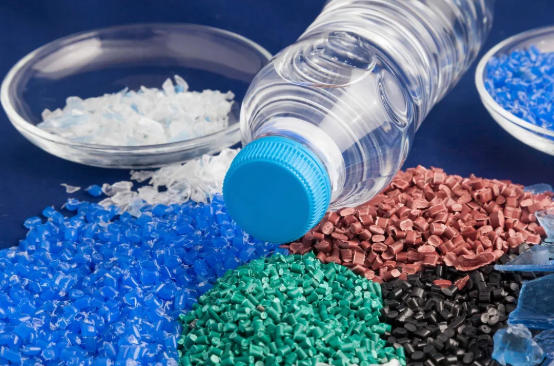
Masterbatch is a concentrated additive used to blend color or enhance properties such as UV resistance and durability in plastic products.
Yes. Recycled plastics can incorporate specialized Masterbatches to restore color, strengthen performance, and improve processability.
Absolutely. Many manufacturers now produce biodegradable or bio-based Masterbatches compatible with compostable plastics and sustainable materials.
Selection depends on the polymer type, processing method, and application needs, including color accuracy, weather resistance, or mechanical strength.
Key industries include packaging, automotive, construction, and electronics, where consistent color and material performance are crucial.


