


close
Choose Your Site
Global
Social Media


Views: 222 Author: Rebecca Publish Time: 2025-12-01 Origin: Site


Content Menu
● Understanding Color Masterbatch
● Initial Customer Engagement and Project Setup
● Production-Scale Ingredient Weighing and Pre-Mixing
● Compounding and Melt Processing
● Packaging, Documentation, and Logistics
● Innovations and Advanced Processing
● Process Variants: Wet and Dry Methods
>> Wet Process
>> Dry Process
>> 1. How do I request a custom color masterbatch?
>> 2. What polymers can use color masterbatch?
>> 3. What quality control tests are performed?
>> 4. What are special effect masterbatches?
>> 5. Are eco-friendly masterbatches available?
Color masterbatch development is a core process in modern plastics manufacturing. It transforms raw materials and client specifications into highly engineered pigment concentrates, which give plastics vibrant, consistent color and desired properties for a wide range of applications.
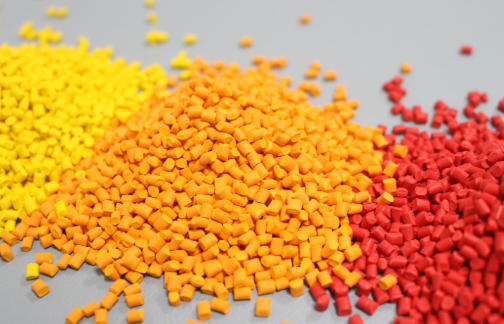
Color masterbatch is a concentrated blend of pigments or dyes and specific additives encapsulated in a carrier resin. When incorporated into raw polymers during processing, masterbatch delivers consistent coloration and enhances particular plastic properties. This approach is prized for simplicity, color integrity, and cost efficiency in large-scale plastic manufacturing.[1]
Every custom color masterbatch project begins with close communication between the plastics manufacturer and the client. The initial step involves collecting comprehensive requirements:
- Color Specification: Customers provide Pantone or RAL codes, plastic part samples, or color chips. These references guide precise color matching.
- Polymer Compatibility: The type of plastic (e.g., PE, PP, PS, PVC, PET) and application (injection, extrusion, blow molding) determine resin selection.
- Performance Needs: Lightfastness, chemical resistance, thermal stability, and other performance characteristics are defined.
- Regulatory Concerns: Requirements for food contact approval, ROHS, or other certifications are gathered.
This thorough preparation ensures the masterbatch will meet both aesthetic and functional requirements.[6]
Raw material selection is one of the critical foundations for masterbatch quality.
- Carrier Resins: Chosen to match the base plastic for maximum compatibility and dispersion.
- Pigments and Dyes: Selected for color strength, thermal stability, and resistance to migration or fading.
- Additives: May include UV stabilizers, flame retardants, antistatic agents, or processing aids, depending on customer requirements.
This phase often involves pre-qualification, as even minor variations in pigment or resin can significantly alter the masterbatch's appearance and performance.[7]
Lab color matching is a blend of science and art. Colorists and technicians use spectrophotometers and software-aided systems to match provided samples.
- Weighing and Blending: Small trial batches are made using accurate scales and high-speed mixers. The mixture is compounded on a lab extruder.
- Visual and Instrumental Evaluation: Samples are evaluated under standardized lighting and with precision spectrophotometers. Any deviation from the reference triggers formula adjustments.
- Application Simulation: The trial masterbatch is processed using the client's polymer, molded, and measured for color accuracy, performance, and dispersibility.
This iterative process can take several rounds to achieve an exact match, especially for demanding customers and high-visibility applications.[6]
Precise weighing and controlled pre-blending are essential for uniformity and reproducibility at manufacturing scale:
- Metering: Ingredients are measured using automated gravimetric systems for accuracy.
- Pre-Mixing: Carrier resin, pigments, and additives are thoroughly blended, often in a high-speed mixing chamber, to create a homogeneous pre-compound.
Effective pre-mixing ensures that no pigment clumping or agglomeration will occur in later stages, which is crucial for top-quality masterbatches.[1][7]
Compounding is the heart of the masterbatch process, resulting in highly dispersed pigment concentrations within the carrier resin.
- Extruder Types: Twin-screw extruders are commonly used for their superior mixing and dispersing capabilities. They shear and melt the mixture, breaking pigment agglomerates and distributing colorants evenly.
- Mixing Mechanisms: Compounding involves both dispersive (breaking apart pigment clumps) and distributive (ensuring even pigment distribution) mixing.
- Temperature and Pressure Control: The extrusion is conducted under tightly regulated temperatures and pressures. Any fluctuations can affect color strength or create defects.
The uniform molten mixture is monitored for consistency before being transported to the pelletizing stage.[3][1]
The hot, processed masterbatch exits the extruder and moves through a rapid cooling system—typically a water bath or air-cooled conveyor.
- Pelletizer: The solidified strand is chopped into uniform cylindrical granules or pellets, which are easy to handle, meter, and dose into plastics processing systems.
- Particle Size Control: Consistent pellet size ensures regular color dosing during customer manufacturing, avoiding streaks or cloudy effects.
Every pellet is expected to embody precise pigment content and performance.[7][1]
No masterbatch batch is shipped without exhaustive testing:
- Color Analysis: Pellets are molded or extruded and checked against color standards. Spectrophotometers provide objective, repeatable color measurements.
- Dispersion Testing: Visual and microscopic analysis ensures pigments are free of clumps.
- Performance Verification: Tests for UV resistance, thermal stability, migration, and compatibility with the intended polymer.
- Physical Testing: Moisture content, melt flow rate, and pellet integrity are measured.
The results are documented, and each batch is traceable via unique lot numbers for full backward and forward traceability.[1][6]
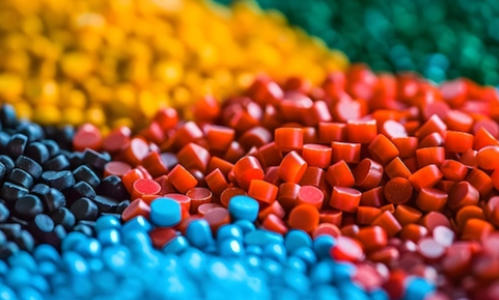
Once passing all tests, color masterbatch is:
- Packaged: Masterbatch is sealed in moisture-resistant, contamination-free bags or containers. Packaging sizes match client's requirements.
- Labeled: Each bag or box carries detailed information, including product code, color name, lot number, and key specifications.
- Documentation: Accompanies each shipment—safety data sheets (SDS), technical data sheets (TDS), and certificates of compliance as per regulations.
- Shipped: Shipped by land, sea, or air as required, ensuring prompt delivery with proper logistics planning.
This approach ensures masterbatch arrives in prime condition for client use, complete with all required regulatory and technical support.[6][1]
With plastics technology evolving rapidly, several innovative trends point to the future of color masterbatch:
- High-Performance & Special Effects: Metallic, pearlescent, glow-in-the-dark, and other effect masterbatches provide brand differentiation and visual uniqueness.
- Sustainable Solutions: Bio-based, compostable, and recycled-resin-based masterbatches support eco-friendly initiatives.
- Automation and AI: Automated color matching and AI-driven quality control enhance reproducibility and reduce development cycles.
- Regulatory Compliance: Ongoing adaptation to stricter food-contact, medical, and environmental standards.
Masterbatch manufacturers continually invest in R&D and upgrade systems to meet these challenges, securing leadership in new markets.[4]
There are two main types of color masterbatch processing—wet and dry—and each offers unique advantages.
- Involves grinding pigments into a fine slurry, phase transforming, followed by washing, drying, and granulation.
- Offers superior pigment dispersion for high-performance applications.
- Involves complex operations like sand milling, solvent transfer, and soap layer protection for pigment particles.
- The most widely used, especially for high-output commercial production.
- Involves thorough pre-mixing and extrusion without the additional wet phase.
- Suitable for bulk commodity masterbatch where slight performance difference is acceptable.
Each method can be further subdivided (ink, washing, kneading, metallic soap), with choice depending on client demands, cost tolerance, and targeted application.[2][4]
Outstanding masterbatch producers don't just deliver pellets—they offer lifelong technical assistance:
- Formulation Adjustments: Support for color tweaks or polymer changes.
- Processing Optimization: Recommendations for extruder or injection molding settings.
- Regulatory Guidance: Updates on evolving standards for different industries.
- On-Site Support: Sampling, troubleshooting, and process optimization at the client's facility.
Through transparency and ongoing innovation, masterbatch suppliers build lasting partnerships with global plastics manufacturers.[6]
Developing a color masterbatch is a rigorous, high-precision process, blending technical collaboration, scientific testing, and advanced manufacturing. From initial customer consultations to blending, compounding, and strict quality control, every stage is designed to deliver color masterbatch with superior performance, stability, and compliance for any plastics application. Continued investment in R&D, sustainability, and new processing methods keeps leading masterbatch providers ahead in a highly competitive industry.[4][7][1]
You provide a color reference (like a Pantone or RAL standard), your target polymer, and application details. The supplier then develops and matches a formula for your approval before producing the batch.[6]
Masterbatch can be engineered for nearly all plastics, including PE, PP, PS, PVC, PET, and engineering-grade resins, as long as the carrier resin matches the host polymer.[4][7]
QC includes colorimetry, dispersion testing, melt flow rate, thermal and UV stability, and compliance with industry or regulatory standards for each batch.[1]
Special effect masterbatches go beyond color, providing properties like metallic sheen, pearlescence, fluorescence, or biodegradable plastic features for added product differentiation.[4]
Yes, sustainable masterbatches use biodegradable carriers and natural colorants to meet environmental requirements and the demand for greener plastics solutions.[7]
[1](https://eupegypt.com/blog/color-masterbatch-manufacturing-process/)
[2](https://www.gsextruder.com/color-masterbatch-manufacturing-process-and-manufacturing-machine-guide/)
[3](https://coperion.com/en/news-media/media-library/infographics/color-masterbatch-production)
[4](https://www.cowinextrusion.com/understanding-color-masterbatch-manufacturing-process/)
[5](https://www.kerkeextruder.com/news/know-how/pet-color-masterbatch-production-comprehensive-guide-for-high-quality-manufacturing-and-equipment-optimization/)
[6](https://www.scribd.com/document/852230712/Color-Masterbatch-Process)
[7](https://www.charmingmb.com/2025/10/09/masterbatch-manufacturing-process-a-complete-guide-to-production-and-innovation/)
[8](https://www.youtube.com/watch?v=a4iDWdSNr6Q)
[9](https://www.materials.zone/blog/8-steps-to-optimize-the-masterbatch-manufacturing-process)
[10](https://firstmold.com/guides/masterbatch/)


