


close
Choose Your Site
Global
Social Media


Views: 222 Author: Rebecca Publish Time: 2025-12-23 Origin: Site


Content Menu
● Understanding ABS and Its Mechanical Limitations
>> Typical Components of an ABS Masterbatch
● The Science of Impact Resistance in ABS
● How ABS Masterbatch Improves Impact Resistance
>> 1. Rubber Toughening Mechanism
>> 2. Energy Absorption at the Molecular Level
>> 3. Improved Dispersion and Compatibility
>> 4. Tailored Compositions for Application Needs
● Benefits of Using ABS Masterbatch in Manufacturing
>> Enhanced Mechanical Performance
>> Cost-Effective Customization
>> Sustainability and Recyclability
● Industrial Applications of ABS Masterbatch
>> 2. Electrical and Electronics
● Factors Influencing Impact Enhancement
● Innovation in ABS Masterbatch Technology
● Quality Control and Testing Standards
● Choosing the Right ABS Masterbatch Supplier
● FAQ
>> (1) What is the primary function of ABS Masterbatch?
>> (2) Can ABS Masterbatch be used with recycled ABS materials?
>> (3) How much Masterbatch should be added to ABS resin?
>> (4) Is ABS Masterbatch suitable for high-temperature applications?
>> (5) How does Masterbatch differ from compound materials?
Acrylonitrile Butadiene Styrene (ABS) has long been one of the most versatile thermoplastic polymers used across industries — from automotive parts and electronics to home appliances and consumer goods. However, the performance of ABS largely depends on the formulation and additive enhancements applied during manufacturing. One of the most effective ways to improve its mechanical strength and durability is through the use of ABS Masterbatch.
This article explores how ABS Masterbatch enhances impact resistance in plastic products, the science behind its formulation, and how manufacturers can utilize it to create high-performance materials for global markets.

ABS is a terpolymer composed of Acrylonitrile, Butadiene, and Styrene. Each component contributes specific properties:
- Acrylonitrile gives chemical resistance and hardness.
- Butadiene adds toughness and impact strength.
- Styrene provides rigidity and a glossy surface finish.
While ABS naturally exhibits good toughness, its impact resistance can decrease under certain conditions such as low temperatures, repeated mechanical stress, or exposure to chemicals. This is where ABS Masterbatch offers a powerful way to reinforce the polymer matrix effectively without drastically altering processing requirements.
ABS Masterbatch is a concentrated mixture of additives, pigments, or reinforcements blended with an ABS carrier resin. During plastic processing, manufacturers mix this masterbatch with raw ABS pellets in specific ratios — typically 1–5% — to enhance the polymer's functional properties.
1. Impact Modifiers – Rubber elastomers or core-shell particles improve flexibility and dissipate stress during impact.
2. Processing Aids – Encourage better melt flow and dispersion of additives.
3. Colorants – Provide uniform coloration without weakening structural performance.
4. Stabilizers – Protect against heat, UV, and oxidation degradation.
5. Reinforcing Fillers – Such as glass fibers or mineral compounds that increase stiffness and dimensional stability.
A well-formulated ABS Masterbatch is designed not only to deliver the desired mechanical properties but also to maintain the polymer's aesthetic and processing characteristics.
Impact resistance refers to the ability of a material to absorb and dissipate energy upon sudden force or collision. In unmodified ABS, impact energy tends to concentrate at microstructural weaknesses, leading to crack propagation.
Masterbatch additives improve this by promoting controlled energy distribution. For example, the butadiene component within an impact modifier acts as a soft elastomeric phase in the polymer matrix. When a force is applied, this phase deforms and absorbs energy, preventing fractures from spreading through the rigid styrene-acrylonitrile regions.
Thus, the synergy between ABS resin and Masterbatch additives creates a more flexible and damage-tolerant structure.
Most ABS Masterbatches utilize rubber-based impact modifiers such as MBS (Methyl Methacrylate-Butadiene-Styrene) or SBS (Styrene-Butadiene-Styrene). These materials form discrete rubber domains in the polymer matrix. Upon impact, these domains initiate localized plastic deformation, significantly improving impact toughness without major trade-offs in stiffness.
ABS Masterbatch enhances energy absorption by increasing the polymer's ability to deflect cracks. The elastomeric phases absorb kinetic energy and redistribute stress across a broader region. This results in improved Izod or Charpy impact strength, particularly in applications demanding structural integrity such as automotive interiors or luggage shells.
The quality of dispersion is key to the effectiveness of any Masterbatch. Modern manufacturing employs twin-screw extruders to ensure homogeneous distribution of impact modifiers throughout the ABS resin. Proper dispersion prevents particle agglomeration and ensures consistent mechanical properties across molded parts.
Different industries may require different levels of toughness. For instance:
- Automotive components demand high impact strength and heat resistance.
- Consumer electronics need excellent surface gloss paired with moderate toughness.
- Household products prioritize cost-effectiveness and durability.
By adjusting the type and concentration of modifiers in the ABS Masterbatch, manufacturers can fine-tune these mechanical profiles according to end-use requirements.
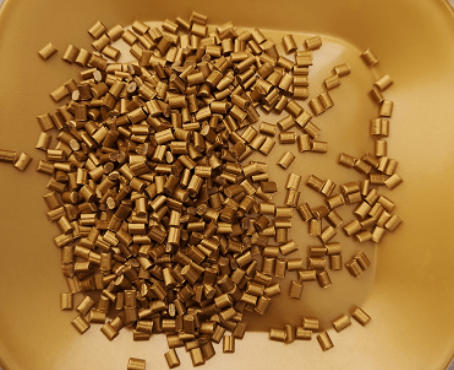
Incorporating ABS Masterbatch offers multiple advantages throughout the production and performance lifecycle of plastic products:
Improved toughness, crack resistance, and flexibility make products more reliable in dynamic environments. This is critical in applications exposed to mechanical stress or accidental drops.
Instead of reformulating the entire polymer base, manufacturers can achieve specific property enhancements simply by adding Masterbatch concentrates. This lowers R&D and production costs while maintaining consistency.
ABS Masterbatch promotes easier processing by improving melt flow and stabilizing heat resistance, which minimizes machine downtime and material waste.
Many impact-modified Masterbatches are engineered to preserve surface gloss and color uniformity — important for appearance-critical products like electronics or appliances.
Modern Masterbatch formulations are compatible with recycling systems. Their efficient use of additives helps extend product life without generating additional waste.
ABS Masterbatch has become integral in several industrial and consumer sectors due to its versatility and performance optimization.
Used in dashboards, grilles, bumpers, and internal trims where durability and shock resistance are crucial.
Enhances enclosures, switches, and connectors by providing both insulation and toughness.
Applied in vacuum cleaner housings, air conditioner panels, and kitchenware due to its glossy surface and robust impact strength.
Provides color consistency and mechanical safety compliance required for high-quality plastic toys.
Improves the performance of fittings, piping components, and protective panels in construction environments.
The actual performance gain from ABS Masterbatch depends on several interrelated parameters:
- Additive Type: The chemical structure of the rubber or modifier determines flexibility.
- Particle Size: Smaller, uniformly distributed elastomeric particles yield better energy absorption.
- Processing Conditions: Temperature, shear rate, and mixing time affect dispersion quality.
- Dosage Ratio: Overuse or underuse can negatively impact mechanical balance.
- Base Polymer Quality: The molecular weight and phase distribution of the ABS resin also matter.
Manufacturers often conduct experimental trials to identify the ideal combination for each product line.
Recent advances in material science have pushed the limits of what Masterbatch technology can achieve. Cutting-edge research focuses on:
- Nano-reinforced Masterbatch: Incorporating nanosilica, nanoclay, or graphene to enhance both stiffness and impact strength.
- Bio-based Modifiers: Sustainable impact modifiers derived from plant-based polymers.
- Smart Masterbatch Systems: Additives that self-adjust to temperature variations, maintaining toughness in extreme environments.
- Reactive Compatibilization: Chemical bonding between modifier and ABS chains for improved phase adhesion and long-term stability.
Such innovations are reshaping the global plastics landscape, allowing manufacturers to meet stringent regulatory and performance standards.
Producing a high-performance ABS Masterbatch requires rigorous testing in accordance with international standards such as:
- ASTM D256 – Izod Impact Testing
- ISO 180 – Charpy Impact Test
- ISO 527 – Determination of Tensile Properties
- UL 94 – Flammability Testing
By ensuring compliance with these benchmarks, manufacturers can guarantee consistent, reliable product quality.
Selecting a professional and research-oriented Masterbatch manufacturer is vital for success. A reliable supplier should provide:
1. Customized formulations based on performance goals.
2. Consistent product quality and supply stability.
3. Technical support for processing optimization.
4. Compliance with international safety and environmental regulations.
For global manufacturers, choosing Chinese suppliers with integrated R&D, production, and sales capabilities often delivers competitive pricing, technical expertise, and flexible customization options.
ABS Masterbatch plays a pivotal role in strengthening the mechanical resilience of plastics, especially in applications where impact resistance defines product reliability. By incorporating well-formulated impact modifiers, manufacturers can achieve superior toughness, consistency, and cost efficiency across various industries.
As demand for high-performance and sustainable materials continues to grow, innovation in ABS Masterbatch formulations will remain a driving force behind next-generation polymer development. For companies seeking durable, adaptable, and value-driven solutions, ABS Masterbatch is the foundation for better-performing plastic products.
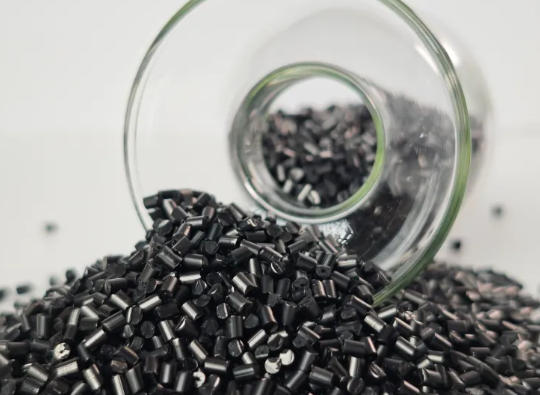
ABS Masterbatch primarily enhances the physical, mechanical, or aesthetic properties of ABS resin. The most common goal is to improve impact resistance and durability without compromising process efficiency.
Yes. Properly formulated Masterbatch blends well with both virgin and recycled ABS, improving consistency and performance even in recycled systems.
The typical dosage ranges from 1% to 5% depending on desired property enhancement. Excessive addition may affect viscosity or surface finish.
Certain formulations are designed with heat stabilizers and can endure prolonged exposure to elevated temperatures, especially in automotive or electrical components.
Masterbatch is a concentrated additive system that must be mixed during molding, whereas a compound is a fully blended resin ready for immediate processing.


