


close
Choose Your Site
Global
Social Media


Views: 222 Author: Rebecca Publish Time: 2026-02-07 Origin: Site


Content Menu
● Understanding PE Masterbatch
>> Key Functions of PE Masterbatch
● Factors Affecting Compatibility of PE Masterbatch
● Compatibility of PE Masterbatch with Common Polymers
>> Polyethylene (LDPE, LLDPE, HDPE)
>> Polyethylene Terephthalate (PET)
>> Acrylonitrile Butadiene Styrene (ABS)
● Enhancing Compatibility through Carrier Selection
● Industrial Applications and Examples
>> Blow Molding
>> Injection Molding Components
● Environmental Considerations
● Future Trends in PE Masterbatch Technology
● FAQ
>> (1) What happens if PE Masterbatch is used with an incompatible resin?
>> (2) Can PE Masterbatch be mixed with PP safely?
>> (3) How can I identify a compatible PE Masterbatch?
>> (4) Is PE Masterbatch suitable for PET packaging?
>> (5) Can compatibilizers improve Masterbatch blending?
Polyethylene (PE) Masterbatch plays a critical role in today's plastics industry, acting as both a performance enhancer and a cost-optimizing solution for a wide range of polymer applications. As global production and consumption of plastic materials continue to rise, understanding the compatibility of PE Masterbatch with other materials becomes increasingly important for manufacturers, designers, and engineers. This article explores how PE Masterbatch interacts with different resins, its limitations, and the factors that determine compatibility and performance.
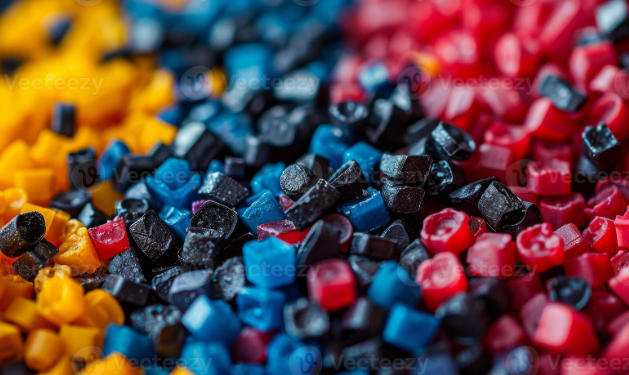
A PE Masterbatch is a concentrated mixture of pigments, additives, and carrier resin (typically polyethylene) used to color and modify the physical properties of plastics. It simplifies manufacturing by providing uniform dispersion of colorants and functional additives—such as UV stabilizers, flame retardants, and antioxidants—within a base polymer.
- Coloration: Delivers consistent and rich pigment dispersion across plastic components.
- Additive Enhancement: Enables the inclusion of anti-static agents, slip agents, and UV absorbers.
- Process Optimization: Reduces dusting, improves yield, and allows precise dosing during processing.
- Cost Efficiency: Enhances performance without requiring extensive additive blending during extrusion or molding.
These advantages make PE Masterbatch an indispensable component in film extrusion, blow molding, injection molding, and sheet manufacturing processes.
The compatibility between PE Masterbatch and base polymers directly influences mechanical strength, surface finish, and long-term stability. When incompatible, the final product may experience uneven dispersion, surface defects, or poor bonding between polymer phases.
Compatibility defines how well the carrier resin in the Masterbatch blends and fuses with the primary polymer matrix. A mismatch leads to separation or performance degradation during processing or in-service use. Therefore, achieving chemical and physical compatibility is fundamental to design and product reliability.
Several key variables determine how PE Masterbatch interacts with other materials:
The carrier resin is the most decisive factor. PE-based carriers (LDPE, LLDPE, HDPE) show excellent compatibility with polyethylene and acceptable blending with polyolefin families such as polypropylene (PP). However, compatibility diminishes when the target material is non-polyolefinic (e.g., PVC, PET).
A significant mismatch in the flow properties (MFI) between the Masterbatch and base resin can cause poor mixing. For instance, a high MFI PE Masterbatch can disperse unevenly within a low MFI polymer, leading to streaking or color distortion.
PE Masterbatch typically processes at 160–220°C. When blended with polymers requiring higher processing temperatures, such as PET or polycarbonate, thermal degradation of PE resin or additives may occur.
Some functional Masterbatches contain reactive additives. These may interact chemically with foreign resins, causing discoloration, poor bonding, or altered performance. Matching additive chemistry with base polymer reactivity avoids unwanted reactions.
Uniform pigment or additive dispersion ensures consistent product quality. For incompatible systems, agglomeration becomes a major issue, affecting surface smoothness and translucency.
PE Masterbatch demonstrates excellent compatibility with polyethylene grades, as both share similar molecular structures. The carrier resin fuses seamlessly, maintaining mechanical strength and optical quality.
PE Masterbatch and PP are semi-compatible. Since both belong to the polyolefin family, physical blending is possible, but minor differences in polarity and density may reduce dispersion efficiency in thin films or fibers. Modified polyolefin carriers can improve bonding.
PE and PS are incompatible due to contrasting polarities and molecular structures. Using coupling agents or special compatibilizers can partially mitigate adhesion issues, but performance trade-offs remain.
PE Masterbatch performs poorly with PVC, as the softening temperature and polarity differ greatly. It can cause delamination or additive migration. PVC-specific Masterbatches with compatible carriers like EVA or PVC should be selected.
PE Masterbatch is not suitable for PET applications. Processing temperature mismatch and polarity differences lead to severe phase separation and clarity loss in transparent products.
PE and ABS exhibit low compatibility; their interfacial adhesion is weak due to distinct polymer structures. Specialized tie-layer compounds or compatibilizers can sometimes be used, but replacing the PE carrier is often recommended.

To maximize compatibility, manufacturers often customize the carrier resin composition of the Masterbatch. For example:
- For polyolefins: LDPE or LLDPE carriers ensure high dispersion and bonding.
- For styrenics: EVA or SBS carriers improve adhesion and impact strength.
- For engineering plastics: Polyamide or PET carriers withstand higher thermal and mechanical demands.
Choosing a carrier similar in chemical nature and processing temperature to the host polymer is the most effective way to enhance compatibility.
Compatibilizers act as molecular bridges between dissimilar polymers. When added to PE-based systems, they improve interface adhesion and phase stability. For instance:
- Maleic anhydride-grafted PE (PE-g-MA) can enhance bonding between PE and polar resins like PA or PET.
- Ethylene-vinyl acetate (EVA) blends act as flexible adhesives across polyolefin and non-polyolefin matrices.
Through compatibilization, manufacturers achieve more uniform composite materials, even when base resins have limited inherent miscibility.
Before large-scale production, plastic compounding facilities perform several tests to verify Masterbatch compatibility:
- Microscopic analysis to examine pigment dispersion and interface continuity.
- Melt blending tests to check flow uniformity under specific processing conditions.
- Mechanical strength measurements to evaluate tensile, flexural, and impact properties.
- Thermal testing (DSC, TGA) to determine heat resistance and potential degradation.
Such evaluations ensure that the selected PE Masterbatch performs optimally without jeopardizing end-product quality.
In film extrusion (LDPE, LLDPE), PE Masterbatch ensures homogenous color and film clarity. When used correctly, it minimizes die buildup and simplifies downstream processing.
For blow-molded bottles and containers, PE Masterbatch imparts color and barrier features. Its compatibility with HDPE provides consistent wall thickness and gloss.
In cable sheathing, conductive or flame-retardant PE Masterbatch enhances durability. Compatibility guarantees stable extrusion flow and insulation uniformity.
In automotive or consumer goods, choosing a PE-based carrier compatible with PP maintains product strength while reducing cycle times.
In the push toward sustainable materials, compatibility also influences recyclability. Using PE Masterbatch with similar polymer bases allows easy reprocessing and minimizes contamination in recycling streams. Conversely, mixing incompatible systems complicates waste segregation and degrades recycled product quality.
Recyclable packaging design now prioritizes mono-material structures, where both the matrix resin and Masterbatch carrier share the same chemical base—commonly polyethylene.
The industry is moving toward:
- Bio-based PE carriers derived from renewable ethanol sources.
- Advanced compatibilizer formulations to expand the range of compatible materials.
- Recycling-friendly Masterbatches to support circular economy initiatives.
- Nano-dispersion technologies for superior color strength and material uniformity.
These innovations aim to improve the performance, sustainability, and cross-compatibility of PE Masterbatch systems across different industrial applications.
Compatibility is the foundation of successful PE Masterbatch performance in polymer processing. By understanding carrier resin properties, additive chemistry, and processing conditions, manufacturers can optimize product quality, minimize extrusion defects, and enhance recyclability. The ongoing evolution of Masterbatch technology—driven by environmental, functional, and economic needs—will continue to refine how PE-based systems integrate with diverse polymers worldwide.

Incompatibility can cause poor dispersion, delamination, surface streaking, and reduced mechanical strength. Product appearance and durability both suffer.
Yes, but partial compatibility limits its efficiency. Modified carriers or compatibilizers help achieve smoother blending and improved adhesion.
Check if the carrier resin closely matches your base polymer's structure and processing temperature. Always request technical datasheets or run pilot blending tests.
No. The processing temperature for PET exceeds the melting point of PE, causing degradation, haze, and structural failure.
Absolutely. Compatibilizers such as maleic anhydride-grafted polyolefins significantly improve interface adhesion between dissimilar polymers.


