


close
Choose Your Site
Global
Social Media


Views: 222 Author: Rebecca Publish Time: 2025-12-23 Origin: Site


Content Menu
● Understanding ABS Masterbatch
● Why Polymer Compatibility Matters
● ABS Masterbatch in Styrenic Polymers
>> 1. ABS and HIPS (High-Impact Polystyrene)
>> 2. ABS and SAN (Styrene-Acrylonitrile)
● Compatibility with Non-Styrenic Polymers
>> 3. ABS and Polycarbonate (PC)
>> 4. ABS and Polyethylene (PE) or Polypropylene (PP)
● Steps to Enhance ABS Masterbatch Compatibility
● Methods for Evaluating Compatibility
● Environmental and Economic Implications
● FAQs About ABS Masterbatch Compatibility
>> 1. What is the main advantage of using ABS masterbatch in polymer blending?
>> 2. Can ABS masterbatch be used with polyethylene or polypropylene?
>> 3. How can manufacturers test the compatibility of ABS masterbatch with other polymers?
>> 4. Does the carrier resin affect the performance of the masterbatch?
>> 5. What processing parameters affect ABS masterbatch performance?
As global manufacturing industries pursue advanced performance materials, the role of masterbatch technology has become increasingly essential. Among all polymer-based colorants and additives, ABS masterbatch stands out for its balance of strength, aesthetic adaptability, and chemical stability. However, when integrating ABS-based masterbatches with other polymers, the question of compatibility becomes critical to achieving optimal performance and cost-efficiency.
This article explores the compatibility of ABS masterbatch with various polymers, analyzing factors such as interfacial adhesion, dispersion quality, and production techniques. It will also provide insights into how manufacturers can tailor their formulations to ensure stable and functional polymer blends.

Acrylonitrile Butadiene Styrene (ABS) is a thermoplastic polymer widely used for its toughness, glossy finish, and dimensional stability. When used as a carrier resin in masterbatch production, ABS provides several advantages:
- High compatibility with a range of styrenic polymers.
- Strong bonding capability with fillers and pigments.
- Excellent processability in injection molding and extrusion.
- Stable color dispersion and heat resistance.
An ABS masterbatch is typically a pre-dispersed mixture of pigments, additives, and the ABS resin carrier. It is used to impart specific color, UV resistance, flame retardancy, or antistatic properties to the base polymer. Selecting an ABS-based carrier allows better matching of rheological properties between the masterbatch and the polymer it is applied to.
Polymer compatibility determines how well two or more different polymers mix or bond at the molecular level. Incompatible systems often lead to poor mechanical properties, color irregularity, or separation during processing.
Key factors influencing compatibility include:
1. Molecular polarity and solubility parameters.
2. Processing temperature range.
3. Viscosity of base polymer and masterbatch carrier.
4. Chemical reactivity between functional groups.
5. Additive migration and pigment wetting behavior.
When using an ABS masterbatch in a non-ABS polymer, controlling these variables ensures that the masterbatch achieves uniform dispersion and functional stability without negatively impacting the host material.
ABS masterbatch blends exceptionally well with HIPS because of their shared styrenic structure. Both materials have similar solubility parameters, allowing for interdiffusion at the interface during processing.
Advantages:
- Smooth color dispersion.
- No phase separation under typical molding temperatures.
- Enhanced impact resistance of HIPS components.
This blend is common in consumer electronics casings, toys, and appliance components, where high surface appearance and mechanical strength are required.
SAN is another compatible polymer for ABS masterbatch systems. Since both polymers share acrylonitrile and styrene monomers, co-mixing results in good clarity, toughness, and heat resistance.
Applications:
- Automotive trims, lighting components, and transparent covers.
- Products requiring balanced mechanical and optical properties.
When formulating transparent or translucent parts, ABS masterbatch color additives can be modified with refractive index-matched pigments to maintain clarity while achieving the desired hue.
ABS/PC blends are among the most popular engineering plastics combinations. Adding ABS masterbatch into PC or PC-dominant systems is feasible, as the two polymers exhibit partial miscibility due to similar polarity.
Benefits of ABS masterbatch in PC systems:
- Improved impact strength with minimal loss in stiffness.
- Versatile color effects with high heat resistance.
- Suitability for automotive interiors and IT applications.
However, careful selection of carrier viscosity and processing temperature is necessary, since PC melts at a higher temperature range (230–260°C). A mismatch could degrade the ABS phase.
Polyolefins such as PE and PP are non-polar polymers, while ABS has a polar structure. This difference leads to poor intrinsic compatibility. When introducing ABS masterbatch into PE or PP systems, chemical compatibilizers or coupling agents must be used.
Possible solutions:
- Using a masterbatch containing a maleic anhydride-grafted ABS carrier.
- Employing compatibilizers such as SEBS-g-MA or PP-g-MA.
- Applying surface treatment or reactive extrusion for enhanced interfacial bonding.
Industrial applications of ABS masterbatch into PP and PE remain limited, often reserved for co-extruded layers, decorative film laminates, or controlled gloss finishes.
Nylon has high polarity and crystallinity, making it thermodynamically incompatible with ABS. Still, manufacturers sometimes incorporate ABS masterbatch into PA to improve toughness or color depth when used with compatibilizing systems.
Challenges include:
- Moisture absorption of nylon causing uneven dispersion.
- Risk of delamination during molding.
- Limited thermal stability for dark color masterbatches at PA processing temperatures.
Proper formulation and surface-treated pigments help minimize these issues.

To ensure optimal blending of ABS masterbatch with various polymers, engineers and color compounders employ the following techniques:
1. Select a compatible carrier resin. Tailor the ABS base with co-polymers (e.g., ABS-SAN) to align thermal and rheological performance with the target polymer.
2. Use dispersion aids. Employ wetting agents or surface-active additives to achieve uniform pigment distribution.
3. Optimize processing parameters. Adjust shear rate, temperature profile, and screw speed during extrusion or injection to ensure proper mixing.
4. Add compatibilizers. Utilize reactive polymers to create molecular bridges between nonpolar and polar systems.
5. Conduct compatibility testing. Assess visual appearance, mechanical performance, and color uniformity after compounding.
These steps can reduce waste, prevent phase separation, and optimize the performance of masterbatch applications across multiple polymer families.
Testing the compatibility of an ABS masterbatch blend involves several analytical and physical evaluation techniques:
- Differential Scanning Calorimetry (DSC): Identifies miscibility by detecting glass transition temperatures.
- Scanning Electron Microscopy (SEM): Examines phase morphology and dispersion uniformity.
- Tensile and Impact Testing: Evaluates mechanical integrity of the resulting composite.
- Colorimetric Analysis: Measures pigment distribution through ΔE color deviation checks.
- Melt Flow Index (MFI): Examines rheological compatibility under heat and shear.
The results from these tests guide formulation adjustments to improve coloration performance, processability, and mechanical strength.
As sustainability gains importance, the reuse and recyclability of polymer blends involving ABS masterbatch attract significant attention. When producing recycled materials, incompatible masterbatch systems can lead to downgraded product quality. Therefore, choosing eco-compatible ABS masterbatch formulations not only ensures performance consistency but also supports circular manufacturing models.
Economic benefits of compatibility include:
- Reduced production losses.
- Minimized equipment contamination from phase separation.
- Consistent product appearance across large-scale runs.
- Lower pigment usage due to efficient dispersion.
By refining compatibility strategies, manufacturers can enhance operational efficiency and align with global sustainability goals.
The compatibility of ABS masterbatch with other polymers plays a decisive role in determining the success of plastic product manufacturing. With suitable selection of carrier resins, processing parameters, and compatibilizing agents, ABS masterbatch can function effectively across a wide range of polymers—from styrenics like HIPS and SAN to engineering plastics like PC and even partially compatible systems like PP and PA.
Understanding the chemical interactions and processing behavior of different polymer systems enables manufacturers to unlock new material combinations that optimize both performance and cost-efficiency. Through careful formulation and testing, ABS masterbatch remains a key enabler in the development of next-generation customized plastic materials.
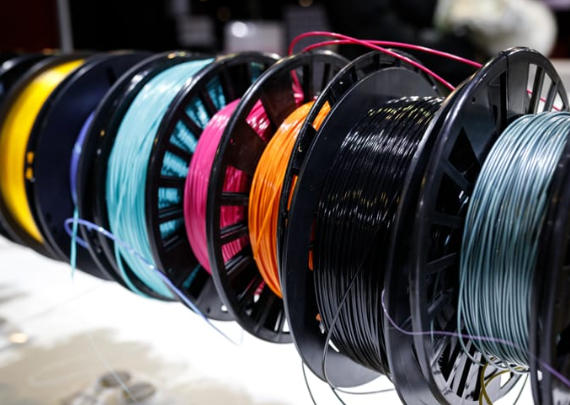
ABS masterbatch offers excellent compatibility with styrenic polymers, strong pigment dispersion, and superior mechanical balance, making it ideal for applications that demand both appearance and performance.
While possible, ABS masterbatch is not naturally compatible with non-polar polyolefins. Compatibilizers or modified ABS carriers are needed to improve bonding and pigment dispersion.
They use methods such as DSC, SEM, and colorimetric analysis to evaluate miscibility, morphology, and color uniformity. These tests help fine-tune formulations for stable blending.
Yes. The carrier resin must have similar melt flow and polarity to the target polymer. An incompatible carrier can cause poor dispersion, irregular coloring, or lower mechanical strength.
Processing temperature, shear rate, and mixing time significantly impact dispersion quality. Uniform temperature control ensures pigment stability and effective blending during molding.


