


close
Choose Your Site
Global
Social Media


Views: 222 Author: Rebecca Publish Time: 2025-12-05 Origin: Site


Content Menu
● Introduction: Why TPU Masterbatch Matters
● Core Advantages of TPU as a Base Material
● Why Use Masterbatch Instead of Pre-Compounded TPU?
● Key Types of TPU Masterbatch for Consumer Electronics
>> Color Masterbatch for Visual Impact
>> Functional Additive Masterbatch
● Application Scenarios in Consumer Electronics
>> Protective Smartphone and Tablet Cases
>> Wearables and Smart Accessories
>> Cables, Chargers, and Connectors
>> Device Housings, Buttons, and Overmolded Parts
● Performance Benefits Enabled by TPU Masterbatch
>> Enhanced Durability and Protection
>> Improved Aesthetics and Branding
>> Safety, Compliance, and Functional Performance
● Process and Cost Advantages for Manufacturers
>> Easier Processing and Higher Efficiency
>> Inventory Optimization and Flexibility
>> Production Consistency and Quality Control
● Design Freedom Enabled by TPU Masterbatch
>> Fine-Tuning Hardness and Tactile Feel
>> Surface Effects and Optical Control
● Choosing and Working With TPU Masterbatch
>> Key Technical Factors to Evaluate
>> Collaboration Between Brand, Processor, and Masterbatch Supplier
● Future Directions and Innovation
● FAQ
>> 1: What exactly is TPU Masterbatch and how is it used in electronics?
>> 2: How does TPU Masterbatch improve product durability for consumer devices?
>> 3: Can TPU Masterbatch help devices meet safety standards such as flame retardancy and ESD control?
>> 4: What should be considered when choosing colors with TPU color Masterbatch?
>> 5: Is TPU Masterbatch suitable for sustainable and recyclable electronics products?
TPU Masterbatch is rapidly becoming a strategic material choice in the consumer electronics industry because it combines design flexibility, protection, and efficient manufacturing in one solution. By integrating Masterbatch technology into TPU-based parts, brands can enhance appearance, durability, and functionality while keeping processes lean and cost-effective.

Thermoplastic polyurethane (TPU) is widely used for smartphone cases, wearables, cables, laptop accessories, and gaming devices due to its flexibility, impact resistance, and pleasant touch. When TPU is modified with Masterbatch formulations, consumer electronics manufacturers can precisely tune properties such as color, surface feel, anti-static behavior, and flame retardancy to meet demanding product specifications.
In modern electronics, design cycles are shorter and product differentiation is critical, so TPU Masterbatch allows brands to update colors, finishes, and functional additives without redesigning the base polymer system. This is particularly valuable for a global OEM/ODM supply chain where the same base TPU compound can be combined with different Masterbatch recipes to serve multiple markets and customer segments.
TPU Masterbatch is a highly concentrated mixture of pigments and/or functional additives that is dispersed in a TPU carrier resin and later diluted into a base TPU during processing. In production, a relatively small percentage of Masterbatch is dosed into the main TPU material—often only a few percent—to achieve the target color or property profile in the final electronics component.
From a formulation standpoint, a TPU Masterbatch usually contains three key elements: the TPU carrier that ensures compatibility, pigments or dyes to control visual appearance, and additives such as UV stabilizers, anti-static agents, slip modifiers, or flame retardants. Because the additives are pre-dispersed in the Masterbatch, processors achieve more uniform distribution and more stable performance than with direct powder dosing.
Before exploring Masterbatch benefits, it is important to understand why TPU itself is so popular in electronics. TPU combines rubber-like flexibility with the strength and processability of thermoplastics, which makes it ideal for housings, cases, cable jackets, flexible covers, and impact-absorbing components. Its high impact resistance has made it a mainstream material for protective smartphone covers and other rugged consumer devices.
TPU also offers excellent abrasion resistance, chemical resistance to oils and greases, and good performance under repeated bending or stretching, which is critical for charging cables, headphone cords, and wearable straps. Furthermore, TPU is compatible with various processing methods—such as injection molding, extrusion, blow molding, and even 3D printing—providing manufacturers with flexibility to design complex geometries and thin-walled parts.
Masterbatch offers significant operational advantages compared with buying many separate pre-compounded TPU grades for every color and function combination. By using a limited number of base TPU resins plus multiple TPU Masterbatch grades, processors can quickly switch between products by only changing the Masterbatch recipe and dosing level.
This approach simplifies inventory, reduces minimum order quantities for niche colors, and enables faster response to custom design requests from electronics brands. It also provides better cleanliness and dosing accuracy than handling loose powders, resulting in fewer defects like streaking, color inconsistency, or surface contamination on high-gloss device housings.
TPU color Masterbatch provides consistent, reproducible color and appearance across large production volumes by ensuring uniform pigment dispersion. In consumer electronics, color Masterbatch is heavily used for smartphone cases, earphone shells, mouse covers, game console controllers, smartwatch straps, and power bank housings where brand identity and trend-driven colors are essential.
Color Masterbatch helps maintain TPU's mechanical properties while achieving rich, vivid colors and effects such as transparent, translucent, metallic, matte, or frosted finishes. Because pigments are precisely metered via the Masterbatch, manufacturers minimize color drift between batches and reduce scrap related to visual non-conformities.
Additive Masterbatch focuses on performance features rather than color, or sometimes combines both. In electronics, common TPU additive Masterbatch types include anti-static, flame-retardant, UV-stabilized, slip/anti-block, and matt surface formulations.
For example, anti-static TPU Masterbatch lowers surface resistivity to reduce dust attraction and prevent static charge buildup on device surfaces, packaging, and cleanroom accessories. Flame-retardant TPU Masterbatch helps casings, cable jackets, and connectors meet regulatory fire safety standards while still maintaining flexibility and mechanical performance.
TPU Masterbatch is widely adopted in phone and tablet case production because it combines impact protection, good grip, and attractive aesthetics. Color Masterbatch allows case manufacturers to follow seasonal trends—such as pastel, neon, gradient, or marble-like effects—without altering the base TPU recipe.
Additive Masterbatch can introduce soft-touch feeling, matte anti-fingerprint surfaces, or enhanced scratch resistance so devices feel premium while resisting daily wear. For rugged cases, Masterbatch can also be formulated to boost impact absorption and abrasion resistance in critical zones like corners and edges.
Smartwatches, fitness bands, AR/VR straps, and wireless earphone hooks frequently rely on TPU because it is comfortable on skin and maintains flexibility over a wide temperature range. TPU color Masterbatch enables consistent brand colors and subtle hue differences to distinguish product series or functional levels.
Functional Masterbatch can introduce sweat resistance, UV stability, and improved resistance to skin oils, which helps wearable straps retain color and mechanical integrity despite continuous contact with the body. This creates longer-lasting wearables that remain attractive and comfortable throughout their service life.
Consumer electronics require large volumes of cable jackets and connector boots where flexibility, mechanical protection, and safety are essential. TPU Masterbatch for cables typically focuses on wear resistance, low-temperature flexibility, fire performance, and anti-static behavior to ensure stable signal transmission and user safety.
Black or colored cable jackets produced with Masterbatch offer consistent color along the entire length and across production batches, simplifying brand recognition and product classification. At the same time, appropriate flame-retardant Masterbatch packages help cables comply with relevant electrical and fire standards.
Many electronics incorporate TPU overmolded on rigid plastics to create soft-touch areas, shock-absorbing corners, or ergonomic grips for handheld devices and controllers. TPU Masterbatch allows designers to tune the hardness, surface friction, and visual effect of these overmolded regions without changing the core mechanical design.
Anti-slip or matte TPU Masterbatch can improve grip and reduce fingerprints on gaming controllers, camera grips, power tool handles, or remote controls. Through intelligent use of Masterbatch, a single device can combine glossy decorative areas with functional, high-friction TPU surfaces.
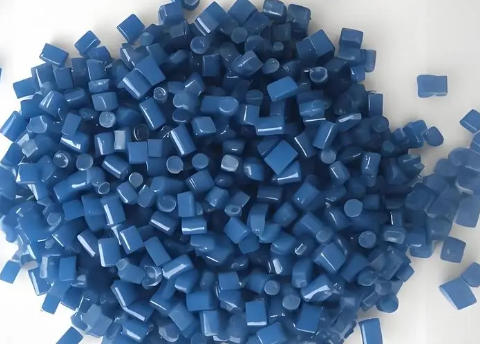
TPU Masterbatch preserves or enhances TPU's intrinsic toughness, abrasion resistance, and impact performance by using compatible carriers and optimized additive systems. In rugged devices, this means better resistance to drops, scratches, and friction, which directly improves user satisfaction and reduces returns.
For cable jackets and connectors, suitable Masterbatch packages improve resistance to bending fatigue, oils, and environmental stresses, extending product lifetime in demanding conditions such as outdoor use or industrial environments. This is particularly valuable in markets where consumers expect long-lasting and reliable charging accessories.
Color Masterbatch enables precise and repeatable control of color value, transparency, and effects such as frost, gloss, or matt texture. This is especially important for global consumer electronics brands that require tight color tolerances across different factories and regions to maintain consistent brand identity.
By carefully selecting TPU Masterbatch formulations, designers can achieve complex visual effects like layered transparency, color gradients, or two-shot overmolded contrasts without sacrificing process stability. This flexibility supports rapid design iteration and allows brands to react quickly to fashion and market trends.
Many consumer electronics must meet safety standards related to flame resistance, electrostatic discharge, and environmental exposure. Flame-retardant TPU Masterbatch helps housings, cable jackets, and accessories comply with relevant regulations while retaining flexibility and mechanical robustness.
Anti-static Masterbatch reduces surface resistance to prevent dust build-up and static shocks, which is beneficial both for user comfort and for protecting sensitive electronic components during handling and assembly. UV-stabilized Masterbatch preserves color and mechanical properties under sunlight or artificial UV exposure, which is vital for outdoor devices and wearables.
Because pigments and additives are pre-dispersed in TPU Masterbatch, processors typically experience fewer issues like streaking, color spots, or poor mixing compared with direct addition of powders or liquids. This leads to more stable production, shorter start-up times, and reduced scrap rates, especially in high-speed extrusion and injection molding lines.
Masterbatch also simplifies dosing: operators only need to adjust the Masterbatch feed rate to fine-tune color or performance, which is easier and safer than handling multiple separate raw additives. This simplicity translates into lower training requirements, fewer operator errors, and smoother shift changes in busy factories.
Using a modular Masterbatch strategy, electronics manufacturers can stock a few core TPU base materials and a portfolio of TPU Masterbatch grades for different colors and functions. This reduces the number of full-compound SKUs, minimizes warehouse complexity, and allows faster adaptation to custom or small-lot orders.
For OEM/ODM suppliers serving many brands, TPU Masterbatch makes it easier to offer customized colors or textures without long lead times or large minimum order quantities of special compounds. As a result, factories can support trial runs, seasonal models, and limited editions with much less risk and capital tied up in inventory.
From a quality management perspective, Masterbatch-based systems support better consistency than individual additive dosing. When the Masterbatch is produced under tight quality controls, the pigment and additive ratio inside each pellet remains constant, making downstream production more predictable.
This also simplifies incoming inspection and quality documentation. Instead of certifying numerous additive packages separately, electronics manufacturers can work with fewer, well-characterized TPU Masterbatch grades. Statistical process control can then focus on a smaller set of variables, improving yield and reducing rework.
Although hardness is mainly determined by the base TPU grade, certain Masterbatch designs can help adjust perceived softness or surface friction. For example, a specially developed TPU Masterbatch can create a velvet-like or rubbery touch on device grips, even when the underlying TPU hardness remains constant.
This opens new possibilities for ergonomic design. A gaming controller or camera grip can be engineered for maximum control and comfort by using different TPU Masterbatch types in various zones, achieving a premium tactile experience without complicating the base resin portfolio.
TPU Masterbatch also influences how light interacts with the surface of an electronic component. By including scattering agents or matting additives, a Masterbatch can generate frosted, satin, or ultra-matte finishes. Conversely, transparent Masterbatch formulations can highlight underlying textures or internal structures.
In transparent or translucent TPU parts, Masterbatch can help manage haze, gloss and color depth, which is crucial for LED indicator covers, translucent remote-control shells, or illuminated logo windows. Designers can therefore use TPU Masterbatch as a “toolbox” for optical engineering as well as for decoration.
When selecting TPU Masterbatch for a particular electronics application, engineers should consider at least the following aspects:
- Compatibility between the TPU carrier and the base TPU grade, to avoid phase separation and property loss.
- Heat stability of pigments and additives at the processing temperature range used for injection molding or extrusion.
- Influence of Masterbatch dosage on mechanical properties such as tensile strength, elongation, tear resistance, and compression set.
- Regulatory and environmental requirements, including RoHS, REACH, and halogen-free or low-smoke standards where applicable.
Testing small-scale samples with several Masterbatch dosages helps determine the best balance between performance and cost. This step is especially important for critical components such as power-cable jackets and structural protective cases.
The most successful TPU Masterbatch applications in consumer electronics are usually the result of close collaboration. Brand owners provide design targets, marketing concepts, and regulatory requirements; processors share information about equipment and processing windows; Masterbatch suppliers contribute formulation expertise and testing capabilities.
By working together at an early stage, the team can avoid issues such as color mismatch on different substrates, incompatibility with overmolding partners, or unexpected property changes during accelerated aging. This collaborative approach shortens development cycles and reduces the risk of last-minute redesigns.
The role of TPU Masterbatch in consumer electronics will continue to grow as devices become thinner, lighter, and more integrated into daily life. Future innovations are likely to include multifunctional Masterbatch systems that combine aesthetics, protection, and smart functionalities in a single product.
For example, TPU Masterbatch could be tailored to incorporate conductive fillers for improved EMI shielding or temperature-management additives for better thermal comfort in wearables. There is also strong interest in bio-based and recyclable TPU combined with environmentally optimized Masterbatch systems, supporting circular-economy strategies in the electronics sector.
As consumers demand more sustainable products, the ability to extend device life, enable refurbishment, and support material recovery will become a competitive advantage. TPU Masterbatch, with its flexibility and compatibility, is well positioned to support these trends.
TPU Masterbatch gives consumer electronics manufacturers a powerful toolbox to optimize aesthetics, performance, safety, and production efficiency within a single material platform. By combining a versatile TPU base with color and functional Masterbatch systems, brands can respond quickly to changing design trends, meet strict regulatory requirements, and deliver products that feel premium and last longer in everyday use.
For global customers seeking customized plastic material solutions, partnering with a supplier that deeply understands TPU Masterbatch formulation, compounding, and application engineering can significantly accelerate development cycles and create differentiated products across the consumer electronics portfolio. From phone cases and wearables to cables and overmolded grips, TPU Masterbatch is truly a game changer for the next generation of electronic devices.
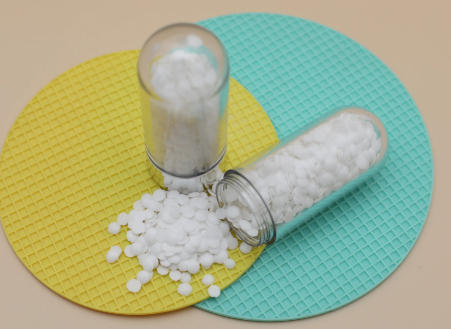
TPU Masterbatch is a concentrated blend of pigments and additives in a TPU carrier that is added in small dosages to a base TPU resin to adjust color and functional properties. In electronics manufacturing, it is typically dosed into injection molding or extrusion equipment to produce cases, straps, cables, and overmolded parts with the desired appearance and performance.
Because TPU itself has high impact, abrasion, and chemical resistance, compatible Masterbatch systems are designed to maintain these properties while introducing color or extra functions. For rugged phone cases, cables, and wearable straps, TPU Masterbatch can enhance resistance to scratching, bending fatigue, and environmental exposure, which reduces failure rates and extends service life.
Yes, TPU additive Masterbatch can incorporate flame retardants and anti-static agents that help parts comply with relevant electrical, fire, and electrostatic discharge requirements. By adjusting Masterbatch type and dosage, engineers can fine-tune performance to meet specific standards while keeping processing conditions and base TPU grades relatively stable.
Designers should balance color strength, transparency, and effects such as gloss or matt with processability and long-term stability under UV, sweat, and skin oils. Collaborating closely with a TPU Masterbatch supplier enables color matching to brand standards and verification through weathering and chemical resistance tests before mass production.
TPU Masterbatch can support more sustainable designs by enabling thinner, longer-lasting parts and by being formulated to be compatible with TPU recycling streams. As bio-based TPU and advanced filler technologies progress, new TPU Masterbatch solutions will further improve efficiency and reduce environmental impact without sacrificing performance in consumer electronics.


