


close
Choose Your Site
Global
Social Media


Views: 222 Author: Rebecca Publish Time: 2026-02-12 Origin: Site


Content Menu
● Understanding Why PC is an Ideal Base Material
● Composition and Functionality of PC Masterbatch
● Key Advantages of Using PC Masterbatch in Plastic Manufacturing
>> 1. Superior Color Uniformity and Stability
>> 2. Enhanced Processing Efficiency
>> 3. Improved Mechanical and Thermal Performance
>> 4. Customization and Flexibility
>> 5. Cost Effectiveness and Sustainability
● Industry Applications of PC Masterbatch
>> Electronics and Electrical Components
>> Optical and Medical Applications
>> Construction and Lighting Materials
● The Role of Innovation and Custom Formulation
● Quality Control and Production Considerations
● Environmental Impact and Sustainable Trends
● Future Outlook for PC Masterbatch Technology
● FAQ
>> 1. What is the main function of PC Masterbatch?
>> 2. How much PC Masterbatch should be added in production?
>> 3. Can PC Masterbatch be used with other resins besides polycarbonate?
>> 4. Are PC Masterbatch products recyclable?
>> 5. What are the key differences between PC Masterbatch and standard Masterbatch?
In the dynamic world of plastic manufacturing, innovation drives performance, sustainability, and product quality. Among the many advancements reshaping the plastics industry, PC Masterbatch (Polycarbonate Masterbatch) stands out as one of the most valuable materials for producers seeking both consistency and customization. By combining the versatility of polycarbonate with advanced additive technologies, PC Masterbatch has become indispensable for manufacturers striving for precision, efficiency, and visual excellence.
This article explores in depth the characteristics, production advantages, and wide-ranging industrial uses of PC Masterbatch — and how it continues to redefine standards for high-performance plastics.
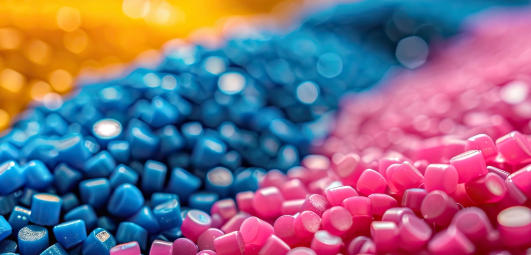
PC Masterbatch is a concentrated mixture of pigments and additives encapsulated in a carrier resin—typically polycarbonate (PC)—that helps modify the mechanical, thermal, and optical properties of plastic products. It is designed to be added to natural polymer materials during processing (such as injection molding, extrusion, or blow molding) in small dosages to achieve desired characteristics.
Unlike traditional colorants or powdered additives, PC Masterbatch ensures more uniform dispersion, higher stability, and greater ease of handling. The carrier resin in the masterbatch perfectly matches the base polymer, ensuring maximum compatibility, superior color strength, and minimal impact on mechanical performance.
Polycarbonate is a high-performance engineering plastic known for remarkable strength, impact resistance, and transparency. It provides an ideal base for Masterbatch formulation because of its physical and chemical stability. Here's why PC stands out:
- Outstanding Transparency: PC offers crystal-clear appearance and optical precision, making PC Masterbatch the choice for transparent or translucent products.
- Thermal Stability: Maintains dimensional stability at high processing temperatures.
- Impact Resistance: Provides exceptional toughness even at low temperatures.
- Electrical Insulation: Ensures safe application in electronic and automotive parts.
- Dimensional Precision: Reduces shrinkage and deformation, guaranteeing consistent results.
Because of these intrinsic properties, PC Masterbatch enables manufacturers to balance strength, safety, and design flexibility across a wide range of plastic applications.
The effectiveness of a PC Masterbatch depends on its composition. Typically, a PC Masterbatch includes:
- Carrier Resin (PC): Ensures compatibility with polycarbonate-based systems.
- Color Pigments: Provide specific coloration (transparent, translucent, or opaque).
- Functional Additives: Improve UV protection, flame retardancy, anti-static properties, or mechanical strength.
- Processing Aids: Enhance flow characteristics and dispersion performance during molding.
Each ingredient in the Masterbatch plays a critical role, allowing manufacturers to tailor optical, tactile, and functional properties according to precise product specifications.
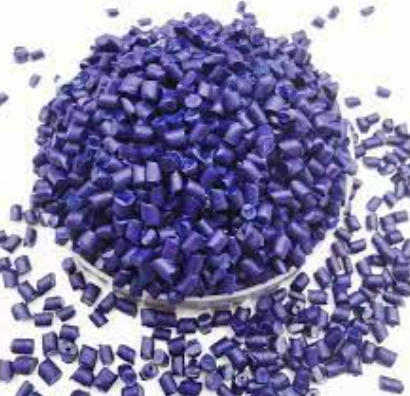
Color consistency is one of the biggest challenges in large-scale plastic production. Masterbatch technology ensures uniform distribution of colorants throughout the polymer matrix. Because pigments are pre-dispersed within the PC carrier, they remain stable during melting and mixing, avoiding defects such as color streaking or spot formation.
PC Masterbatch simplifies the handling of pigments and additives, improving manufacturing efficiency. Instead of weighing and mixing powder materials each time, producers can simply feed a pre-formulated masterbatch into the extruder or molding machine. This not only shortens processing time but also minimizes labor intensity and contamination risks.
Unlike surface coatings or post-treatments, PC Masterbatch modifies plastic at a molecular level. The resulting material inherits both the robust structure of polycarbonate and the functional enhancements of the additives, leading to:
- Increased impact and tensile strength
- Better heat resistance
- Enhanced UV and weather performance
- Stable mechanical behavior under varying environmental conditions
PC Masterbatch gives manufacturers immense freedom to innovate. Whether producing flame-retardant automotive housings, high-gloss electronic shells, or transparent optical lenses, customized formulations can be developed to precisely match production requirements. This level of flexibility reduces waste and supports rapid new product development.
Using Masterbatch is more cost-efficient than individual pigment dosing or liquid color systems. Small percentages (usually 1–5%) of Masterbatch achieve intense coloration and functionality with little wasted material. Furthermore, the dispersion process minimizes dust, improving workplace safety and enabling better recycling of production scraps.
In electronic device housings, connectors, and LED parts, PC Masterbatch offers desirable clarity and flame-retardant features. The anti-static and UV-stabilized grades help maintain performance over time. High transparency and impact strength make it ideal for LED covers and lenses.
Automotive design increasingly demands aesthetics aligned with performance. PC Masterbatch can provide metallic, pearlescent, or matte finishes while retaining structural integrity. Tailored formulations also support heat resistance and scratch protection, fitting the stringent conditions of dashboard and lighting components.
For packaging applications such as cosmetic bottles or transparent containers, PC Masterbatch ensures flawless clarity, gloss, and durability. Its ability to resist discoloration and chemical degradation keeps packaging visually appealing and safe for long-term use.
Optical-grade PC Masterbatch is used in lenses, safety goggles, and medical devices requiring optical transparency and chemical inertness. The uniform dispersion of high-purity pigments ensures stable transmission properties essential to optical precision.
In LEDs, building panels, and protective covers, PC Masterbatch provides weather resistance and stable light diffusion features. By adjusting formulation, manufacturers can balance transparency and diffusion for efficient illumination without glare.
Customization is where PC Masterbatch truly shines. Advanced compounding technologies enable manufacturers to design formulations that meet new market needs. For instance:
- Environmentally Friendly Masterbatch uses halogen-free flame retardants.
- Antimicrobial Masterbatch inhibits bacteria and mold growth for medical-grade plastics.
- Diffusive Masterbatch controls light dispersion in optical applications.
The ability to integrate various additives and colorants into a single masterbatch system allows engineers to simplify production chains while maximizing product diversity.
For consistent Masterbatch performance, several process parameters require close control:
- Pigment Dispersion: Uniform distribution avoids color inconsistency.
- Moisture Control: PC is sensitive to water absorption; drying before processing is essential.
- Melt Flow Index (MFI): Determines compatibility between PC Masterbatch and host resin.
- Thermal Degradation: Proper temperature management preserves additive function.
- Batch-to-Batch Stability: Ensures that each production run performs identically.
Rigorous testing—covering colorimetric analysis, mechanical properties, and aging resistance—helps maintain consistency and certify product quality.
As global industries move toward sustainability, using PC Masterbatch can also support eco-friendly production goals. Some environmental advantages include:
- Reduced Pigment Waste: Concentrated formulation minimizes raw material usage.
- Cleaner Processing: No dust generation compared to powders, improving workplace safety.
- Recyclable Compatibility: Masterbatch designed for recyclability preserves resin reusability.
- Energy Efficiency: Shorter production cycles and improved yield lower carbon footprints.
Manufacturers are increasingly exploring bio-based additives and recycled PC Masterbatch formulations to align with global ESG policies and circular economy initiatives.
The next decade will see stronger integration between materials science and intelligent manufacturing. With automation and digital color matching, PC Masterbatch production will achieve faster turnaround and even tighter quality control. Furthermore, nanotechnology-based additives could extend Masterbatch performance beyond aesthetics—to self-healing, anti-fogging, or conductive properties.
As global demands for premium plastics grow, PC Masterbatch will remain a core material technology bridging performance, sustainability, and design innovation.
PC Masterbatch represents a strategic advancement in plastic manufacturing—combining the inherent strength and clarity of polycarbonate with the versatility of modern additive technology. From automotive lighting to medical devices and packaging, its ability to deliver consistent color, performance stability, and design flexibility gives manufacturers a decisive edge in competitive markets.
As industries continue to evolve toward eco-efficiency and customization, PC Masterbatch will not only enhance production quality but also pave the way for smarter, more sustainable plastics innovation.
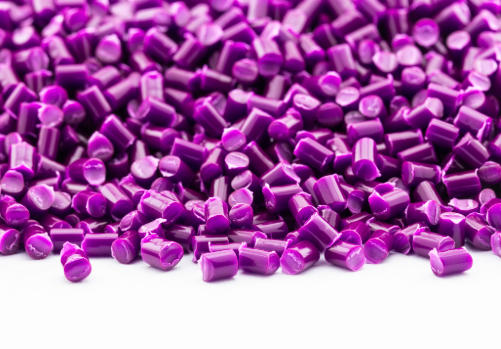
PC Masterbatch delivers color, UV stability, flame retardancy, and other functional improvements to polycarbonate and related plastics during processing.
Typically, 1–5% by weight of PC Masterbatch is sufficient, depending on the desired color intensity and additive concentration.
Yes, though primarily designed for PC, compatible versions exist for ABS, PMMA, and PET systems with proper carrier matching.
Yes. High-quality PC Masterbatch formulations are fully recyclable when blended with compatible polymers, supporting circular production models.
PC Masterbatch specifically uses polycarbonate as the carrier resin, providing superior optical clarity, heat resistance, and mechanical balance—making it ideal for engineering-grade plastics.


