


close
Choose Your Site
Global
Social Media


Views: 222 Author: Rebecca Publish Time: 2025-12-11 Origin: Site


Content Menu
● Understanding TPU Masterbatch
● The Importance of Color in TPU Products
>> Enhancing Brand Recognition
>> Functionality Through Color Coding
>> Emotional and Aesthetic Impact
● Types of TPU Color Masterbatch
>> Transparent or Translucent Masterbatch
>> Metallic and Pearl Masterbatch
>> Natural and Biodegradable Tone Masterbatch
● Color Matching and Customization Process
● Factors Affecting Color Performance in TPU Masterbatch
>> 1. Carrier Resin Compatibility
● Innovations in TPU Masterbatch Technology
>> Smart and Functional Colors
● Choosing the Right TPU Masterbatch Supplier
● Applications of TPU Masterbatch Across Industries
>> Electronics
● Future Trends in TPU Color Customization
● FAQ
>> 1. What is the difference between pigment and Masterbatch?
>> 2. Can TPU Masterbatch affect mechanical properties?
>> 3. How do I choose the right Masterbatch concentration?
>> 4. Is TPU Masterbatch suitable for recycled materials?
>> 5. What testing methods are used to verify color consistency?
The global plastics industry continues to evolve with growing demand for customized, high-performance materials. One of the most adaptable and functional materials available today is thermoplastic polyurethane (TPU). Known for its elasticity, transparency, and durability, TPU is widely used in fields ranging from footwear and electronics to automotive interior parts. However, when it comes to meeting brand-specific or functional color requirements, TPU needs an essential ingredient — the Masterbatch.
This article explores how TPU Masterbatch enables color customization, the types of colors available, and the latest innovations in processing and design. We'll also examine key factors to consider when selecting color Masterbatch for TPU applications and share insights into the global customization trends driving product differentiation.

In plastic manufacturing, a Masterbatch is a concentrated mixture of pigments, additives, or both, encapsulated in a carrier material such as TPU, PP, or PE. It is used to color raw polymers or impart specific properties such as UV resistance, flame retardancy, or gloss enhancement. Instead of dosing pigments directly into the polymer, manufacturers use Masterbatch pellets, which ensures consistent dispersion and minimizes waste.
TPU, being a thermoplastic elastomer, benefits significantly from a well-formulated color Masterbatch. Since TPU materials are sensitive to heat and prone to degradation if not processed properly, the Masterbatch must have excellent compatibility and thermal stability. High-quality TPU Masterbatch ensures:
- Uniform color dispersion
- Retention of mechanical strength
- Resistance to yellowing or fading under UV exposure
- Ease of processing during injection molding or extrusion
Color plays a critical role in product design and branding. For many consumer and industrial applications, the right color not only improves appearance but also influences user perception, safety, and functionality.
Many companies use distinctive hues that represent their brand identity. By applying a custom TPU Masterbatch, manufacturers can replicate brand colors with precision across multiple product lines — from cables and seals to phone cases and sportswear accessories.
Color is also functional in technical industries. For instance, medical tubing, electronic connectors, or data cables often require specific color codes to distinguish product types. A well-chosen TPU Masterbatch simplifies manufacturing by embedding colors that comply with international standards while preserving material integrity.
Consumers respond emotionally to color. A vibrant TPU phone cover, a transparent sneaker sole, or a pastel automotive trim piece can affect purchasing decisions. The TPU color Masterbatch thus plays both an aesthetic and commercial role in creating attractive, marketable designs.
This type provides opaque and consistent shades. It is suitable for industrial or technical parts where opacity and durability matter more than transparency.
Applications:
- Automotive dashboards
- Power tools handles
- Protective gear and components
TPU naturally allows partial light transmission. Transparent Masterbatch enhances visual appeal while keeping functional clarity, perfect for items like flexible phone cases or shoe soles.
Applications:
- Sportswear components
- LED covers
- Transparent hoses
Adding metallic pigments or pearlescent agents creates a premium look with reflective effects. Metallic TPU Masterbatch is increasingly popular in consumer goods and electronics accessories.
Applications:
- Luxury packaging
- Electronic device cases
- Footwear embellishments
Fluorescent TPU Masterbatch helps enhance visibility and safety. With UV-activated pigments, it produces vivid colors suitable for safety equipment and fashion accessories.
Applications:
- Safety vests and straps
- Sports gear
- Glow-in-the-dark accessories
With sustainability as a global trend, many TPU Masterbatch producers now offer eco-friendly, bio-based options. These are compatible with recycled TPU and minimize environmental impact.
Applications:
- Environmentally friendly packaging
- Recyclable consumer products
- Green mobility components
Creating the perfect color for TPU products requires accuracy and technical expertise. The color matching process usually involves three key stages:
1. Color Specification
The manufacturer provides color samples, Pantone references, or physical prototypes. The Masterbatch designer analyzes the required tone and optical properties.
2. Laboratory Testing
Using advanced spectrophotometers, colorists test compatibility with TPU resins under different processing temperatures. They adjust pigment ratios to maintain thermal stability and UV resistance.
3. Trial Production
Small test batches are run on injection or extrusion machines. The sample is compared to the target color under varying lighting conditions before bulk production begins.
Modern TPU Masterbatch producers invest in digital color-matching systems, allowing real-time adjustment and faster lead times.
The base resin of the Masterbatch must be compatible with the TPU material. Poor compatibility can lead to color streaking, uneven dispersion, or mechanical weakness.
High-performance pigments with heat and light stability ensure long-term color retention. Inferior pigments fade or yellow upon exposure to UV or humidity.
Extrusion temperature, screw speed, and residence time affect color consistency. The processing parameters must match both TPU and Masterbatch melting points.
Additives such as antioxidant agents, UV stabilizers, or anti-static agents improve performance. However, excessive additives can alter color shading or opacity.
Contamination by dust or moisture can distort color results, especially in transparent or translucent TPU. Cleanroom manufacturing ensures pigment purity and accuracy.
The field of Masterbatch production is shifting toward advanced, sustainable, and digital technologies.
Manufacturers now develop low-VOC TPU Masterbatch to reduce emissions during molding. Bio-based carriers derived from renewable resources are also entering the market as part of green manufacturing initiatives.
Using nanoparticle pigments improves dispersion and enhances color strength, enabling deeper hues with lower pigment dosage. This advancement helps achieve vibrant coloration without affecting TPU's mechanical properties.
Some TPU Masterbatch formulations can change color under heat or light exposure, offering innovative visual effects. Thermochromic or photochromic pigments enable smart wearables, temperature indicators, and decorative applications.
As TPU becomes a key material in additive manufacturing, specialized TPU Masterbatch pellets are designed for filament or powder preparation. They provide stable color distribution for complex 3D-printed geometries.
When selecting a Masterbatch supplier, consider these factors carefully:
- Experience with TPU Materials: TPU differs from common plastics like PP or PE and requires specific processing expertise.
- Color Consistency and QC System: Suppliers with ISO or RoHS certification guarantee stability across production batches.
- Technical Support: A reliable partner provides both pre-sales color matching and post-molding color troubleshooting.
- Customization Capabilities: For unique brand colors or effects, choose a supplier offering personalized formulations and on-demand adjustments.
- Sustainability Standards: Confirm the supplier's ability to provide eco-friendly TPU Masterbatch that adheres to global environmental directives.
Used for dashboards, door trims, and cable coatings. The TPU color Masterbatch enhances aesthetic value while preserving flexibility in harsh temperature conditions.
Insoles, soles, and upper components use TPU Masterbatch for vivid colors, transparency, and durability, helping brands differentiate their sports or lifestyle lines.
Flexible cords, phone cases, and protective housings rely on TPU's elasticity and Masterbatch color customization to achieve high-end finishes.
Color-coded flexible tubing and surgical accessories employ biocompatible TPU Masterbatch to ensure visibility and safety in clinical settings.
Seals, gaskets, and hoses colored with TPU Masterbatch simplify assembly processes and visual identification.
- Digital twin simulation for predicting color behavior before physical production.
- AI-driven color formulation for precision and faster design-to-market cycles.
- Circular economy integration, focusing on recyclable Masterbatch and closed-loop TPU reprocessing.
- Customization-on-demand, where customers configure colors digitally and order personalized Masterbatch formulations online.
As industries move toward sustainability and individuality, the Masterbatch sector will remain a driving force in material innovation.
Color is more than just a visual attribute — it's a language that connects technology, emotion, and identity. The TPU Masterbatch industry provides an essential bridge between material science and creative design, allowing manufacturers to deliver durable, aesthetically coherent, and brand-aligned products. By understanding pigment chemistry, processing technology, and market trends, manufacturers can harness Masterbatch solutions that not only meet technical demands but also inspire innovation.
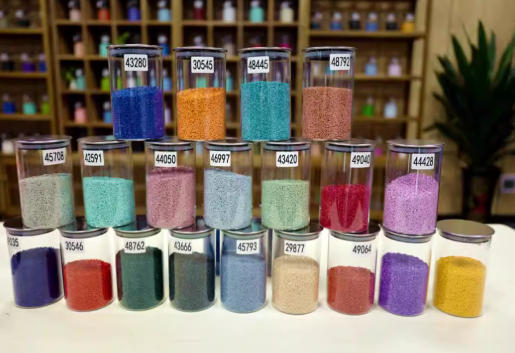
Pigments are raw color powders, while Masterbatch is a pre-dispersed, concentrated color mixture encapsulated in TPU resin for easier handling and uniform dispersion during production.
If correctly formulated, TPU Masterbatch should maintain or even enhance mechanical properties. Poor-quality batches, however, might affect flexibility or cause uneven coloration.
It depends on product thickness, opacity, and desired hue intensity. Typical addition ratios range from 1% to 5% by weight, but testing is recommended for precision.
Yes. Many modern TPU Masterbatches are compatible with recycled TPU, ensuring stable coloration without compromising reprocessing quality.
Spectrophotometric analysis, Delta E measurement, and accelerated UV exposure tests are common methods used to ensure color uniformity and durability.


