


close
Choose Your Site
Global
Social Media


Views: 222 Author: Rebecca Publish Time: 2025-12-05 Origin: Site


Content Menu
● Understanding TPU Masterbatch
● What Counts as Traditional Plastics?
● Material Properties: TPU Masterbatch Versus Traditional Plastics
● Surface Feel, Aesthetics, and Functional Effects
● Processing Behavior and Production Efficiency
● Sustainability and Regulatory Advantages
● Design and Application Opportunities
● How TPU Masterbatch Enables Custom Plastic Solutions
● FAQ
>> 1. What is TPU masterbatch and why is it important?
>> 2. How does TPU masterbatch differ from traditional plastic solutions?
>> 3. Is TPU masterbatch suitable for large‑scale industrial production?
>> 4. Does TPU masterbatch support sustainability and regulatory compliance?
>> 5. When should a manufacturer choose TPU masterbatch over traditional plastics?
Thermoplastic polyurethane (TPU) masterbatch is reshaping the way engineers and brand owners think about plastic components in demanding applications. TPU masterbatch blends the elasticity and toughness of TPU with highly concentrated pigments and functional additives, allowing manufacturers to build soft, durable, and visually attractive products with great precision. Compared with traditional plastics such as PE, PP, PVC, ABS, and others, TPU masterbatch enables a higher level of material customization while aligning with modern expectations for comfort, safety, and sustainability. As global markets move toward higher performance and value‑added features, the limitations of unmodified traditional plastics become more visible. Engineers are increasingly seeking masterbatch solutions that do more than provide color; they must enhance mechanical properties, surface quality, regulatory compliance, and environmental footprint. For a company focusing on innovative plastic materials, positioning TPU masterbatch as a core technology platform provides a powerful way to serve customers in footwear, electronics, automotive, healthcare, and many other fields.

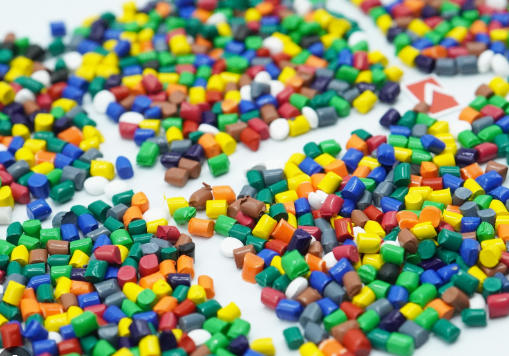
TPU masterbatch is a pelletized, highly concentrated mixture of pigments and/or functional additives using TPU as the carrier resin. Because the carrier and the target substrate share the same TPU chemistry, the masterbatch disperses uniformly and maintains the base resin’s properties, such as excellent flexibility, tensile strength, and abrasion resistance. This compatibility is a key reason why TPU masterbatch is preferred in high‑end applications where both performance and aesthetics are important. TPU masterbatch can take several forms. Color masterbatch focuses on delivering stable, vivid shades across a wide range of opacities and transparencies. Functional TPU masterbatch targets performance enhancements such as UV resistance, flame retardancy, antistatic behavior, slip modification, or antimicrobial effects. Multifunctional TPU masterbatch combines color and performance additives in one system, reducing the number of materials that processors must handle while simplifying quality control. Because TPU is a thermoplastic elastomer, its masterbatch inherits outstanding elastic recovery and flexibility over a broad temperature range. This makes TPU masterbatch a strong candidate in products that must bend, flex, or stretch repeatedly without cracking or whitening. When used correctly, a small addition of TPU masterbatch can significantly change how a product looks, feels, and performs without forcing designers to change the overall resin family.
Traditional plastics typically refer to widely used commodity and engineering thermoplastics such as polyethylene (PE), polypropylene (PP), polyvinyl chloride (PVC), polystyrene (PS), polyethylene terephthalate (PET), acrylonitrile‑butadiene‑styrene (ABS), and polyamides (PA). These materials form the backbone of modern industry because they are cost‑effective, readily available, and supported by well‑understood processing technologies. They are used in packaging, containers, pipes, consumer goods, automotive parts, electronics housings, and countless other everyday items. Each traditional resin family has its own strengths and weaknesses. PE and PP are lightweight, chemically resistant, and easy to process, but they offer limited rigidity and thermal resistance without reinforcement. PVC provides good form stability and can be formulated to be flexible or rigid, yet often depends on plasticizers and stabilizers that face regulatory scrutiny. ABS combines rigidity and impact strength but may not handle continuous flexing or harsh outdoor exposure without additional protection. In many high‑demand applications, these traditional plastics must be modified with additives or combined with other materials to meet performance targets.
A major advantage of TPU masterbatch is the ability to preserve and amplify TPU’s intrinsic mechanical properties. TPU is known for its rubber‑like elasticity, high tensile and tear strength, and outstanding abrasion resistance. When pigments and additives are incorporated via a TPU masterbatch, these properties remain largely intact, allowing designers to rely on the same baseline performance across a range of colors and functional variations. By contrast, traditional plastics often start from a more rigid or brittle base state. While some grades of PE, PP, and ABS can be impact‑resistant, they usually cannot match TPU’s combination of soft flexibility and toughness. When these traditional plastics are heavily filled or modified, they may become more susceptible to cracking, stress whitening, or creep under long‑term load. It is common to compensate by increasing part thickness or adding separate elastomeric components, which adds weight and cost. Another important difference lies in low‑temperature performance. Many traditional plastics become stiffer and more fragile at low temperatures, which can limit their use in outdoor or refrigerated environments. TPU, however, retains its flexibility and elastic recovery at much lower temperatures, and TPU masterbatch allows this behavior to be preserved even in richly colored or functionally loaded formulations. This property is especially useful in outdoor sports equipment, winter footwear, flexible cables, and cold‑chain logistics components.
Designers increasingly see surface feel as a core part of user experience. TPU masterbatch can be tailored to deliver soft‑touch surfaces that are comfortable in contact with skin, making it ideal for wearables, phone cases, grips, and ergonomic tools. The elastomeric nature of TPU allows the surface to compress slightly under pressure and then quickly recover, giving a premium, cushioned feel that traditional rigid plastics rarely achieve without overmolding additional materials. Color is another domain where TPU masterbatch shines. Because pigments are pre‑dispersed in a compatible TPU carrier, the final products can achieve uniform color with minimal streaks, cloudiness, or patchiness. TPU masterbatch supports solid, translucent, and transparent color effects while maintaining clarity and gloss levels determined by the formulation. This consistency is particularly important for global brands that demand identical appearance from batch to batch and across multiple production sites. Beyond aesthetics, TPU masterbatch can create advanced surface functions. Matte masterbatch systems reduce glare and fingerprints, antistatic masterbatch lowers surface resistivity to prevent dust build‑up and static shocks, and slip‑modifying masterbatch tunes the coefficient of friction for better grip or smoother sliding. Traditional plastics can also use additive masterbatch solutions, but differences between carrier resin and base polymer sometimes lead to poor dispersion, unstable surface properties, or compromised mechanical performance. In TPU applications, a dedicated TPU masterbatch preserves both look and function.
From a processing standpoint, TPU masterbatch is designed to work smoothly with standard thermoplastic technologies such as extrusion, injection molding, calendaring, and film or sheet production. Processors generally add TPU masterbatch via dry blending or gravimetric dosing directly into the feed throat along with base TPU resin. Because the carrier is chemically identical or very similar to the base TPU, melt mixing is efficient and dispersion is uniform. The use of TPU masterbatch can simplify formulation complexity at the processing stage. Instead of adding multiple separate additives and pigments, processors can use a single masterbatch that encapsulates the desired combination. This reduces dosing errors, improves reproducibility, and speeds up changeovers between product variants. For high‑volume manufacturers, fewer formulation variables translate into less downtime, lower scrap rates, and more predictable product quality. Traditional plastics also rely heavily on masterbatch technology, but they sometimes face compatibility and rheology challenges when combining multiple additives. For example, a color masterbatch based on an incompatible carrier can cause gels, visible streaks, or melt fracture. In heavily filled systems, flow issues may appear, requiring equipment adjustments or higher processing temperatures. TPU masterbatch avoids many of these problems by using a TPU carrier specifically designed to match the flow characteristics and thermal behavior of the host TPU resin.
Sustainability is now an essential factor in material selection, and TPU masterbatch can support greener strategies in several ways. TPU can be produced in halogen‑free grades, and certain formulations are designed for recyclability or even biodegradability under defined conditions. When such resins are combined with TPU masterbatch, the resulting products can offer a more favorable environmental profile than those based on PVC or other plastics with challenging additives. Long product life is another environmental advantage. Thanks to high abrasion resistance and elastic recovery, TPU masterbatch‑modified components tend to last longer in service than many traditional plastic alternatives. A shoe sole or strap based on TPU masterbatch may withstand more cycles of bending and friction before showing wear, which reduces overall consumption and waste over time. From a life‑cycle perspective, this durability can offset the higher initial material cost. Regulatory compliance also plays a central role in market access. In sensitive sectors such as toys, consumer electronics, automotive interiors, and healthcare, the use of certain plasticizers, heavy metal pigments, or halogenated additives is increasingly restricted. TPU masterbatch systems can be formulated to meet strict standards while still delivering required mechanical and aesthetic performance. Traditional plastics that depend on such restricted additives may require more complex reformulation or additional barrier layers to achieve similar compliance.
On a per‑kilogram basis, TPU and TPU masterbatch are usually more expensive than commodity plastics like PE and PP. However, cost evaluation needs to go beyond material price and consider the total cost of ownership, including product performance, warranty claims, manufacturing efficiency, and brand value. TPU masterbatch can deliver a better cost–performance balance for many high‑value applications. Because TPU masterbatch allows thin‑wall designs with high toughness, parts can often be lighter yet more durable than those made from traditional plastics. This may save material weight per piece even if the resin is costlier per unit mass. Furthermore, the combination of color and functional additives within a single TPU masterbatch can eliminate secondary processes such as painting, coating, or overmolding, which reduces labor, cycle time, and quality risks. From a branding perspective, products that feel better, last longer, and maintain their appearance under real‑world use build stronger customer loyalty. The incremental material cost of TPU masterbatch is frequently offset by higher perceived value, premium pricing opportunities, and reduced after‑sales issues. In many markets, especially in sports, electronics, and automotive, this value proposition is more important than lowest upfront material expense.
TPU masterbatch supports a wide range of design opportunities across industries. In footwear, it is used to customize sole hardness, rebound, transparency, and color, enabling designers to create visually striking shoes with tailored cushioning. In sports and outdoor equipment, TPU masterbatch enhances grips, straps, and protective shells that must remain flexible, non‑slip, and impact‑resistant in varying weather conditions. In consumer electronics and wearables, TPU masterbatch allows the production of soft straps and protective sleeves that stay comfortable against the skin while resisting sweat, oils, and repeated bending. The same approach can be used for protective cases that must absorb shocks and maintain color vibrancy. TPU masterbatch also supports smooth integration of branding elements through controlled color matching and special visual effects such as translucency or matte surfaces. Automotive and transportation sectors make use of TPU masterbatch in interior trims, acoustic components, and flexible covers, where low noise, pleasant touch, and long‑term color stability are important. In industrial and medical applications, TPU masterbatch can help tune tubing, hoses, and films to achieve a balance of chemical resistance, clarity, and flexibility that is difficult to achieve with traditional plastics alone. In each of these fields, TPU masterbatch is not just a coloring agent but a functional design tool.
One of the strongest arguments for TPU masterbatch is its role as a modular platform for custom solutions. By adjusting TPU masterbatch formulation variables—such as base TPU hardness, pigment type, additive package, and let‑down ratio—material engineers can precisely tune final product properties without changing processing equipment or basic part design. This flexibility is particularly useful when working with global customers who require localized color standards, regional regulatory compliance, or application‑specific performance. For a plastics company specializing in masterbatch, a structured co‑development process with customers can include concept discussion, small‑scale lab trials, prototype runs, and full‑scale production. Throughout this process, TPU masterbatch can be refined for optimal balance between processability and in‑service performance. This collaborative model is harder to implement with traditional plastics alone, where modifying core resin properties often requires more drastic formulation changes and longer development cycles. In addition, a dedicated TPU masterbatch partner can help customers standardize across platforms. For example, a brand might use a unified TPU masterbatch concept for multiple product lines while varying the let‑down ratio to adjust hardness, gloss, or transparency. This approach reduces inventory complexity and improves quality consistency, while still delivering a customized feel in each final application.
TPU masterbatch combines the unique advantages of thermoplastic polyurethane with the versatility of concentrated masterbatch technology, creating a powerful tool for modern product design. Compared with traditional plastics, TPU masterbatch provides superior elasticity, abrasion resistance, low‑temperature flexibility, and tunable surface feel, while maintaining consistent color and functional performance. It also offers clear benefits in sustainability, regulatory compliance, and long‑term durability. For manufacturers aiming to differentiate their products in footwear, electronics, automotive, industrial, and medical markets, TPU masterbatch is more than an additive; it is a strategic material platform. By partnering with a specialist in TPU masterbatch development and production, global customers can transform conventional plastic components into high‑value solutions that deliver better user experience, longer service life, and stronger brand recognition. Switching from purely traditional plastics to customized TPU masterbatch systems can thus become a decisive step toward innovation and market leadership.
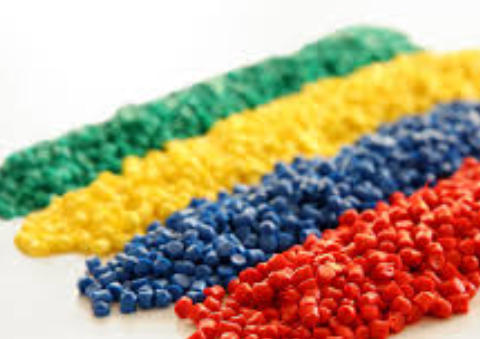
TPU masterbatch is a concentrated mixture of pigments and functional additives formulated in a TPU carrier resin. It is important because it allows manufacturers to fine‑tune color, surface feel, and performance while preserving the outstanding mechanical properties of TPU, such as elasticity and abrasion resistance. By using TPU masterbatch, companies can create high‑value products with consistent quality and reduced formulation complexity.
Traditional plastics such as PE, PP, PVC, or ABS are typically rigid or semi‑rigid and may require additional elastomers, coatings, or fillers to reach demanding performance levels. TPU masterbatch, by contrast, starts from an elastomeric base and uses a compatible TPU carrier to disperse additives uniformly. This leads to components that can flex, stretch, and resist wear while maintaining a stable color and surface finish, which is difficult to achieve with unmodified traditional plastics.
Yes, TPU masterbatch is specifically designed for industrial processes like extrusion, injection molding, and film production. It can be dosed precisely using standard feeding systems and integrates smoothly into existing production lines. Because pigments and additives are pre‑dispersed, TPU masterbatch often improves process stability and reduces scrap, which is especially valuable for large‑scale, high‑volume manufacturing.
TPU masterbatch can be formulated with halogen‑free, recyclable, or even biodegradable grades of TPU and additives that meet strict international regulations. Its long‑lasting mechanical performance reduces product replacement rates, and its design flexibility helps companies avoid restricted substances that are sometimes present in traditional plastics. As a result, TPU masterbatch offers a practical route to more sustainable and compliant plastic solutions.
A manufacturer should consider TPU masterbatch when applications demand a combination of flexibility, durability, comfort, and premium appearance that traditional plastics cannot easily deliver. Typical examples include sports footwear, wearables, soft‑touch grips, flexible protective cases, automotive interior parts, and specialized tubing or films. In these cases, the enhanced performance and brand value provided by TPU masterbatch outweigh the higher raw‑material cost, making it the preferred choice for forward‑looking companies.


