


close
Choose Your Site
Global
Social Media


Views: 222 Author: Rebecca Publish Time: 2025-12-17 Origin: Site


Content Menu
● Understanding the Concept of Masterbatch
● Why ABS Material Is Ideal for Toys
>> Heat and Chemical Resistance
● The Role of ABS Masterbatch in Toy Manufacturing
>> 1. Color Uniformity and Precision
>> 2. Enhanced Durability and Scratch Resistance
>> 5. Cost Efficiency and Process Optimization
● Key Additives Used in ABS Masterbatch
>> Antioxidants
>> Slip and Anti-block Additives
● Masterbatch Formulation and Production Process
● Environmental Considerations in Masterbatch Development
>> Low VOC and Heavy Metal-Free Formulations
>> Recycling-Compatible Masterbatch
>> Bio-Based Additive Solutions
● Applications of ABS Masterbatch Beyond Toys
● Quality Standards and Testing Methods
● Future Trends in Masterbatch for Toys
>> Smart Masterbatch Technologies
>> Circular Economy Integration
>> 1. What is ABS Masterbatch used for?
>> 2. Is ABS Masterbatch safe for toy manufacturing?
>> 3. Can Masterbatch be used with recycled ABS materials?
>> 4. How should manufacturers choose the right ABS Masterbatch?
>> 5. What are the future innovations in ABS Masterbatch technology?
In the modern plastics industry, Masterbatch technology plays a pivotal role in improving material performance, color consistency, and processing efficiency. Among the various polymers used across industries, Acrylonitrile Butadiene Styrene (ABS) stands out for its toughness, impact resistance, and aesthetic finish. When combined with a specialized ABS Masterbatch, these properties can be significantly enhanced, making it the preferred choice for toy manufacturing, automotive components, and consumer electronics.
This article explores how ABS Masterbatch contributes to improving the performance and durability of toys — focusing on formulation science, material properties, processing strategies, and emerging innovations in sustainable plastic materials.

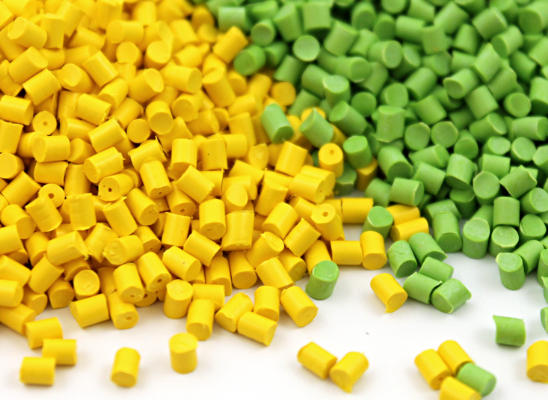
A Masterbatch is a concentrated mixture of pigments, additives, or fillers dispersed into a polymer carrier resin. It allows manufacturers to incorporate precise doses of color or performance-enhancing additives into raw polymers without compromising uniformity or efficiency.
- Color Masterbatch: Provides consistent and customizable coloring.
- Additive Masterbatch: Enhances UV resistance, flame retardancy, anti-static properties, or impact strength.
- Filler Masterbatch: Reduces production costs by incorporating mineral fillers such as calcium carbonate or talc.
- Combination Masterbatch: Integrates both colorants and functional additives for multifunctional performance.
For ABS-based products, the ABS Masterbatch uses the same resin as its carrier, ensuring superior compatibility, dispersion, and overall consistency in product properties.
Toys frequently undergo rough handling, drops, and mechanical stress. ABS plastic provides excellent impact resistance, ensuring children's toys remain intact even after repeated use.
ABS demonstrates remarkable stability under varying temperature conditions and exposure to mild chemicals. This makes it safe and long-lasting for use in diverse environments.
ABS offers an appealing glossy surface and vibrant coloration, which can be further enhanced by adding a color Masterbatch, ensuring toys maintain bright, fade-resistant colors.
ABS Masterbatch ensures consistent color distribution, even in large-scale production. In the toy industry, visual appeal is a decisive factor influencing purchasing behavior. By using color Masterbatch, manufacturers can achieve customized shades across different product lines with minimal variation.
Innovative additive Masterbatch blends can improve surface hardness and reduce wear, which is especially valuable for outdoor and mechanical toys that experience regular friction.
Toys left under sunlight or subjected to varying climates require UV-stabilized ABS materials. An ABS UV Masterbatch prevents discoloration, brittleness, and surface degradation.
Safety regulations in toy manufacturing are stringent. Flame retardant Masterbatch formulations help ensure the final product meets international fire safety standards such as EN 71-2 and ASTM F963.
Integrating Masterbatch into ABS resin streamlines production, reducing the need for separate coloring and additive processes. This leads to more efficient extrusion and injection molding cycles.
Protect polymer chains from oxidative degradation during processing and end use.
Prevent discoloration and maintain aesthetic quality.
Reduce surface dust attraction, improving the cleanliness and appearance of toy surfaces.
Minimize friction between molded parts during packaging and handling.
Increase rigidity and structural strength without compromising weight or finish.
The development of ABS Masterbatch follows a systematic process to ensure precise dispersion and stability of additives:
1. Pre-mixing Stage: All ingredients — ABS resin, pigments, and additives — are premixed at controlled ratios.
2. Twin-Screw Extrusion: The mixture is melted, sheared, and dispersed uniformly through high-shear extrusion.
3. Cooling and Pelletizing: The extruded strand is cooled and cut into uniform pellets, called Masterbatch granules.
4. Quality Testing: Spectrophotometers, thermal analyzers, and mechanical strength testers verify color accuracy, dispersion, and performance.
Ensuring the ABS Masterbatch exhibits consistent melt flow and dispersion guarantees that finished toys meet desired quality and safety requirements.
The global toy market increasingly values eco-friendly plastics and sustainability. Manufacturers now focus on recyclable or bio-based materials and non-toxic additive systems.
Modern ABS Masterbatch products comply with regulations such as RoHS, REACH, and EN 71, eliminating heavy metals and reducing volatile organic compounds (VOCs).
Recycling compatibility ensures that waste materials or rejected parts can be reprocessed without losing mechanical or aesthetic qualities.
Innovators have introduced bio-based Masterbatch formulations that maintain performance while minimizing carbon footprint. These advanced materials help global toy brands align with sustainable manufacturing principles.
While toys are a significant segment, ABS Masterbatch usage extends to numerous industries:
- Automotive interior components like dashboards and trims.
- Consumer electronics housings for laptops, printers, and appliances.
- Household items such as handles, fixtures, and casings.
- 3D printing filaments for decorative and functional applications.
This versatility highlights how Masterbatch technology continues to redefine the potential of ABS polymer systems.
For manufacturers exporting to global markets, consistent testing and certification are essential. Common standards include:
- Color consistency: CIELAB color space evaluation and spectrophotometric comparison.
- Mechanical performance: Izod impact strength and tensile tests.
- Micro-dispersion analysis: Microscopic examination of pigment and additive distribution.
- Thermal stability: Differential scanning calorimetry (DSC) and thermal gravimetric analysis (TGA).
These quality control processes ensure each batch of ABS Masterbatch meets international safety and performance expectations.
The next generation of ABS Masterbatch may include functional additives capable of providing antimicrobial or self-healing properties — ideal for hygienic and long-lasting children's products.
Artificial intelligence and spectrophotometric modeling are revolutionizing Masterbatch formulation by automatically predicting pigment ratios to achieve desired hues with minimal waste.
Recycled ABS combined with eco Masterbatches offers a sustainable path for reducing industrial plastic waste. Manufacturers are developing formulations that maintain durability and safety standards using post-consumer or post-industrial ABS materials.
ABS Masterbatch has become an indispensable solution in the global toy manufacturing industry. By enhancing durability, color uniformity, safety, and production efficiency, it allows manufacturers to create toys that are not only visually appealing but also long-lasting and compliant with international standards.
As the demand for sustainable and high-performance plastic products continues to grow, Masterbatch technology will play an even greater role in driving material innovation and environmental responsibility. Manufacturers investing in advanced ABS Masterbatch research today are shaping the next generation of safe, sustainable, and high-quality toy products.
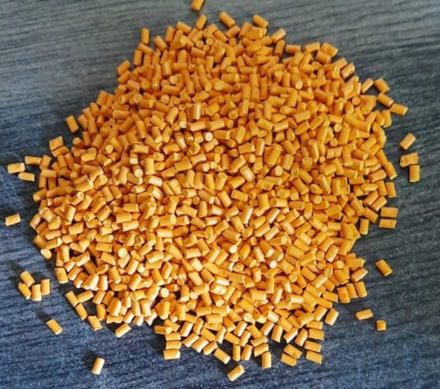
Answer: ABS Masterbatch is primarily used to add color, UV stabilizers, or functional additives to ABS resin. It enhances properties such as strength, gloss, and heat stability while ensuring consistent quality across production runs.
Answer: Yes. High-quality ABS Masterbatch formulations are non-toxic, heavy metal-free, and compliant with international safety standards like EN 71 and RoHS, making them completely safe for children's toys.
Answer: Absolutely. Recycling-compatible Masterbatches are designed to work efficiently with both virgin and recycled ABS, maintaining consistent color and mechanical performance.
Answer: Manufacturers should consider the desired effect (coloration, UV protection, flame retardancy, etc.), processing temperature, and application environment. Partnering with a reliable Masterbatch supplier ensures optimal customization.
Answer: Future developments include bio-based Masterbatches, antimicrobial additives, and smart pigments that react to temperature or light, supporting sustainable and intelligent material design.


