


close
Choose Your Site
Global
Social Media


Views: 222 Author: Rebecca Publish Time: 2025-12-23 Origin: Site


Content Menu
● The Science Behind Masterbatch Formulation
● Importance of Color Matching in ABS
● Factors Affecting Color Consistency
● The Role of Additives in ABS Masterbatch
● Steps to Achieve Perfect Color Matching
● Testing and Quality Assurance
● Common Challenges in ABS Masterbatch Production
● Industrial Applications of ABS Masterbatch
● Sustainability and Future Innovations
● FAQ
>> 1. What is the difference between ABS Masterbatch and color pigment?
>> 2. How is ABS Masterbatch used in production?
>> 3. Can Masterbatch affect the mechanical properties of ABS?
>> 4. How can manufacturers ensure color consistency across batches?
>> 5. What trends are shaping the future of ABS Masterbatch?
In the fast-evolving world of plastic manufacturing, color precision and material stability play a vital role in defining product quality. For industries using Acrylonitrile Butadiene Styrene (ABS), achieving consistent color throughout batches is both an art and a science. This is where ABS Masterbatch technology steps in — a formulation that allows producers to customize colors, enhance performance, and maintain material uniformity across large-scale production.
From automotive interiors to consumer electronics, ABS plastic relies heavily on reliable Masterbatch solutions to achieve aesthetic consistency and functional reliability. This article explores how ABS Masterbatch contributes to superior color matching, the science behind its composition, and the best practices for achieving consistency in manufacturing.
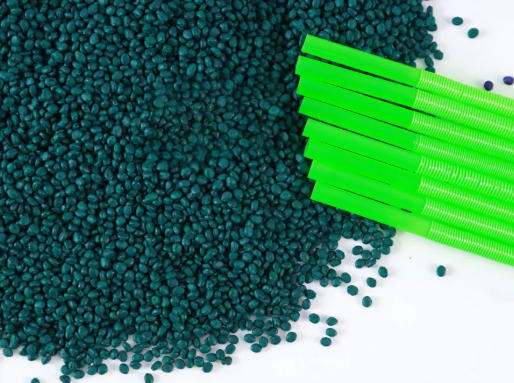
ABS Masterbatch is a concentrated mixture of pigments and/or additives encapsulated during a heat process into a carrier resin compatible with ABS polymer. It is later cooled and cut into granular shapes. When added to raw ABS material during processing, it imparts color and other desired properties uniformly.
Unlike dry colorants or liquid dyes, ABS Masterbatch offers exceptional dispersion, minimizes wastage, and enhances repeatability in production. This formulation ensures that manufacturers can reliably reproduce exact shades even when scaling production across multiple lines.
The effectiveness of a Masterbatch depends on how well pigments distribute within the carrier resin. ABS, being a thermoplastic polymer, demands a compatible carrier that melts and disperses evenly during processing.
A typical ABS Masterbatch formulation includes:
- Carrier resin: Usually ABS resin itself, ensuring compatibility.
- Pigments or dyes: Provide the desired color tones.
- Additives: Enhance UV resistance, impact strength, gloss, or flame retardancy.
- Dispersants: Facilitate uniform pigment distribution.
Proper formulation ensures that colorants do not interfere with the mechanical performance or surface characteristics of the final product. By controlling viscosity, melt flow index, and dispersion behavior, masterbatch manufacturers can guarantee consistent results batch after batch.
Color is one of the first visual cues consumers notice. Even minor variations can significantly influence brand perception. For instance, in automotive or electronics applications, inconsistent hues across components can make the product look unrefined.
Color matching in ABS Masterbatch production involves aligning the desired color tone with reference samples or Pantone standards. The process considers not only pigment selection but also how color appears after ABS processing under heat and pressure. Factors such as base polymer shade, pigment concentration, and cooling rate all influence the final color outcome.
A well-developed color-matching system ensures accuracy within tight tolerances, often measured using colorimetric data such as ΔE values.
Maintaining color consistency in ABS requires careful control over several variables:
1. Processing Temperature: Excessive heat may cause pigment degradation or uneven dispersion.
2. Mixing Speed and Duration: Insufficient blending can result in localized color concentration.
3. Moisture Content: Residual moisture can alter melt flow and affect final coloration.
4. Pigment Particle Size: Finer particles allow smoother color transitions.
5. Machine Calibration: Even a slight variation in screw speed or pressure can change output shade.
By optimizing each factor during production, factories can prevent issues like streaking, patchiness, or gloss inconsistency in ABS components.
Beyond coloration, additives play a major role in the performance and endurance of ABS materials. Depending on the application, additives can be mixed into the Masterbatch to improve characteristics such as:
- UV stabilizers: Prevent fading under sunlight exposure.
- Anti-static agents: Reduce dust accumulation in electronics housings.
- Flame retardants: Enhance safety for appliances and transport parts.
- Impact modifiers: Increase toughness without compromising color depth.
This multifunctional approach allows manufacturers to meet strict quality and regulatory requirements while keeping visual consistency intact.
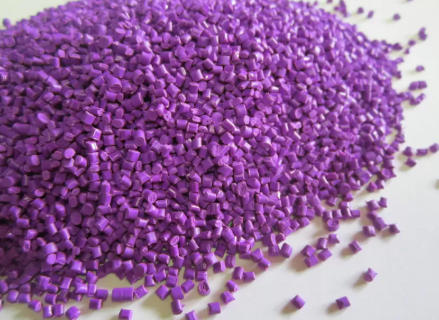
Color matching demands systematic testing and expertise. Typically, the process follows these key steps:
1. Define target color specifications using either brand guidelines or standard color charts.
2. Select appropriate pigments and carriers compatible with ABS resin types.
3. Conduct small-scale trial runs to measure color dispersion and adjust pigment ratios.
4. Perform spectrophotometric analysis to quantify differences from the target color.
5. Finalize Masterbatch formulation and establish standard processing parameters.
When properly executed, these steps result in stable color shades reproducible across multiple production facilities.
Consistency is verified through rigorous testing during and after manufacturing. Common quality checks include:
- Melt flow index testing to assess processing stability.
- Spectrophotometry to measure exact color values across light angles.
- Weathering tests to simulate UV exposure and determine fade resistance.
- Impact and tensile tests to ensure mechanical reliability isn't compromised by pigmentation.
By integrating stringent quality control, Masterbatch producers not only deliver dependable color quality but also guarantee that physical properties remain consistent.
Even experienced manufacturers face challenges when producing color-stable ABS Masterbatch. Typical issues include:
- Metamerism: Colors that appear identical under one light source but differ under another.
- Thermal instability: Pigments sensitive to high processing temperatures.
- Pigment migration: Uneven pigment distribution leading to surface defects.
- Batch-to-batch variation: Caused by inconsistent raw material quality or machine calibration.
Addressing these issues requires tight process control, proper pigment selection, and consistent supplier quality assurance.
ABS Masterbatch finds widespread application across industries including:
- Automotive components: Dashboards, trims, and handles requiring uniform matte or glossy finishes.
- Consumer electronics: Laptop cases, phone housings, and printer parts.
- Home appliances: Vacuum cleaners, blenders, and switch housings.
- Construction materials: Decorative panels, fittings, and structural components.
Each sector places unique demands on visual and mechanical performance, making the right Masterbatch formulation crucial.
Sustainability is increasingly driving innovation in Masterbatch production. Manufacturers are transitioning toward:
- Using bio-based carrier resins to reduce carbon impact.
- Enhancing pigment dispersion to lower dye loads without sacrificing color strength.
- Designing recyclable ABS-compatible Masterbatch for circular manufacturing systems.
- Leveraging AI-based color prediction systems to achieve real-time matching accuracy.
These advances ensure that ABS Masterbatch technology continues to evolve with environmental regulations and market expectations.
Color precision is more than aesthetic — it's a reflection of quality and brand integrity. ABS Masterbatch not only simplifies the process of achieving visually consistent products but also ensures repeatability, performance, and cost efficiency across industrial-scale operations.
As manufacturing standards increase, companies investing in advanced Masterbatch technology gain a competitive edge through superior color accuracy, reduced production waste, and long-term product reliability.
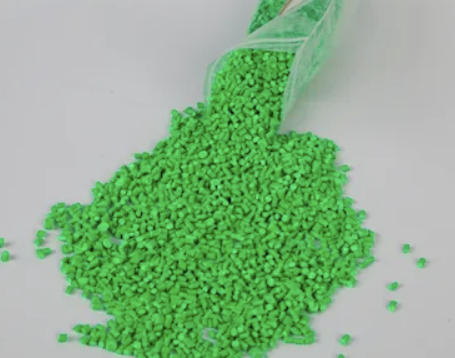
ABS Masterbatch is a pre-dispersed mixture of pigments within an ABS-compatible carrier resin, whereas pure pigments are raw colorants without carriers. Masterbatch provides better dispersion and color consistency during plastic processing.
It is typically added at a specified ratio to natural ABS resin before extrusion or injection molding. During melting, the pigments and additives distribute evenly throughout the material, delivering the desired color and properties.
If properly formulated, it should not. Compatible carrier resins and optimal pigment concentrations maintain physical performance while delivering uniform coloration.
By maintaining identical processing parameters, raw material sources, and pigment dispersion methods, supported by routine spectrophotometric testing and calibration.
Eco-friendly formulations, AI-assisted color prediction, and recyclable carrier systems are major trends transforming how Masterbatch materials are developed and used globally.


